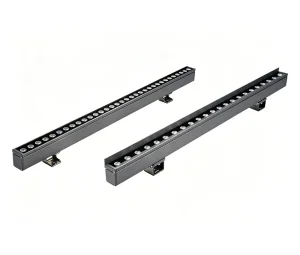
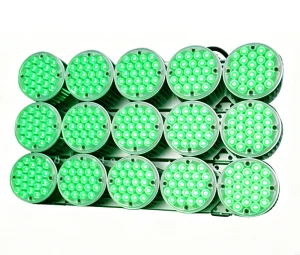
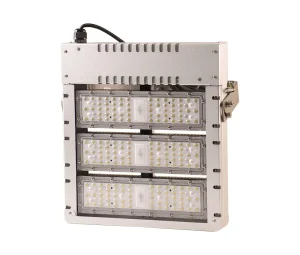
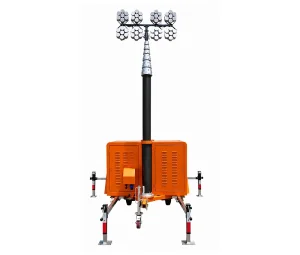
Heavy-Duty Production & High-Output Luminaires
Engineered for high-frame-rate television broadcasts, underwater film production, and demanding commercial shoot environments.
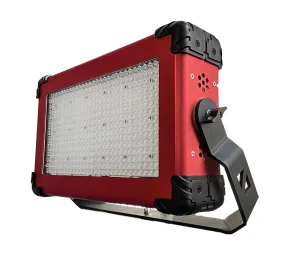
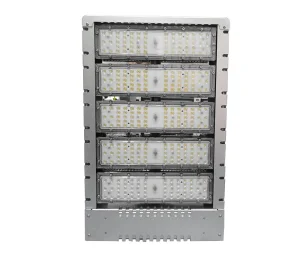
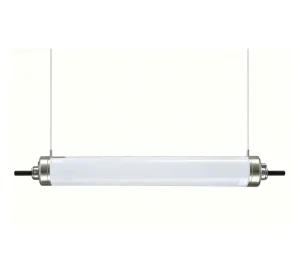
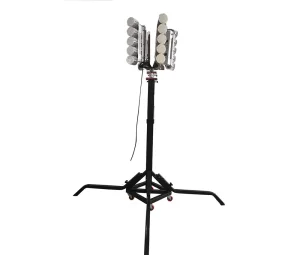
Global Market Architecture of Video Production Lighting
Analyzing the tectonic shift from legacy tungsten/HMI luminaires to solid-state digital illumination across major global film hubs and broadcast centers.
The global video production lighting sector has evolved from a craft-centric niche into a capital-intensive, high-precision photonics industry. Valued at over $3.8 billion globally and expanding at a compound annual growth rate (CAGR) exceeding 8.4%, the sector is shaped by simultaneous demands from major motion picture streaming studios (Hollywood, Cinecittà, Pinewood, Hengdian), global sports broadcasting consortiums, and virtual production volume operators. The sunsetting of inefficient metal-halide and halogen fixtures is virtually complete, replaced by high-efficacy, multi-emitter LED luminaires calibrated to tight chromatic tolerances.
In this modern ecosystem, tier-1 production lighting factories do not simply assemble off-the-shelf LED strips into aluminum frames. They operate precision semiconductor integration facilities equipped with spectrophotometers, goniophotometers, optical surface modeling software, and automated surface-mount device (SMD) pick-and-place lines. The standard for cinematic illumination requires spectral fidelity across the entire visible spectrum (380 nm to 780 nm), eliminating the dreaded green-magenta tint spikes that plague generic industrial luminaires and corrupt digital camera color science.
Broadcast & Live Stage Dominance
4K and 8K HDR slow-motion sports coverage requires continuous luminous flux exceeding 200,000 lumens per cluster with near-zero ripple current (<0.5%), preventing sensor banding at 1,000 frames per second.
In-Camera VFX (ICVFX) Volumes
LED video walls combined with ceiling volume luminaires require direct RGBACL spectral matching. OEM suppliers must tune light sources to complement the RGB subpixels of micro-LED walls.
Harsh-Environment Cine Specialization
From sub-zero polar expeditions to high-humidity rainforest soundstages and submersed ocean filming, robust IP67/IP68 and marine-grade anti-corrosion luminaires eliminate failure-prone custom waterproof housings.
Cinema-Grade Metrology: Beyond Standard CRI Metrics
Why Tier-1 video production factories evaluate luminaires through SSI, TLCI, and TM-30-20 to safeguard camera sensor response curves.
In standard architectural illumination, a Color Rendering Index (CRI $R_a$) of 80 or 90 is widely considered acceptable. In high-end cinematography, however, standard CRI is fundamentally obsolete. CRI was engineered around human eye sensitivity under incandescent benchmarks, relying on eight low-saturation pastel swatches ($R_1$ to $R_8$). It fails entirely to predict how an ARRI ALEV III, RED HELIUM, or Sony VENICE CMOS sensor registers skin tones, particularly when saturated deep-red skin pigments (tracked by the $R_9$ metric) are illuminated by discontinuous phosphor spikes.
Modern video lighting factories and specialized suppliers calibrate their emission engines according to three critical color indices:
| Metrology Metric | Evaluation Method & Bandwidth | Threshold for Cinema/Broadcast | Consequence of Low Score |
|---|---|---|---|
| TLCI-2012 Television Lighting |
Simulates standard 3-CCD broadcast camera sensor reactions across 18 color targets. | TLCI > 96 (No post-color correction needed) | Muddy facial skin tones, significant camera sensor noise, color grading artifacts. |
| SSI Spectral Similarity Index |
Developed by the Academy of Motion Picture Arts & Sciences (AMPAS). Compares spectrum directly to standard 3200K Tungsten or 5500K Daylight. | SSI [P3200] > 85 SSI [D5500] > 80 |
Spectral dropouts in cyan/deep-red zones, causing synthetic fabric discoloration on camera. |
| TM-30-20 Fidelity ($R_f$) & Gamut ($R_g$) |
IES standard calculating 99 real-world color samples plus a 16-hue vector graphic for saturation shifts. | $R_f \ge 95$ $R_g$ between 98 and 102 |
Unintended oversaturation or desaturation of secondary colors; skin appears lifeless or overly jaundiced. |
| PWM Frequency Flicker Suppression |
Microsecond switching speeds of DC step-down driver circuits delivering continuous current to LED dies. | > 25,000 Hz (High-speed rating) True Linear Constant Current |
Banding bars, rolling black frames, or stroboscopic fluttering at high shutter speeds (>1/1000s). |
To eliminate green and magenta balance skewing, precision factories calculate chromaticity coordinate deviations ($\Delta uv$) relative to the Planckian locus. Fixtures leaving production lines must adhere to strict limits, holding tolerances within $\Delta uv \le \pm 0.0015$ across their entire color temperature tuning spectrum (typically 2,200K to 10,000K). This consistency ensures that multiple fixtures arrayed over a soundstage match seamlessly without requiring manual magenta/minus-green gel filtration.
Specialized Filming & Commercial Application Scenarios
Field installations where standard commercial lights fail and specialized video production luminaires excel.
Subsea & Water-Submerged Film Production
Traditional underwater filming relies on bulky, pressurized glass housings that disrupt buoyancy and distort beam angles. Specialized submersible luminaires rated to 30 meters depth (IP68) with pressure-balanced encapsulation allow direct underwater deployment, providing uniform key and rim lighting for underwater cinema without chromatic beam fringing.
Extreme Industrial & Foundry Documentaries
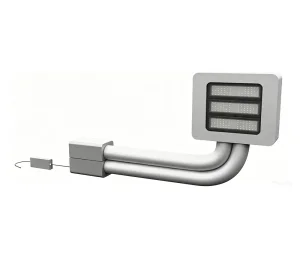
Documenting glass manufacturing, steel rolling mills, and smelting operations exposes lighting gear to ambient temperatures exceeding 80°C (176°F) to 150°C (302°F). Standard production fixtures melt down or suffer thermal shutoff. Industrial tailored high-temperature fixtures with remote ballast boxes and phase-change heat sinks provide continuous, reliable illumination in critical ambient heat zones.
Broadcast Arenas & HDTV Sports Production
Major international sports arenas require glare-controlled floodlighting capable of meeting FIFA, FIBA, and Olympic broadcast illumination guidelines. Luminaires must deliver vertical lux values of 2,000+ lux toward tracking cameras, while strict honeycomb and asymmetric visor optics shield athletes' vision and maintain uniform field light distribution.
Rapid Mobile Production & Emergency Night Shoots
Location scouting, remote documentary expeditions, and overnight sets often lack fixed electrical grids. Trailer-mounted and heavy telescopic mobile light towers fitted with directional, flicker-free LED arrays provide high-lumen field coverage over thousands of square meters, powered by onboard clean diesel generators or high-density lithium storage modules.
Factory Direct Sourcing: OEM/ODM Foundry Capabilities
Navigating tier-1 supply chains, structural thermal modeling, optical molding, and turnkey production compliance.
For rental houses, gaffers, equipment distributors, and lighting directors, sourcing directly from original design and manufacturing (ODM) factories provides distinct competitive advantages. In-house engineering teams bridge the gap between abstract aesthetic requirements and robust solid-state electronics. A comprehensive factory engineering protocol encompasses:
1. Thermodynamic Dissipation Architecture: High-output cinematic fixtures concentrated into compact chassis generate extreme heat flux density. Tier-1 manufacturers deploy cold-forged 6063 aluminum, high-conductivity heat pipes, and micro-channel copper vapor chambers. Active liquid cooling or magnetically levitated silent fans operating below 18 dBA ensure zero acoustic interference on soundstages with live audio capture.
2. Precision Secondary Optics & Beam Shaping: Premium fixtures integrate optical-grade poly-methyl methacrylate (PMMA) micro-lenses, total internal reflection (TIR) collimators, and borosilicate glass shields. These optics control chromatic aberration at the beam edge, ensuring clean light distribution without color fringing or flare artifacts.
3. Digital Control Network Integration: Modern production sets operate via complex hybrid control networks. Direct manufacturers integrate multi-channel protocols: 16-bit DMX512-A with RDM bidirectional communication, sACN (E1.31), Art-Net 4, LumenRadio CRMX wireless transceivers, and Bluetooth mesh interfaces for real-time mobile app management.
Custom Optical Tooling
In-house CNC mold manufacturing for bespoke TIR optics, specialized micro-diffusion grids, and interchangeable 10°, 25°, 45°, and 90° beam formers with clean falloff profiles.
Driver Electronics Design
Proprietary constant-current circuit designs with power-factor correction (PFC > 0.98), input surge suppression up to 10 kV, and wide AC 90–305V voltage tolerances for stable global operation.
Environmental Stress Testing
Salt spray corrosion chambers, multi-axis harmonic vibration simulators, high-pressure IP69K hot-water jet testers, and thermal shock validation from -40°C to +85°C.
Technology Roadmap: The Next Decade in Video Lighting
Emerging semiconductor physics, AI-driven photometric calibration, and next-generation spectral engineering.
GaN Power Electronics & Micro-Ballasts
Gallium Nitride (GaN) power switches replace legacy silicon MOSFETs in cine ballasts, slashing power brick physical volume by 45%, raising conversion efficiency to 96.5%, and substantially reducing working temperatures.
Multi-Primary 8-Channel Spectral Engines
Transition from standard bi-color and RGBACL architectures to 8-channel emitter engines (Deep Red, Red, Amber, Lime, Cyan, Blue, Royal Blue, Far Red), achieving SSI ratings above 93 across the full Kelvin spectrum.
Machine-Vision Dynamic Follow-Key
Real-time optical camera tracking synced via Ultra-Wideband (UWB) and AI vision chips, allowing luminaires to compute subject movement, automatically adjust beam edge feathering, and compensate for ambient bounce light in milliseconds.
Quantum Dot Photoluminescence & True Continuous Spectra
Quantum Dot LED (QD-LED) cinema arrays offering continuous, unnotched spectral radiation curves matching blackbody radiators, ending color disparity across diverse camera sensor brands.
Frequently Asked Questions: Global Sourcing & Engineering
Comprehensive answers for procurement directors, cinematographers, gaffers, and system integrators.
How does industrial LED lighting prevent flicker during ultra-high-speed filming?
Flicker occurs when alternating current (AC) cycles modulate the LED junction current, creating visible rolling dark bands across rolling-shutter camera sensors. Professional cinema luminaires utilize high-frequency Pulse Width Modulation (PWM) operating at frequencies above 25,000 Hz, or pure linear Constant Current Reduction (CCR) ripple-free DC power stages. This ensures zero stroboscopic artifacts, even at frame rates exceeding 2,000 fps and extreme shutter speeds (e.g., 1/4000s).
Why is the R9 color rendering value critical for cinema production lights?
The standard CRI ($R_a$) calculation only averages the first eight desaturated pastel color samples ($R_1$ to $R_8$). The $R_9$ metric represents saturated solid red, which corresponds to biological hemoglobin under skin tissue. In cinema production, an $R_9$ rating below 90 results in lifeless, gray, or greenish skin tones that require costly per-frame post-production tracking and color correction. High-quality production lighting factories engineer phosphor mixes with tailored red-emitting materials to maintain $R_9 > 95$.
What is the advantage of using IP68 underwater fixtures over traditional diving housings?
Traditional underwater camera lighting requires standard lights placed inside thick acrylic or aluminum watertight housings. These housings add significant weight, trap heat (accelerating LED lumen depreciation), cause internal glass surface reflections, and introduce buoyancy complications. Purpose-built IP68 underwater LED luminaires feature solid-core polyurethane or optical-grade silicone resin encapsulation, enabling unhoused operation down to 30 meters depth with natural water-cooling heat transfer.
Can industrial high-power floodlights be customized with cinema-standard DMX controls?
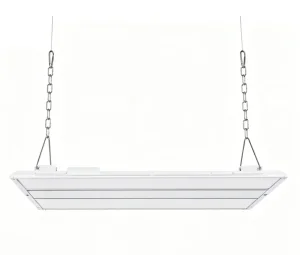
Yes. Specialized ODM factories frequently build custom stadium and high-bay floodlights (up to 3000W) equipped with 16-bit DMX512-A, RDM, Art-Net, or wireless CRMX control cards. This enables lighting consoles to dim high-power fixtures smoothly from 0.1% to 100% without Kelvin color temperature drift, allowing industrial fixtures to integrate seamlessly into live entertainment, concert tours, and large film set lighting grids.
What factory quality assurance certifications are essential for international B2B orders?
International buyers should require ISO9001 certified manufacturing, backed by regional electrical safety compliance marks including CE (LVD/EMC), UL/ETL (UL 1598 / UL 8750 for North America), FCC Part 15 Class B, and RoHS/REACH material certifications. For photometric performance, authentic third-party IES LM-79 integrating sphere test reports and LM-80/TM-21 LED lifespan data ($L_{70} > 50,000$ hours) are vital to verify lumen output, color rendering, and thermal stability claims.
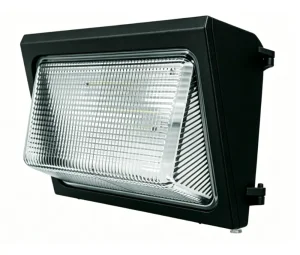
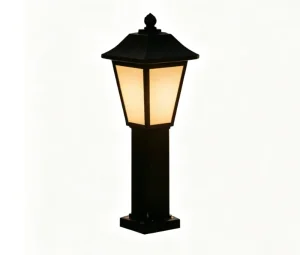
Specialized Exterior, High-Temp & Architectural Video Luminaires
Industrial LED luminaires engineered for large-scale backlots, architectural film staging, extreme temperatures, and mobile power masts.