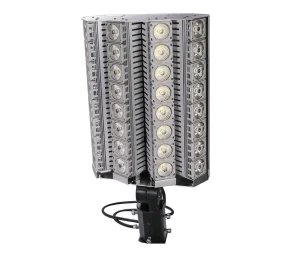
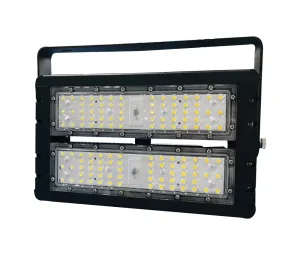
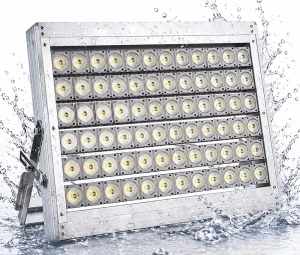
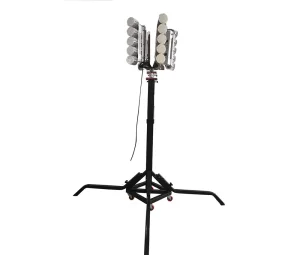
Featured Industrial & Specialized Solutions
Engineered for thermal extremes, high corrosive resistance, and heavy industrial integration. Every fixture is field-tested under punishing mechanical strain.
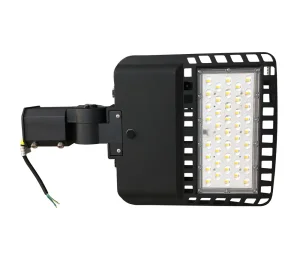
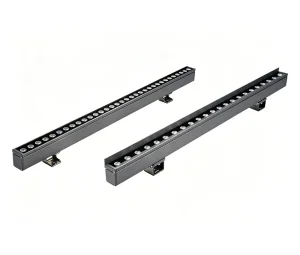
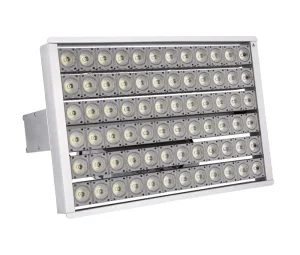
The Global Industrial Landscape for 150W Explosion-Proof Systems
Modern heavy industries are rapidly decommissioning legacy 400W Metal Halide and High-Pressure Sodium (HPS) systems. The 150W industrial explosion-proof LED luminaire has emerged as the definitive global standard for hazardous-zone illumination.
The 150W Sweet-Spot Metric
Delivering between 21,000 to 24,000 usable lumens at an efficacy exceeding 150 lm/W, the 150W class provides direct 1:1 replacement for 400W HID luminaires mounted between 6 to 12 meters. This achieves a 62.5% immediate reduction in continuous energy load without requiring redesign of existing structural mounting stanchions.
Capital OPEX Amortization
Maintenance in hazardous environments requires certified technicians, hot-work permits, atmospheric sniffers, and scaffolding. By transitioning to isolated LED thermal engines rated for L70 > 100,000 hours at Ta = 55°C, facility operators drop their unscheduled lighting servicing downtime to virtually zero over an 8-year operating cycle.
Stringent Safety Compliance
Globally harmonized workplace safety directives (OSHA, ATEX Directive 2014/34/EU, IECEx Scheme) mandate strict surface temperature thresholds. A 150W explosion-proof lamp engineered by an authorized OEM must maintain absolute T-Class ratings (T4, T5, or T6) under dust blanket insulation testing without thermal runway.
Engineering Blueprint: Inside an OEM 150W Ex-Proof Luminaire
True industrial explosion proofing is not merely a thick casing; it represents an integrated balance of flamepath mechanics, metallurgy, galvanic barrier mitigation, and isolated power topology.
The Physics of Containment: Flameproof 'Ex d' vs. Increased Safety 'Ex eb'
In accordance with IEC/EN 60079-1, an OEM explosion-proof luminaire enclosure is constructed to withstand the internal detonation of an explosive air-gas mixture without transmitting ignition to the external atmosphere. The machining tolerances of spigot joints and threaded cylindrical flamepaths are kept within micrometric limits (Ra ≤ 6.3 μm, gap length ≥ 12.5mm) to quench flame fronts below auto-ignition temperatures before pressure equalization occurs.
Copper-Free Die-Cast Housing
Formed from ADC12 or A380 alloy with copper content restricted below < 0.1% to prevent intergranular galvanic corrosion in coastal offshore salt-fog zones. Finished with electrostatic thermoset epoxy powders rated for 1,000+ salt spray hours (ASTM B117).
Multi-Chamber Thermal Decoupling
Separating the 150W LED emitter array from the switch-mode power converter (SMPS) prevents cumulative heat accumulation. The driver chamber operates up to 25°C cooler than the optical cavity, preserving electrolytic capacitors and ensuring high MTBF.
Impact-Proof Borosilicate Lens
4.0mm to 8.0mm thermally toughened, shock-resistant borosilicate glass with IK08 to IK10 mechanical impact ratings. Specially tempered to eliminate birefringence stresses, offering 93%+ spectral transmittance without yellowing under intense UV exposure.
Transient & Harmonic Protection
Integrated 6kV to 10kV surge suppression devices (SPD) compliant with IEEE C62.41.2 Location Category C. Full THD < 10%, Power Factor > 0.98, and broad voltage acceptance windows (100–277VAC or 347–480VAC) for remote generator stability.
Global Macro Sectors & Harsh Deployment Matrix
Where standard luminaires fail within hours, OEM-customized 150W explosion-proof lamps maintain uncompromising photometric performance across challenging environmental matrices.
| Industrial Sector | Atmospheric Risk Vector | Classification Standard | OEM 150W Fixture Engineering Configuration |
|---|---|---|---|
| Offshore Oil & Gas Platforms | Hydrogen sulfide gas, hydrocarbon mist, extreme salt-spray | ATEX Zone 1 / Zone 21; Cl I Div 1 Grps C, D | 316L stainless steel external hardware, dual silicone O-ring hermetic seals, marine C5-M anti-corrosion coating. |
| Petrochemical Refineries & Distillation | High ambient process heat (Ta 60°C), explosive gases (IIB+H2) | ATEX / IECEx Ex db eb IIC T5 Gb | Extended cold-forged aluminum pin-fin heatsink, remote driver mounting option, low surface temp T5 rating. |
| Grain Elevators & Agro-Processing | Conductive & non-conductive combustible dusts (Class II) | Zone 20 / 21 / 22; Cl II Div 1 Grps E, F, G | Smooth-curved outer chassis preventing dust accumulation, IP66 washdown protection, shatterproof optics. |
| Pharmaceutical Clean Synthesis | Volatile organic solvent vapors (Acetone, IPA, Ethanol) | Class I, Division 1 & 2; Zone 1, 2 | Electropolished finishes, chemical-resistant fluoroelastomer seals, high CRI (>85) for process inspection clarity. |
| Marine Shipyards & Ballast Tanks | High structural vibration, bilge water washdown, wet dampness | ABS / DNV Type Approved; IP67/IP68 | Heavy-duty trunnion brackets with 3G/5G vibration damper integration, IK10 borosilicate glass shield. |
OEM Manufacturing Rigor & Factory Verification
As a tier-1 industrial lighting manufacturer, our production pipeline enforces zero-defect quality control across every individual explosion-proof assembly before shipment.
100% Hydrostatic Overpressure Testing
Every individual cast enclosure undergoes factory hydrostatic pressure testing (up to 4 times the reference explosive pressure, typically 1.2 to 2.0 MPa) according to IEC 60079-1 standard, verifying metallurgical density and eliminating porosity defects.
Full Thermal Equilibrium Burn-In
Each production batch of 150W lamps is subjected to a minimum 72-hour thermal stress test in elevated ambient testing chambers (Ta = 50°C), closely monitoring junction temperatures (Tj) and power factor stability across variable voltage drops.
Optical Goniophotometer & IES Reporting
Our engineering laboratory generates full photometrical files (IES / LDT) with specialized distribution optics: symmetrical narrow (25°/40° for high bays) to asymmetrical wide-flood (120° for wide pipe-racks and processing tanks), aiding Dialux simulations.
Future Tech Roadmap: Smart Ex-Proof Illumination
The next decade will see hazardous lighting transition from passive luminescence to intelligent edge nodes within industrial Internet-of-Things (IIoT) ecosystems.
Intrinsically Safe Wireless Mesh
Integration of low-power Zigbee/LoRaWAN and Bluetooth Mesh nodes housed behind explosion-proof RF-transparent sapphire windows, enabling DALI-2 dimming, zoning, and automated scheduled power reduction without breach of containment.
Real-Time Gas & Vibration Telemetry
The luminaire pole or housing acts as a localized sensor hub. Auxiliary modules detect trace volatile methane/hydrogen gas build-up and transmit micro-vibrations from aging pipeline assets directly to SCADA plant control monitors.
LiFi Data Transmission in Ex Zones
Traditional radio frequencies (RF) can carry risk of induced spark hazards in hydrogen-rich Zone 0/1 setups. Optical light communications (LiFi) integrated into 150W explosion-proof downlights provide gigabit wireless communication to field workers.
Frequently Asked Technical Questions
Addressing mission-critical criteria evaluated by EPC contractors, industrial specifiers, and procurement directors.
What distinguishes a true OEM 150W explosion-proof lamp from conventional waterproof industrial fixtures?
How does ambient temperature (Ta) impact the T-rating on a 150W hazardous-area fixture?
What OEM customization options are available for specialized hazardous mounting sites?
How are cable entries secured to maintain ATEX/IECEx certified containment?
What are the lead times and minimum order quantities (MOQ) for custom OEM explosion-proof lamps?
Specialized Extreme Heavy Industrial Luminaires
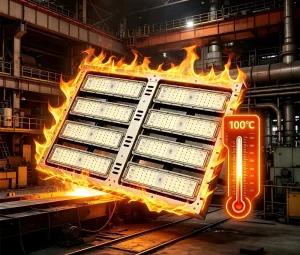
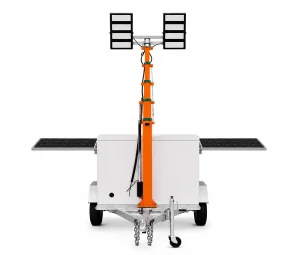
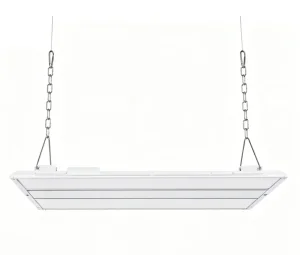
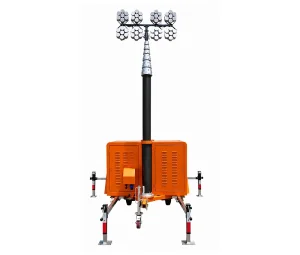
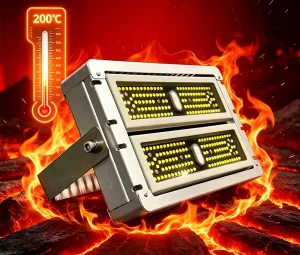
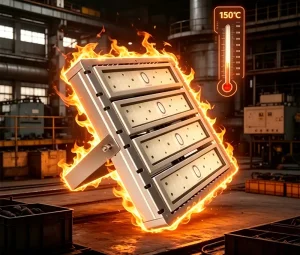
Browse our extended product lines, covering high-temperature environments up to 200°C, deep marine deployments, mobile industrial light towers, and high bay systems.