
Specialized Industrial Product Architecture · Phase I
Explore heavy-duty luminaires designed to solve severe environmental degradation, ranging from thermal runaway mitigation to deep submersion and high vibration.
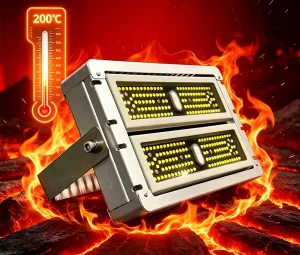
The Engineering Evolution of 300°C Solid-State Industrial Illumination
Why conventional LED packages instantly degrade above 85°C, and how China’s top OEM manufacturers break physical thresholds using separated driver topologies and liquid vapor phase-change chambers.
Thermal Boundary Breaking
Standard semiconductor junction temperatures (Tj) cannot exceed 125°C without immediate color shifting and catastrophic silicone yellowing. Our 300°C extreme luminaires employ remote optical waveguides, ceramic gold-wire substrate bonding, and sintered micro-heat pipes to reject convective and radiant heat instantly away from the core dies.
Isolated Dynamic Drivers
Electrolytic capacitors in conventional drivers fail within hours at temperatures above 105°C. LSLEDSUS engineering isolates drivers via high-temperature silicone conduits at distance boundaries (5–30 meters away), or uses custom gallium nitride (GaN) solid-state conversion modules embedded in vacuum-jacketed thermal sleeves.
Hermetic Borosilicate Sealing
Polycarbonate lenses deform and melt in hyper-thermal zones. Our factory designs feature 8mm thermally tempered borosilicate glass matched with space-grade fluoroelastomer (FKM/FFKM) gaskets, yielding true IP68 ingress protection against toxic sulfurous gases, furnace scale, and hot steam blasts.
Engineering Audit: Standard LED vs. OEM 300°C High-Temp Fixtures
A rigorous comparative analysis demonstrating component survival across extreme thermodynamic conditions.
| Evaluation Parameter | Generic Commercial LED | Industrial Grade (80℃-100℃) | LSLEDSUS OEM 300℃ Specialized Series |
|---|---|---|---|
| Max Sustained Ambient | 45°C (113°F) Fails Rapidly | 80°C - 100°C (176°F - 212°F) | Up to 300°C (572°F) Continuous |
| Driver Housing Strategy | Internal onboard PCB | Thermally segregated top mount | Remote GaN / Vacuum Dual-Chamber Isolation |
| Lens Material & Behavior | Optical PMMA / PC (Yellows/Softens) | Tempered float glass | High-Shock Borosilicate 3.3 Micro-Prismatic |
| Thermal Interface (TIM) | Standard silicone paste (Dries out) | Phase change pad (5 W/m-K) | Indium / Sintered Silver Matrix (>60 W/m-K) |
| Mean Time Between Failures | < 500 hrs at 90°C ambient | ~ 25,000 hrs at rated max | > 50,000 hrs at rated continuous 250°C-300°C |
Shenzhen Advanced Manufacturing & Global OEM Delivery Advantage
How our vertically integrated facility leverages precision die-casting, rapid prototyping, and automated photometrics to reduce lead times by 65% compared to Western counterparts.
Full-Cycle Die-Casting & CNC
Our in-house 2,500-ton cold-chamber die casting machines produce ADC12 and aerospace-grade A380 aluminum enclosures featuring specialized thermal fins engineered via computational fluid dynamics (CFD) to maximize natural convective dissipation in zero-airflow environments.
Agile OEM/ODM Customization
From custom bracketry accommodating complex overhead crane tracks to specialized multi-angle beam optics (15°/25°/40°/60°/90°), our team fabricates pre-production tooling within 14 business days, complete with complete photometric distribution simulation and comprehensive IES data files.
Rigorous In-House Thermal Testing
Every lighting system undergo thermal stress audits in our automated industrial ovens at sustained peak temperatures (up to 320°C for prototype safety margins) under continuous full electrical loads, guaranteeing zero flicker, strict voltage regulation, and certified L70 lumen retention.
Engineered for Critical Environments Where Failure Means Plant Downtime
Reliable illumination tailored to withstand thermal gradients, caustic vapors, explosive particulates, and violent mechanical resonance.
Steel Mills, Smelters & Blast Furnaces
Mounting fixtures directly above continuous casting platforms, ladle stations, or electric arc furnaces subjects them to intense infrared radiation and hot upward air currents averaging 180°C to 280°C. Our specialized fixtures prevent optical degradation and thermal shutdowns without requiring expensive compressed-air vortex cooling setups.
Industrial Glass Kilns & Brick Autoclaves
Glass annealing lehrs and pressurized ceramic processing chambers present unrelenting ambient heat loads coupled with airborne abrasive silica particulate. Fully sealed IP68 housings combined with borosilicate optics resist thermal cracking and keep light paths crystal clear through multi-year production campaigns.
Nuclear Containment & Turbine Halls
Superheated secondary steam loop tunnels and turbine generation halls combine elevated thermal gradients with gamma-resistant lighting safety requirements. We engineer remote-driver arrays and zero-halogen, flame-retardant wiring harnesses for long-life operation under strict nuclear safety protocols.
Global Market Dynamics & B2B Industrial Sourcing Trends
Key drivers behind international EPC contractors, plant managers, and equipment distributors transitioning from legacy high-pressure sodium (HPS) and metal halide fixtures to next-generation thermal LED platforms.
Total Cost of Ownership (TCO) Compression
Replacing a burned-out lamp above a hot furnace requires halting operations, cooling the bay, and deploying specialized scaffolding—frequently costing over $25,000 in lost production per event. Transitioning to 300°C rated solid-state fixtures eliminates recurrent relamping cycles, amortizing the upfront capital investment within 6 to 9 months.
ESG & Carbon Footprint Directives
Heavy enterprises face strict regulatory pressure to cut kilowatt-hour intensity. Outdated HID bulbs operate at only 65-85 lm/W, dissipating substantial energy as unwanted heat. Our specialized systems hit up to 160 lm/W fixture efficacy, reducing industrial electricity usage and secondary HVAC refrigeration loads.
Intelligent IoT & Thermal Telemetry
Leading global buyers demand integrated health-monitoring circuits. Our fixtures can incorporate embedded NTC thermistors and DALI-2/Zigbee mesh gateways, letting maintenance technicians monitor thermal dissipation in real time before safety shutdowns are triggered.
Frequently Asked Questions on High-Temperature LED Sourcing
Technical guidance for electrical engineers, procurement specialists, and industrial plant managers.
What exact design enables an LED luminaire to withstand up to 300°C (572°F)?
+
How do you handle optical degradation and yellowing from extreme ambient heat?
+
Can your factory provide custom mounting brackets, photometrics, and OEM branding?
+
What are the lead times and Minimum Order Quantities (MOQ) for custom runs?
+
How do these high-temperature luminaires hold up against corrosive gases and steam?
+
Specialized Industrial Product Architecture · Phase II
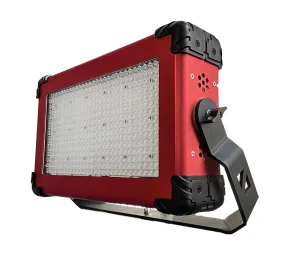
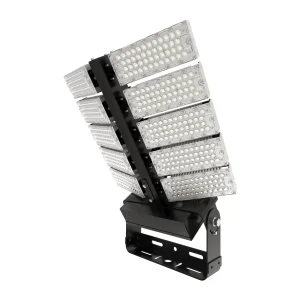
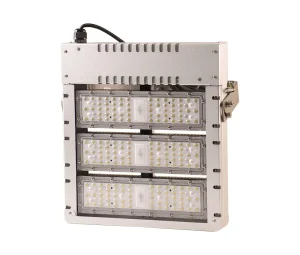
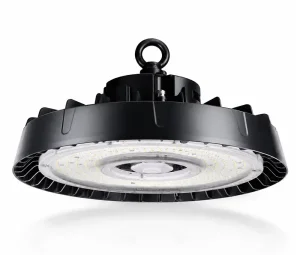
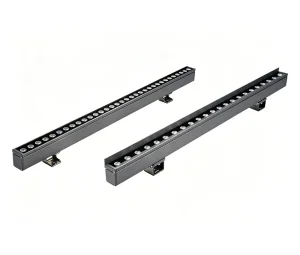
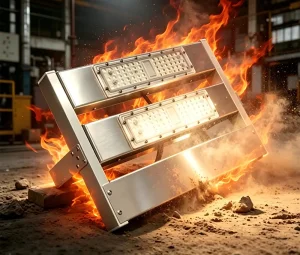
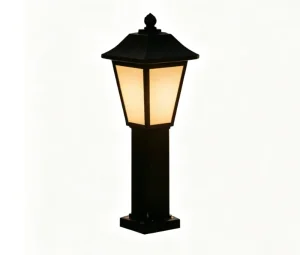
Complete your facility specifications with tailored high-temperature high bays, articulating floods, and IP68 submersible fixtures engineered to perform in extreme environments.
Initiate a Custom 300°C Thermal Engineering Consultation
Share your operational site conditions, ambient thermal profiles, installation heights, and target illuminance levels. Our experienced optical and mechanical engineers will deliver tailored fixture designs, complete photometric simulations, and direct factory pricing within 24 hours.