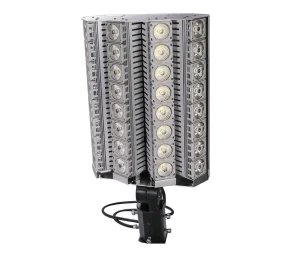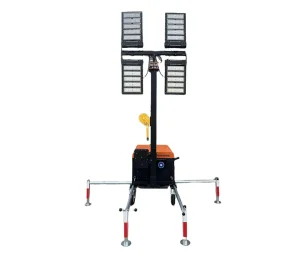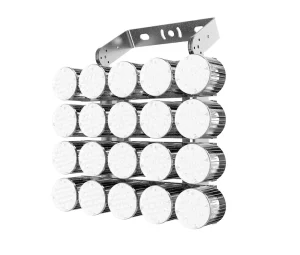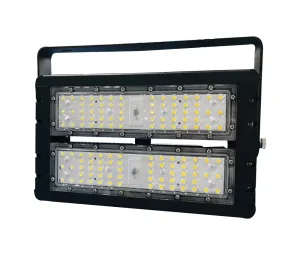
Featured Sports & Industrial Lighting Systems
Explore our high-performance LED luminaires engineered for harsh industrial zones, marine hubs, and professional sports stadiums.
Next-Generation Baseball Stadium Illumination Engineering
An in-depth guide to optical beam geometry, high-speed camera flicker control, thermal management, and OEM sourcing standards for modern sports venues.
Baseball stadium lighting represents one of the most complex challenges in sports architectural engineering. Unlike symmetric field sports such as soccer or track and field, baseball demands asymmetric light distributions to track a small, fast-moving object (a 2.9-inch diameter baseball travelling in excess of 95–100 mph) against both dark night skies and high-contrast stadium backgrounds. Achieving optimal visual clarity for players, umpires, spectators, and ultra-high-definition (4K/8K) HDTV broadcast crews requires custom optical design, high luminous efficacy, and zero-flicker power electronics.
As a leading OEM baseball stadium lights manufacturer and supplier, our engineering core focuses on solving key physical bottlenecks: glare mitigation (UGR < 19), 3D vertical illuminance uniformity, wind-load resistance on 30-to-45-meter high masts, and thermal degradation prevention in high-power LED modules (600W to 2000W+).
Critical Photometric Metrics in Modern Diamond Lighting
To meet IESNA (Illuminating Engineering Society of North America) RP-6-20 standards and MLB broadcast specifications, baseball field lighting systems must be segmented into distinct zones: the Infield, where intense action occurs within milliseconds, and the Outfield, which spans vast horizontal space requiring precise high-mast optical aiming.
- Horizontal & Vertical Lux Uniformity: Uniformity ratios ($U_1 = E_{min}/E_{max}$ and $U_2 = E_{min}/E_{avg}$) must exceed 0.7 to 0.8 in the infield. Vertical illuminance at heights up to 15 meters above the diamond ensures outfielders do not lose track of high fly balls against dark skies.
- TLCI & CRI Broadcast Requirements: For 4K/8K slow-motion cameras operating at 1,000 frames per second, color rendering index (CRI) must be Ra > 90, with a Television Lighting Consistency Index (TLCI) > 95. This prevents color shifting and strobe flickering during instant replays.
- Spill Light & Dark-Sky Compliance: Advanced visor shielding and laser-guided asymmetric optics eliminate light pollution into surrounding residential neighborhoods, directing 95%+ of generated lumens strictly within the field perimeter.
Strategic OEM/ODM Advantages of China Manufacturing
Unrivaled supply chain integration, state-of-the-art thermal engineering, and global compliance testing under one roof.
Full Supply Chain Integration
Situated in the heart of China’s high-tech manufacturing hub (Shenzhen/Guangdong), we source premium die-cast aluminum alloys (A360/A380), optical grade PC/PMMA lenses, and high-efficiency driver components directly from tier-1 suppliers, reducing lead times by up to 40%.
Custom Mechanical & Optical ODM
Our in-house optical R&D center provides custom beam angle engineering (from ultra-narrow 10° pencil beams for distant high-masts to 60°×120° wide asymmetric flood distributions). We provide bespoke enclosure branding, customized mounting brackets, and tailored voltage configurations (100–277V, 347–480V, DC solar).
Rigorous Quality Assurance & Testing
Every stadium luminaire undergoes 100% full-load burn-in testing, thermal imaging camera analysis, IP68 water immersion testing, salt-spray anti-corrosion validation (ASTM B117 standard), and optical goniophotometer measurement (LM-79 / LM-80 compliance).
Global Industry Trends in Sports Stadium Lighting
How smart controls, optical advancements, and multi-functional entertainment lighting are revolutionizing stadium infrastructure.
1. Intelligent DMX512 & DALI-2 Control Integration
Modern venues are moving beyond static lighting switches. OEM baseball stadium fixtures now integrate wireless DMX512 / DALI-2 protocols, enabling real-time dimming, zone-by-zone lighting scheduling, energy monitoring, and instant light shows synchronized with stadium audio systems during home runs and player introductions.
2. Hybrid Dynamic RGB & White Light Entertainment
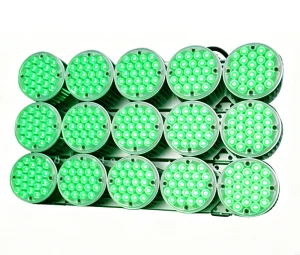
High-end stadium projects combine ultra-bright white LED modules (5700K high-CRI) with secondary RGB floodlighting channels within the same physical fixture housing. This allows venues to switch seamlessly from strict professional match play mode to festive concert and event light shows, drastically increasing stadium ROI.
3. Phase-Change Thermal & Ultra-Lightweight Housings
Legacy metal-halide fixtures and early generation heavy LED floodlights placed immense structural stress on lighting poles. Advanced OEM manufacturers utilize hollow-fin cold-forged aluminum or pure copper heat pipe modules, reducing fixture weight by 35% and wind drag surface area by 25% while handling up to 1500W–2400W output.
4. Carbon-Neutral Energy Retrofits
Replacing traditional 2000W Metal Halide fixtures with 800W–1000W high-efficacy LED luminaires delivers immediate 60%+ electrical energy savings. Paired with automated occupancy sensing and solar microgrid compatibility, stadium operators can achieve carbon-neutral facility certification within 3 to 5 years.
Localized Application Scenarios & Illuminance Standards
Specific field requirements vary dramatically across municipal parks, high school diamonds, collegiate facilities, and professional broadcast stadiums.
| Class / Facility Type | Target Application | Infield Lux (Avg) | Outfield Lux (Avg) | Uniformity ($U_1$) | CRI / TLCI | Recommended Pole Height |
|---|---|---|---|---|---|---|
| Class I | Professional (MLB / International / 4K Broadcast) | 1500 – 2500 Lux | 1000 – 1500 Lux | ≥ 0.80 | CRI > 90 / TLCI > 95 | 35m – 45m (6 to 8 Poles) |
| Class II | Collegiate, AAA Minor League & Regional Arenas | 750 – 1000 Lux | 500 – 750 Lux | ≥ 0.70 | CRI > 80 / TLCI > 85 | 25m – 35m (6 to 8 Poles) |
| Class III | High School & Large Municipal Sports Complexes | 500 – 750 Lux | 300 – 500 Lux | ≥ 0.60 | CRI > 80 / TLCI > 70 | 20m – 30m (4 to 6 Poles) |
| Class IV | Little League, Youth Training & Recreational Parks | 300 – 500 Lux | 200 – 300 Lux | ≥ 0.50 | CRI > 70 / TLCI > 60 | 15m – 22m (4 to 6 Poles) |
Engineering Design Notes for Field Layouts:
A standard baseball diamond features a unique asymmetric wedge layout. Pole placement must rigidly adhere to visual comfort zones to prevent battery glare (pitcher and catcher collision angles) and outfield fly-ball glare for fielders tracking deep hits.
- Poles 1A / 1B (Behind Home Plate): Must utilize precise asymmetric beam shielding to illuminate the catcher, batter, and umpire zone without blinding spectators in the grandstand directly behind home plate.
- Poles 2A / 2B (First & Third Base Lines): Positioned outside the foul lines to flood light into the infield dirt diamond and baseline running lanes while maintaining high vertical contrast.
- Poles 3A / 3B (Outfield Fences): Equipped with narrow to medium spot optical lenses (15° to 30°) mounted on high towers to reach deep center field and foul corners smoothly.
Macro Industry Solutions for Large-Scale Sports Infrastructure
End-to-end technical execution—from Dialux photometric simulation to structural wind-load verification and remote electrical driver racks.
1. Advanced Photometric Modeling
Before casting metal or assembling modules, our engineering team generates 3D Dialux / Relux photometric reports. We calculate lux level grids, camera vertical illuminance vector maps, and glare indices ($GR$), allowing project managers to preview field performance prior to procurement.
2. Centralized Remote Power Racks
Mounting heavy LED drivers high atop 35-meter poles creates severe maintenance liabilities. Our OEM solutions offer centralized, ground-level driver cabinets (up to 200 meters away from poles) with 20kV–40kV heavy-duty surge protection, simplify servicing, and protecting power electronics from severe pole vibration.
3. Extreme Hurricane & Coastal Protection
Coastal baseball complexes face severe salt-air corrosion and high wind loading. Our stadium light bodies utilize electro-phoretic powder coating over marine-grade die-cast aluminum, passing 2,000-hour salt fog testing. Structurally engineered to withstand Category 17 hurricane force winds (> 60 m/s).
Global Enterprise Procurement & Custom OEM/ODM Workflow
A streamlined, transparent partnership process tailored for electrical contractors, sports lighting distributors, and municipal procurement agents.
Requirement Analysis
Submit your stadium CAD drawings, pole location vectors, target illuminance class, and local environmental standards (e.g., coastal, extreme heat, voltage grid rating).
Dialux Photometrics & ODM Design
Our optical and mechanical engineers model custom beam distributions, calculate wind resistance profiles, select optimal drivers, and provide a full photometric proposal within 48 hours.
Sample Validation & Certs
Rapid prototyping allows sample fixtures to be tested for thermal behavior, lux output, and IP sealing. Complete certification dossier (CE, RoHS, CB, ETL, UL, IP68, IK10) provided for local authority approval.
Mass Production & Logistics
Automated SMT lines and rigorous inline QA ensure consistent quality across large-scale orders. We offer sea, air, and multimodal logistics support with customized protective ocean packaging.
Frequently Asked Questions (FAQ) for Baseball Stadium Procurement
In-depth answers from our senior optical engineering team addressing key technical, installation, and maintenance questions.
What are the key differences between general floodlights and specialized baseball stadium lights?
How many luminaires and poles are required for a standard baseball diamond?
Why is slow-motion camera flicker control critical for baseball sports venues?
How do OEM factory services customize optical beam distribution for specific fields?
What warranty and thermal lifespan can buyers expect from your OEM stadium fixtures?
Can your stadium luminaires resist coastal salt spray and typhoon winds?
What is the lead time for custom OEM orders and prototype testing?
Specialty Lighting Systems & Mobile Equipment
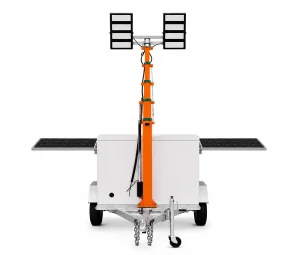
Explore our extended lineup of street, tower, RGB flood, and portable floodlight solutions manufactured for global industrial deployment.