
Featured Chemical & High-Temperature Luminaire Portfolio
Engineered for immediate integration across volatile processing units, acid-gas contactors, and high-heat synthesis plants. Factory-direct OEM customization across all voltage ranges, mounting geometries, and explosion-containment standards.
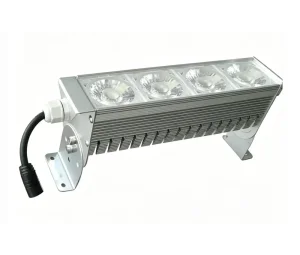
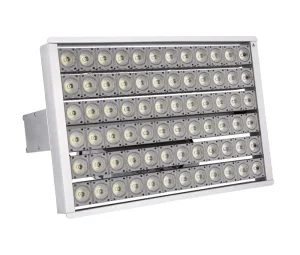
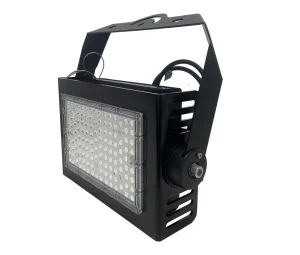
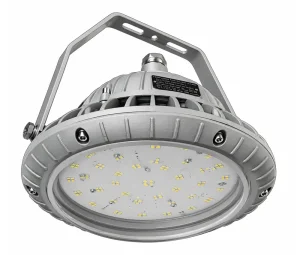
The Macro Landscape of Modern Chemical Plant Lighting
Chemical manufacturing complexes represent the most punitive operating envelope in industrial photometrics. Between continuous chemical off-gassing, extreme ambient thermal loading, and stringent functional safety regulations, luminaires are critical plant assets rather than passive hardware.
Aggressive Chemical Atmospheric Ingress
Standard industrial luminaires rapidly degrade when exposed to volatile organic compounds (VOCs), hydrogen sulfide (H2S), sulfuric acid mists, and concentrated ammonia vapors. Chemical plant fixtures require specialized non-porous fluorocarbon powder coatings, chemically inert borosilicate optical lenses, and silicone-free fluoroelastomer gasket seals that eliminate molecular permeation and internal reflector clouding.
Thermal Loading & Hazardous Ignition Classes
Petrochemical plants host complex temperature classes (T1 to T6). If a luminaire's surface temperature exceeds the auto-ignition threshold of ambient airborne gases (e.g., ethylene, butane, or hydrogen), catastrophic detonations can occur. Premium OEM manufacturing guarantees strict adherence to external T-class temperature envelopes through active thermal dissipation channels and isolated dual-compartment enclosures.
High Cost of Plant Downtime & Maintenance Relamping
Halting continuous chemical synthesis to replace a failed ballast or LED driver in an elevated fractionating column requires hot-work permits, scaffolding, and safety standbys that run into tens of thousands of dollars per hour. Plant engineers now demand an MTBF (Mean Time Between Failures) exceeding 100,000 continuous hours, forcing OEM suppliers to adopt premium isolated driver architectures and military-grade solid-state semiconductors.
How Our OEM Chemical Plant Lighting Factory Engineers Resilience
True explosion-proof and severe-environment luminaire manufacturing is rooted in metallurgical precision, thermal isolation science, and automated quality verification. Explore our end-to-end bespoke manufacturing processes.
Low-Copper Die-Cast Metallurgy
We utilize high-pressure die-cast A380/ADC12 aluminum housings with copper content controlled below 0.2%. This structural standard eliminates galvanic pitting corrosion in marine coastal refineries and acid plants, providing foundational structural integrity rated to IK10 mechanical impact.
Isolated Dual-Chamber Thermal Architecture
Driver electronics degrade under sustained thermal radiation. Our OEM housings physically decouple the LED emitter chamber from the power supply housing using an engineered thermal break. Conductive and convective airflow passages dissipate heat directly away from critical electrolytic components.
Molecular Anti-Acid Surface Treatments
Each casting undergoes a multi-stage chromate conversion process followed by electrostatically applied thermo-cured epoxy-polyester powder coating (exceeding 120 microns thickness). This shields fixtures against 1,000+ hours of continuous ASTM B117 salt spray and cyclic chemical vapor immersion.
Rigorous Hydrostatic & Overpressure Testing
Every explosion-proof production run undergoes flameproof joint gap verification and 100% pneumatic pressure testing to guarantee containment of any internal explosion, ensuring no gas ignition transfer to the surrounding hazardous chemical atmosphere.
Chemical Zone Specification & Engineering Matrix
Cross-referencing international hazardous classification systems (IECEx, ATEX Directive 2014/34/EU, NEC 500/505) with specialized luminaire engineering parameters.
| Hazardous Zone | Typical Chemical Facility Location | Gas / Dust Environment | Required Protection Concept | Lsledsus Factory OEM Solution |
|---|---|---|---|---|
| Zone 0 / Class I Div 1 | Inside chemical reactors, closed vessel storage, vapor vents | Continuous explosive gas atmosphere (>1000 hrs/yr) | Ex ia / Ex ma (Intrinsically Safe) | Ultra-low-voltage encapsulated LED units with galvanic barrier circuits |
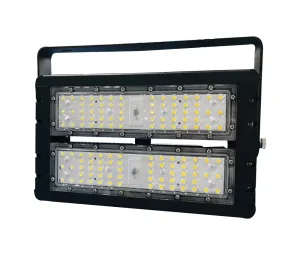
| Zone 1 / Class I Div 1 | Distillation columns, blending stations, pump rooms, loading racks | Intermittent volatile mixtures under standard operating conditions | Ex d / Ex eb mb (Flameproof Enclosure) | Cast copper-free aluminum explosion-proof high bays & floods with tempered borosilicate lenses |
| Zone 2 / Class I Div 2 | Pipe bridges, outdoor tank farms, secondary containment dykes | Explosive mixture unlikely to occur; if present, only for brief intervals | Ex ec / Ex nR (Non-Sparking / Restricted Breathing) | High-lumen industrial linear fixtures, IP66/IP68 sealed, high ambient rating (80°C–100°C) |
| Zone 21 / Class II Div 1 | Polymer resin processing, fertilizer granulators, pulverizer mills | Combustible, conductive, or non-conductive dust layers or clouds | Ex tb / Ex tc (Dust Ignition Protected) | Smooth-body UFO and linear luminaires engineered to prevent dust deposition, IP69K washable |
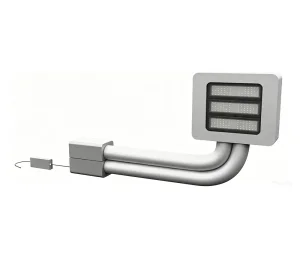
| High-Heat Zones | Cracker furnace bays, steam reforming units, boiler decks | Extreme ambient thermal radiation ranging 90°C to 300°C | Thermal Dissipation Ex | Active thermal management fixtures with remote-mounted driver pods and high-temp silicone wiring |
Mission-Critical Petrochemical Application Scenarios
Every chemical plant sub-process features unique environmental aggressors. Our OEM manufacturing team tailors optical distributions, mounting accessories, and control architectures to solve precise site challenges.
Ethylene & Propylene Cracking Units
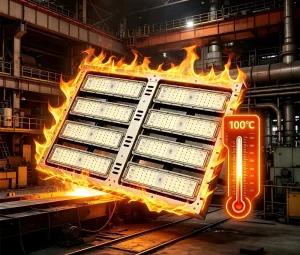
Cracking furnaces operate at intense thermal equilibrium, creating localized ambient ceilings above 90°C directly under structural mezzanines. Our high-temperature LED lights (rated 100°C to 300°C) with remote-located driver banks ensure uninterrupted 24/7 runtimes, eliminating premature lumen degradation and driver capacitor burnouts while maintaining crisp 5000K illumination for instrumentation readability.
Fertilizer & Phosphoric Acid Towers
Fertilizer synthesis produces continuous ammonium nitrate dust and acidic vapors that quickly dissolve conventional aluminum housings and plastic covers. We deploy IP69K tri-proof and high bay fixtures finished with specialized fluoropolymer coatings and 316L stainless steel hardware that survive routine high-pressure caustic spray washdowns without seal breakdown.
Offshore Petrochemical Terminals & Tank Farms
Bulk liquid storage and maritime loading docks demand wide-angle optical distributions to eradicate deep shadowing across catwalks, valves, and floating roof seals. Combining marine-grade C5-M anti-corrosion construction with high-power explosion-proof floodlights ensures long-range illumination that withstands severe ocean salt spray, heavy wind loading, and extreme humidity.
Technological Roadmap: The Future of Chemical Plant Illumination
Beyond simple illumination, industrial lighting is evolving into an integrated digital sensory grid within the Industrial Internet of Things (IIoT) framework.
Edge-Sensing Hazardous Thermal Throttling
Next-generation Lsledsus OEM drivers incorporate internal microcontrollers running active thermal throttling algorithms. When ambient air temperatures spike due to temporary plant process exotherms, luminaires dynamically modulate current draw to preserve junction temperature thresholds without abruptly extinguishing the fixture, preserving vital worker visibility while maintaining strict T-class temperature compliance.
Wireless Hazardous Mesh (WirelessHART / Zigbee Ex)
Eliminating thousands of meters of rigid explosion-proof conduit for control lines, our R&D team integrates intrinsically safe wireless mesh nodes directly inside the flameproof driver housing. Plant managers gain centralized DALI-2 dimming, emergency evacuation visual strobe sequencing, and automated energy profiling directly from the central SCADA DCS platform.
Colorimetric Spectral Tuning for Chemical Detection
Specialized solid-state emitter spectra optimized with high color fidelity (CRI > 90, R9 > 50) allow field operators to immediately detect subtle discoloration in petrochemical process sight glasses, pipeline flange leaks, or chemical reagent titrations, drastically improving physical maintenance response and operator safety.
Frequently Asked Questions by Industrial Lighting Specifiers
Detailed technical answers to help electrical engineers, EPC contractors, and chemical plant safety managers navigate complex procurement criteria.
How do Lsledsus high-temperature fixtures survive 100°C to 300°C ambient ratings?
We achieve extreme thermal tolerance through a combination of proprietary physical decoupling, ceramic-packaged high-temperature LED chips, pure copper thermal heat pipes, and our isolated remote driver architecture. For operational zones exceeding 150°C and up to 300°C, the electronic driver is positioned in an ambient-safe control box up to 50 meters away, while the optical luminaire head uses entirely passive, high-conduction metallic heatsinks and silicone-free fluoroelastomer seals.
What is the difference between ATEX Ex d and Ex eb mb protection concepts?
Ex d (Flameproof) relies on heavy, robust housings engineered to contain any internal explosion without allowing the flame front to escape through machined flame paths. Ex eb mb (Increased Safety and Encapsulation) prevents any ignition source from forming through tighter electrical tolerances, enhanced creepage distances, and by hermetically embedding the LED matrix in chemically inert resin. Both provide robust Zone 1 safety; our OEM factory offers both configurations based on project weight constraints and optical preferences.
Can you provide custom beam angles and DIALux photometric calculations?
Yes. Every chemical plant lighting project begins with rigorous photometric planning. Our engineering office creates tailored 3D DIALux / Relux simulation layouts based on your facility drawings, matching target lux levels, uniformity ratios, and glare limitations (UGR < 19). We offer precision optics ranging from 15° narrow spots for tall fractionator towers to 120° wide batwing floods for broad open process bays.
How does your factory protect against sulfur, chlorine, and amine embrittlement?
Standard silicone gaskets and polycarbonate lenses embrittle, discolor, and fail in chemical plant atmospheres. We replace all exposed synthetic components with high-grade, heavy-duty borosilicate tempered glass lenses and specialized FKM / Viton fluoroelastomer seals. Housing coatings are applied using a thermoset fluoropolymer epoxy process that creates an impenetrable barrier against sulfur dioxide, chlorine gas, and amine solvent vapors.
What OEM customization options are available for existing retrofits?
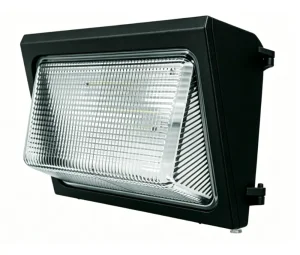
We offer extensive drop-in retrofit brackets compatible with major legacy high-pressure sodium (HPS) and metal halide (MH) mounting systems (stanchion, ceiling, pendant, wall, and 25-degree angled stanchion). Additionally, we can customize input voltages (100–277VAC, 347–480VAC, 12V/24V/48V DC), emergency battery backup modules, cable entry threading (NPT, Metric M20/M25), and terminal block arrangements.
How does Lsledsus ensure batch-to-batch quality across massive production volumes?
Operating as an established manufacturer with over 20 years of experience, we employ strict ISO 9001 certified manufacturing protocols. Every fixture undergoes high-voltage dielectric isolation testing, helium leak detection for IP68/IP69K sealing verification, integrating sphere spectroradiometric batch testing, and minimum 24-hour continuous elevated-temperature burn-in prior to final packaging and export dispatch.
Specialized Industrial, Marine & Extreme Environment Solutions
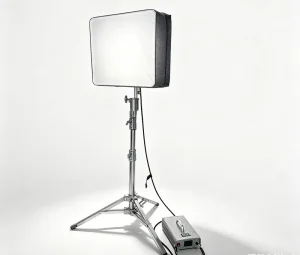
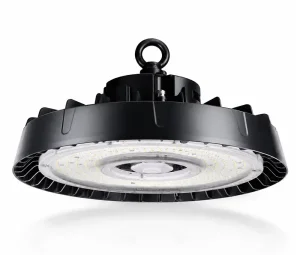
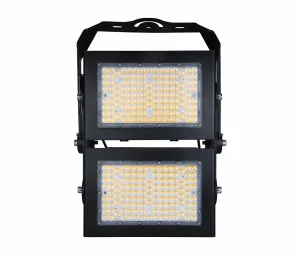
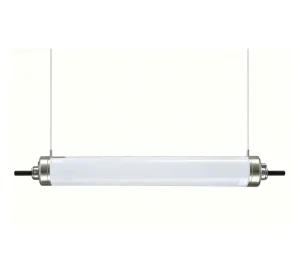
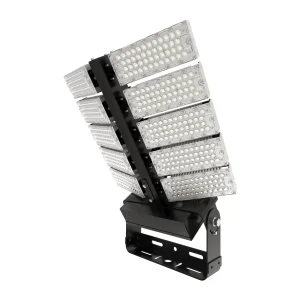
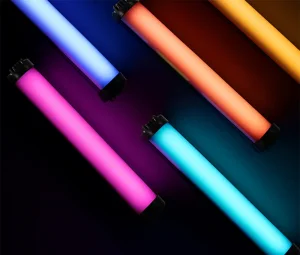
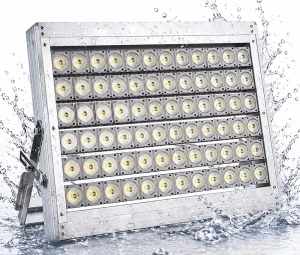
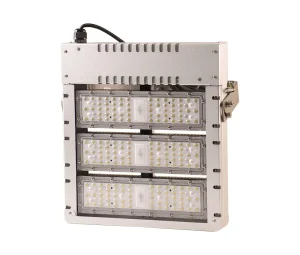
Engineered alongside our core chemical luminaires to deliver high-lumen, anti-corrosive, and mobile lighting capabilities across surrounding infrastructure, ship docks, stadium arenas, and remote plant sites.
Turnkey OEM & ODM Collaboration for Global EPC Contracts
We act as an integrated engineering partner for international engineering, procurement, and construction (EPC) conglomerates, delivering audited manufacturing excellence from Shenzhen to worldwide chemical clusters.
Custom Mechanical & Optical Tooling
Whether your project requires custom pole brackets, vibration-damping spring mounts for heavy compressor halls, or narrow-beam TIR collimator lenses for elevated chemical reactor inspection, our in-house tooling division rapidly develops and validates functional prototypes to accelerate project timelines.
Full Documentation & Traceability Dossiers
We provide complete engineering documentation packages for Tier-1 petrochemical qualification: full material mill test certificates (MTR), explosion-proof conformity certificates, IP68/IP69K testing laboratory reports, salt-spray chamber validation data, and comprehensive luminaire warranty schedules.
Photometric Planning & Total Cost Optimization
By balancing high luminous efficacy (up to 160 lm/W) with targeted optical distributions, our layout engineers minimize total luminaire fixture counts across complex facilities, reducing installation labor costs, cabling runs, explosion-proof junction boxes, and lifetime plant energy consumption.