
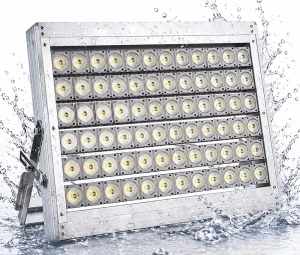
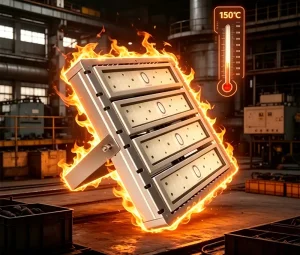
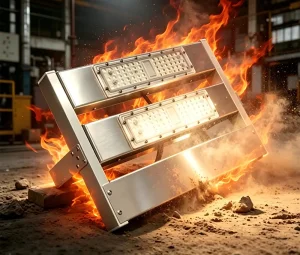
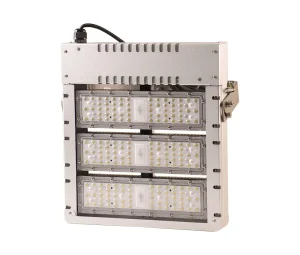
Featured Industrial & Specialized OEM Lighting Solutions
Engineered for extreme performance, high ambient heat resilience, and severe weather operation across heavy industrial, maritime, and construction sites worldwide.
Global Procurement Analysis of Construction Light Towers
As global megaprojects, round-the-clock mining operations, and urgent disaster recovery efforts expand, mobile construction light towers have transitioned from simple job site auxiliaries to critical mission-essential assets.
The global construction lighting market is undergoing a structural technological shift. Driven by worldwide decarbonization mandates, strict municipal noise pollution limits, and soaring diesel costs, equipment rental companies and Tier-1 engineering contractors are aggressively phasing out heritage Metal Halide (MH) towers in favor of customized high-efficiency LED Construction Light Towers and Solar-Diesel Hybrid Systems.
From an OEM manufacturing perspective, meeting global procurement needs requires solving multifaceted challenges: delivering ultra-uniform photometrics across vast acreage, engineered resistance against extreme ambient temperatures, structural rigidity under hurricane-force winds, and smart telemetry for automated remote operation.
Core Insight for Procurement Directors: Modern light tower OEM evaluation must look beyond initial unit purchase cost (CAPEX). Superior engineering selection evaluates Total Cost of Ownership (TCO), fuel burn efficiency (Liters/Hour), optical lumen maintenance (L80B10 curves), modular maintenance accessibility, and cross-border environmental compliance certifications (EU Stage V, US EPA Tier 4 Final, CE, UL).
Intent Mining: Key B2B OEM Buying Criteria
Analyzing search intent and contract tender documentation from top international rental fleets and EPC contractors reveals five core engineering mandates.
Power Efficiency & Zero-Emission Hybridization
Contractors require ultra-low fuel consumption diesel generators coupled with high-density LiFePO4 battery storage and retractable monocrystalline solar panels to achieve 18+ hours of silent, zero-emission night runtime.
Customizable Photometric Optics
Standard open floodlights cause high glare and dangerous blinding shadows for heavy excavator operators. Preferred OEM manufacturers provide asymmetrical optical lenses, multi-angle flood adjustment, and glare-free balloon diffusers.
Mast Ergonomics & Safety Systems
Safety regulations demand hydraulic vertical telescoping masts with automatic safety lock pins, emergency manual descent valves, individual wheel braking, and certified stability up to 110 km/h wind loads.
Heavy-Duty Environmental Protection
Mobile light towers face harsh conditions: salt-spray maritime winds, heavy desert dust storms, and extreme vibration. Heavy galvanization, powder coating (C5-M corrosion rating), and IP67 sealed lamp enclosures are essential.
Smart Telematics & Remote IoT Management
Fleet operators prioritize light towers integrated with GPS tracking, remote engine telemetry, fuel gauge monitoring, automatic dusk-to-dawn sensors, and CAN-bus fault diagnosis to streamline equipment maintenance.
Engineering Architecture of Advanced OEM Light Towers
Examining the core hardware, thermal control, electrical topology, and mechanical systems engineered by leading original equipment manufacturers.
1. High-Efficiency LED Optics & Thermal Management
Modern OEM light tower heads deploy high-lumen optical chips (such as Lumileds or Cree) coupled with custom PMMA or tempered glass lenses. Achieving high luminous efficacy (>160 lm/W) drastically reduces total wattage requirement (e.g., replacement of a 4x1000W Metal Halide array with 4x250W high-efficiency LED modules).
Thermal mitigation is achieved via die-cast aluminum heat sinks featuring cold-forge fin architecture. Liquid cooling or heat-pipe convection loops maintain junction temperatures ($T_j$) below 75°C even when operating continuously in +55°C ambient desert environments.
2. Hybrid Power Architecture & Solar Integration
To eliminate generator idling and maximize fuel economy, OEM light tower engineering incorporates multi-source power distribution controllers:
- Pure Electric (Plug-in): Direct grid connectivity via 110V/230V shore power inlets.
- Solar-Diesel Hybrid: High-efficiency monocrystalline PV panels automatically charge a deep-cycle battery bank during daylight hours.
- Smart Auto-Start Generator: The ultra-quiet diesel engine automatically turns on only when the battery state of charge (SOC) drops below 20%.
3. Structural Mast Engineering & Wind Dynamics
The telescoping mast must withstand extreme shear stress. OEM manufacturing standards utilize high-tensile Q345 steel or lightweight aviation-grade aluminum alloys with hot-dip galvanization.
Mast extension mechanisms employ either dual-piston hydraulic rams with integrated locking check valves or dual-drum electric winches equipped with auto-braking steel cables, ensuring 360-degree rotational flexibility and 9-meter maximum height deployment within 25 seconds.
4. IoT Smart Fleet Controllers & CAN Bus Integration
Next-generation OEM light towers feature integrated microcontrollers supporting RS485 and CAN-bus protocols. Integrated 4G telematics modules relay key telemetry parameters—battery SOC, engine rpm, oil pressure, fuel level, and ambient light levels—directly to cloud dashboard systems.
Integrated geo-fencing and automated dusk-to-dawn photocell triggers ensure zero human intervention, drastically lowering job site operational expenditures.
Technical Performance Comparison Matrix
Comparative quantitative analysis illustrating the technical evolution from legacy light towers to modern custom OEM hybrid LED towers.
| Specification Metric | Legacy Metal Halide Tower | Standard Tier-1 LED Tower | Advanced OEM Hybrid LED Tower |
|---|---|---|---|
| Total Power Consumption | 4,400 Watts (4 x 1100W) | 1,200 Watts (4 x 300W) | 600 - 1,000 Watts (4 x 150-250W) |
| System Efficacy (lm/W) | 75 - 85 lm/W | 130 - 140 lm/W | 160 - 180 lm/W |
| Fuel Consumption (L/hr) | 1.8 - 2.2 Liters / Hour | 0.7 - 0.9 Liters / Hour | 0.2 - 0.4 Liters / Hour (Solar-Hybrid) |
| Continuous Operation per Tank | 50 Hours | 120 Hours | 300+ Hours (or 100% Autonomy in Solar mode) |
| Maintenance Interval | Every 250 Engine Hours | Every 500 Engine Hours | Every 1,000 - 1,500 Engine Hours |
| Noise Emission Level @ 7m | 72 to 78 dB(A) | 65 to 68 dB(A) | 0 dB(A) Battery Mode / 58 dB(A) Engine |
| CO2 Emissions Offset | Baseline (Highest) | 55% Reduction | Up to 85% - 90% Reduction |
| Mast Deployment Type | Manual Cable Winch | Electric Winch | Hydraulic Safety Auto-Locking Mast |
Global Regulatory Compliance & Regional Customization
OEM manufacturing demands tailored compliance configurations matching specific international market certifications and site safety standards.
North American Market (DOT / OSHA / EPA)
Requires US EPA Tier 4 Final compliant Kubota or Perkins diesel engines, DOT-approved high-speed road trailers with dual safety chains, electric braking axles, and OSHA-compliant emergency stop switches and electrical grounding points.
European Union (CE / Stage V / Noise Directives)
Mandates EU Stage V ultra-low emission engine standards, CE electrical safety compliance, EC noise directive certification (< 65 dB at 7 meters), spill-containment bunded chassis (110% fluid containment), and bio-degradable hydraulic fluids.
Middle East & Mining Operations
Demands tropicalized radiator cooling packages rated for 55°C continuous ambient operation, dual-stage heavy-duty desert air filtration, sand-blast resistant powder coatings, and anti-vibration rubber isolators for corrugated quarry tracks.
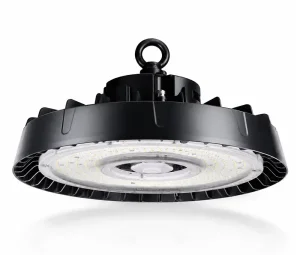
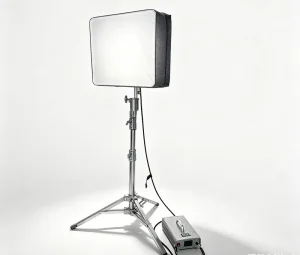
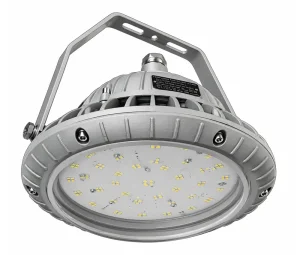
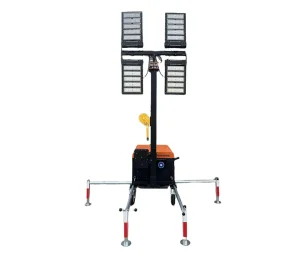
Explore Complete Commercial & Industrial Lighting Portfolio
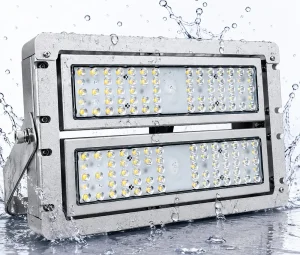
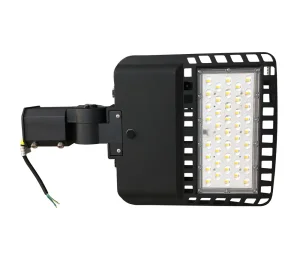
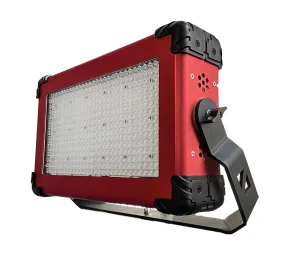
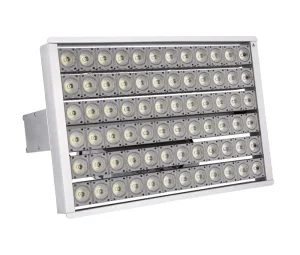
Factory-direct OEM manufacturing for specialized high-bay, underwater, marine, street, and mobile tower applications.
Frequently Asked Questions for OEM Light Tower Buyers
Detailed insights covering engineering customization, global logistics, warranty support, and operational metrics.
What customization options are available for OEM / ODM Construction Light Towers?
- Power Systems: Diesel engine integration (Kubota, Perkins, Yanmar, Kohler), pure solar monocrystalline setups, solar-diesel hybrid packs, or LiFePO4 battery modules.
- Mast Configurations: Galvanized vertical hydraulic masts, manual friction winches, or electric screw drive masts ranging from 4 meters to 9 meters in height.
- Lighting Head Engineering: Wattages from 4x100W up to 4x500W, beam distribution optics (15°, 30°, 60°, 90°, or asymmetrical 120° x 60°), glare-free anti-blinding diffusers, and color temperatures (3000K to 6500K).
- Branding & Trailer Enclosure: Custom powder coating colors (RAL matching), laser-cut company logos, specialized towing hitches (ball hitch, ring hitch, or pintle), and DOT/EU road homologation kits.
How does a Solar-Hybrid Light Tower calculate Return on Investment (ROI)?
In contrast, an advanced OEM Hybrid Light Tower runs predominantly off its battery bank charged by solar panels, triggering the engine only 1.5 to 2 hours per night for top-up charging (consuming ~1.5 Liters total per night). This yields a daily savings of $22.20 ($8,103 per tower per year), fully recovering the hybrid hardware price premium in less than 10 to 14 months of active job site deployment.
What wind load safety ratings and certification standards do your masts carry?
What are the recommended service maintenance intervals for OEM equipment?
- LED Luminaire & Optical Arrays: Virtually maintenance-free with a rated lifespan of >50,000 hours (L70 standard). Clean protective lenses periodically in high-dust environments.
- Diesel Engines: Standard oil, fuel filter, and air filter changes are required every 250 to 500 operating hours. Hybrid models extend engine service intervals up to 1,000+ hours because the diesel engine operates for far fewer total hours.
- Lithium Battery Banks (LiFePO4): Maintenance-free operation for 3,000 to 5,000 deep discharge cycles (up to 8-10 years of operational life).