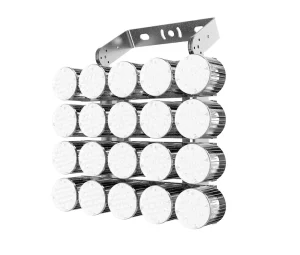
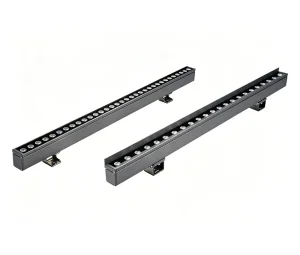
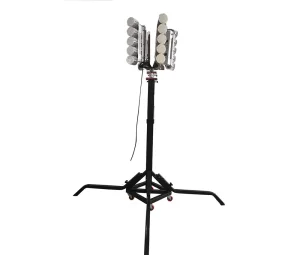
Industrial Lighting Portfolio — Core OEM Series
Featured high-temperature, marine-grade, and severe-environment luminaires manufactured directly for global B2B procurement and original equipment integration.
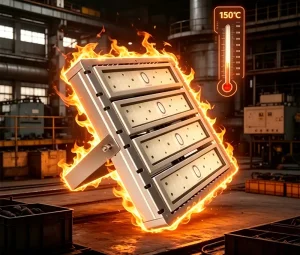
1. High-Heat Industrial Lighting: Industry Evolution & Market Trends
Analyzing thermal dissipation paradigms, energy-efficiency shifts, and solid-state luminaire integration within modern high-temperature process manufacturing.
In modern industrial thermal processing—ranging from commercial baking, steel hot-rolling, glass annealing, to continuous curing ovens—illumination systems operate at the extreme periphery of materials science. Historically, commercial ovens and industrial high-temperature zones relied on incandescent or halogen light sources. While naturally resistant to heat due to their filament-based nature, incandescent lamps present critical operational disadvantages: extremely low luminous efficacy (<15 lm/W), short operational lifespans (<2,000 hours), fragile envelope integrity, and exorbitant energy waste.
The global industrial transition toward Solid-State Lighting (SSL) has introduced specialized High-Heat LED technology engineered to withstand ambient operating temperatures ($T_a$) spanning from 80°C (176°F) to upwards of 300°C (572°F). However, adapting LEDs to high-heat environments represents a formidable thermal management challenge. Because semiconductor junctions deteriorate rapidly when junction temperatures ($T_j$) exceed critical thresholds (typically 125°C to 150°C), specialized OEM manufacturers must deploy advanced thermomechanical engineering, ceramic encapsulation, remote-driver topologies, and borosilicate optical pathways.
Industry Macro Trends Shaping OEM High-Temp Lighting Demand
Electrification & Automation
Automated manufacturing lines require continuous computer vision inspection through oven windows. High-CRI (>90), flicker-free LED lights are mandatory for high-speed camera acquisition inside drying and baking tunnels.
Strict Environmental Hygiene
Food processing facilities require NSF/ANSI 2 compliance, glass-free shatterproof borosilicate optics, non-toxic fluoroelastomer gaskets, and IP69K high-pressure washdown capability without thermal-shock seal degradation.
Total Cost of Ownership (TCO)
Facility operators are aggressively phasing out short-lived halogen lamps. Upgrading to high-heat OEM LED solutions yields up to 85% energy savings and eliminates costly production downtime associated with bulb replacements.
2. Global OEM Sourcing & Procurement Intent Mining
Deconstructing the exact engineering specifications, regulatory criteria, and decision-making matrices utilized by B2B buyers and OEM engineers.
When industrial project managers, plant engineers, and OEM equipment manufacturers search for "OEM High Heat Oven Lighting Factory & Supplier", their intent reaches beyond buying off-the-shelf fixtures. They require customized engineering support, reliable thermal validation datasheets, and scalable manufacturing partner credentials. Sourcing decision-makers evaluate prospective factories across four key procurement vectors:
A. Mechanical & Form-Factor Customization
Commercial ovens, kilns, and environmental test chambers feature unique wall thicknesses, insulation layers, and mounting cutouts. OEM suppliers must offer bespoke flange designs, custom thread pitch (NPT/Metric), adjustable recessed brackets, and tailored wire harness lengths using high-temperature PTFE or silicone-insulated leads.
B. Thermal Management Topologies
Buyers need clear options regarding thermal architecture: Integrated Active Heatsinks (for moderate ambient temperatures up to 90°C), Passive Phase-Change Heat Pipes, or Conductive Remote-Driver Configurations where sensitive driver electronics reside in ambient zones outside the heated chamber.
C. Optical Clarity & Spectral Consistency
Whether for industrial paint curing or commercial bread baking, visual spectrum monitoring is vital. Specifiers search for high-CRI LED engines (Ra > 90, R9 > 50), tight MacAdam ellipse binning (SDCM < 3), and anti-fogging tempered glass lenses that resist grease accumulation and thermal discoloration.
D. Global Supply Chain & Compliance Guarantees
B2B buyers demand factory certifications including ISO9001, IATF16949 (for automotive curing applications), CE, UL 1598, UL 8750, and ATEX/IECEx compliance for explosive dust or gas environments often present in industrial coating processes.
3. Technical Architecture & Engineering Solutions
A deep dive into advanced materials science, ceramic packaging, liquid-cooling jackets, and remote electronic driver topologies.
To achieve reliable illumination at temperatures where conventional electronics melt, modern high-heat oven fixtures employ rigorous multi-barrier thermal architectures. Below is the structural breakdown of our proprietary high-temperature industrial luminaire design:
| Subsystem | Standard LED Fixture | Lsledsus High-Heat OEM Grade | Engineering Benefit |
|---|---|---|---|
| LED Chip Package | Plastic PPA / EMC Mid-Power | Flip-Chip Ceramic Substrate / COB on AlN | Prevents substrate yellowing; eliminates silver plating degradation at >150°C. |
| Thermal Interface (TIM) | Standard Thermal Grease (1.5 W/mK) | Sintered Nano-Silver / Phase-Change Metal (30+ W/mK) | Drastically lowers thermal resistance between chip and aluminum core plate. |
| Optical Lens | PC (Polycarbonate) or PMMA | Borosilicate Glass 3.3 / Fused Quartz Lens | Zero thermal deformation up to 500°C; 92% light transmittance without yellowing. |
| Sealing Gaskets | Standard EPDM or NBR Rubber | Fluorocarbon (FKM) / High-Temp Fluorosilicone | Maintains elasticity and gas-tight sealing integrity under continuous thermal cycling. |
| Driver Electronics | Internal On-Board Driver | Thermally Decoupled Remote IP67 Driver Enclosure | Removes sensitive electrolytic capacitors from heat zone, boosting MTBF by 400%. |
Thermal Management Mechanics: Conductive & Radiative Heat Sinking
The primary breakdown vector for LEDs in high-heat zones is heat accumulation at the P-N junction. When heat cannot escape, electron-hole recombination efficiency drops (thermal quenching), and atom diffusion destroys the chip structure. Lsledsus high-heat fixtures utilize a dual-chamber thermal decoupling technique:
1. Primary Heat Absorption Zone
The LED array is directly bonded to an Aluminum Nitride (AlN) ceramic PCB featuring a thermal conductivity of 170-200 W/m·K. Heat is rapidly drawn away from the micro-junctions into extruded 6063-T6 anodized aluminum heatsink fins positioned in cool air channels outside the main oven chamber insulation.
2. Radiation Shielding & Convection Barriers
For inline conveyor ovens operating at 200°C–300°C, the fixture body uses multi-layered vacuum insulation panels (VIP) paired with stainless steel (316L) reflective radiation shields. These deflect radiative IR energy while internal copper heat pipes transfer internal heat out to external convection zones.
4. Global Localization, Compliance & Quality Assurance
Navigating global regulatory standards, explosion-proof directives, food safety protocols, and rigorous OEM testing routines.
Deploying electrical equipment into severe thermal environments demands strict compliance with international safety codes. Equipment failures in commercial food ovens or chemical drying chambers can result in catastrophic downtime or safety incidents. As an established OEM factory, Lsledsus maintains a complete quality assurance framework:
UL 1598 & UL 8750 Compliance
Full design compliance for North American markets, ensuring electrical isolation, temperature-rated wiring insulation, flame resistance, and dielectric voltage withstand testing under elevated ambient conditions.
Hazardous Location (ATEX / IECEx)
For industrial powder-coating ovens, paint spray booths, and grain drying processes where flammable vapors or combustible dusts are present alongside high heat. Certified T-Class ratings (T4/T3) guarantee low exterior surface temperatures.
NSF/ANSI Standard 2 Food Zone
Smooth, non-porous stainless housing designs without exposed screws or crevices where bacteria can harbor. Lenses feature shatterproof safety retention systems to prevent glass contamination in commercial bakery production lines.
5. Next-Gen Technology Roadmap & Future Outlook (2025–2030)
Pioneering advancements in GaN-on-SiC substrates, embedded AI thermal monitoring, and self-healing optical coatings.
As industrial processing plants migrate toward Industry 4.0 smart manufacturing, oven lighting systems are evolving from static illumination fixtures into intelligent optical sensing hubs. Lsledsus R&D team is actively driving innovation across three key technological horizons:
1. Gallium Nitride on Silicon Carbide (GaN-on-SiC)
Next-generation LED emitters leveraging GaN-on-SiC wide-bandgap substrates exhibit vastly superior thermal conductivity and lower internal heat generation, allowing stable continuous operation at junction temperatures exceeding 200°C.
2. Integrated Smart Sensor Nodes
Embedding micro-thermocouples and digital ambient temperature sensors directly into the LED array board. Data is transmitted via MODBUS or wireless mesh backchannel to the facility’s SCADA system for predictive failure maintenance.
3. Hydrophobic Nano-Ceramic Coatings
Advanced oleophobic and hydrophobic optical glass coatings prevent baking fats, evaporated sugar oils, and chemical fumes from baked-on pyrolytic staining, maintaining high light output with minimal manual cleaning cycles.
6. Comprehensive Technical FAQ & Sourcing Guide
Detailed engineering answers to the most frequent technical inquiries submitted by industrial OEM buyers and plant engineers.
Extended Specialized Industrial Lighting Solutions
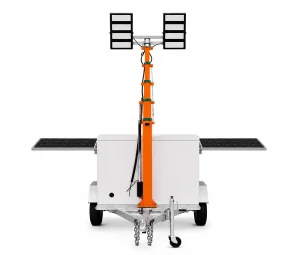
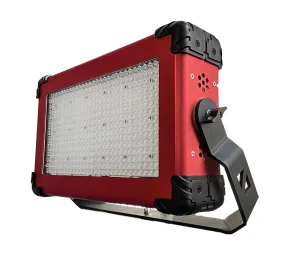
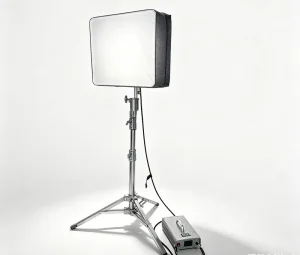
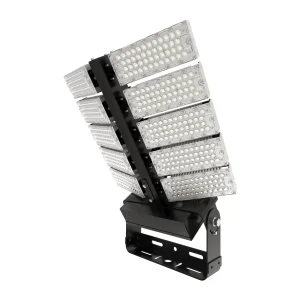
Explore our wider range of high-power floodlights, mobile solar towers, marine underwater fixtures, and film production lighting.