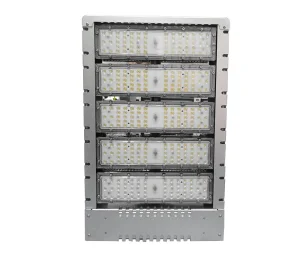
High-Temperature & Harsh Environment Luminaires: Top Series
Explore our core engineered lighting solutions designed for high-stress ambient operating conditions, mobile high-output towers, and hazardous industrial applications.
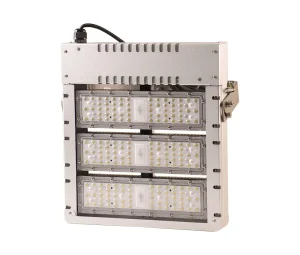
OEM High Temperature LED Flood and High Bay Light Rated 80°C
Explore Technical Specs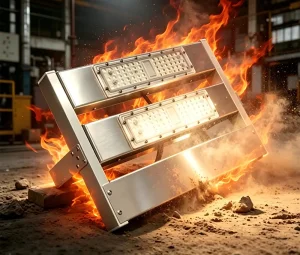
Best Tailored High Temperature LED Light with Highly Dustproof Configuration
Explore Technical Specs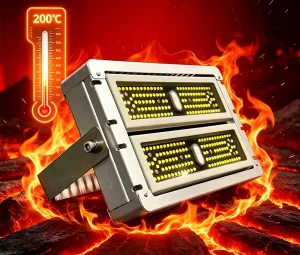
Ultra High Temperature LED Light - Rated 200°C (392°F) with IP68
Explore Technical Specs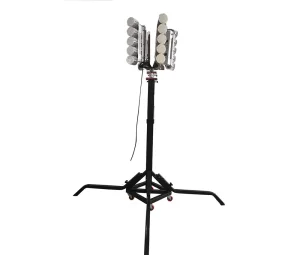
OEM Economic 4m Mobile Light Tower Factory, Manufacturer
Explore Technical Specs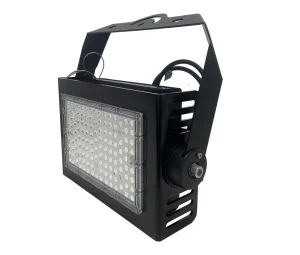
OEM 48V DC LED Flood Light for Mobile Light Towers & Off-Grid Systems
Explore Technical Specs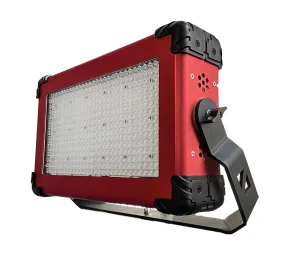
Revolutionary Underwater LED Film Light - 30-Meter Depth, Zero Housing
Explore Technical Specs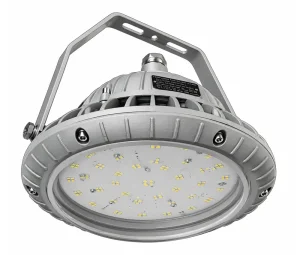
Best Explosion Proof LED Light – Safe, Durable Industrial Illumination
Explore Technical Specs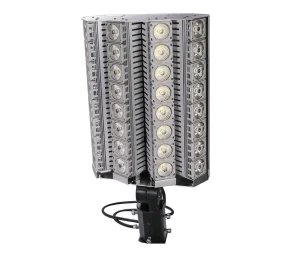
Best LS-STN Series Asymmetric LED Street Light for Roadway Applications
Explore Technical SpecsEngineering High Bay Illumination for Extreme Ambient Temperatures
Why commercial grade off-the-shelf LED high bays suffer catastrophic failures within months under high-temperature ceilings, and the exact thermodynamic innovations that mitigate them.
The Arrhenius Law on Capacitor Electrolytes
In high-bay installations located near industrial heat sources, ambient air stratifies heavily towards ceiling peaks. Standard LED drivers employ liquid electrolytic capacitors rated merely for 85°C or 105°C operating limits. Under the Arrhenius chemical reaction rate model, for every 10°C increase in internal operating temperature, the evaporation rate of the liquid electrolyte doubles, halving component MTBF. Our OEM high-temperature solutions deploy military-grade solid-state conductive polymer capacitors or remotely decoupled driver enclosures situated safely out of the thermal convection plume.
Phosphor Thermal Quenching & Color Shift
Standard white LEDs rely on Cerium-doped Yttrium Aluminum Garnet (Ce:YAG) phosphors converted over blue Indium Gallium Nitride (InGaN) dies. When the p-n junction temperature (Tj) exceeds 120°C due to inadequate thermal paths in hot ambient workshops, phosphor efficiency degrades exponentially through non-radiative recombination known as thermal quenching. This triggers catastrophic chromaticity drift towards purple/blue and severe lumen loss. Our foundry-grade high bays utilize custom metal-core printed circuit boards (MCPCB) with thermal conductivities reaching 4.0 W/m·K to hold junction temperatures well below critical boundaries.
Phase-Change Vapor Chambers & Aerodynamic Fins
Traditional fin designs trap ascending particulate dust and hot gases, forming an insulating blanket that accelerates thermal runaway. We utilize aerodynamic aerospace-grade 6063-T5 cold-forged aluminum with integrated pure-copper sintered heat pipes and vacuum vapor chambers. The vertical convection chimney geometry accelerates airflow velocity by utilizing the facility's own thermal draft, actively ejecting settling combustible dust while continuously transferring heat outward from the solid-state light emitters.
The Global Industrial Reality: Operating Above 65°C
Across worldwide primary manufacturing hubs, plant managers face stringent decarbonization mandates while operating heavy equipment that pushes roof truss temperatures past the tolerance of generic lighting.
Primary Steel & Blast Furnace Casting Halls
In continuous casting lines, blast furnace tapholes, and hot strip mills in North America, Western Europe, and Asia, ambient temperatures frequently hover around 65°C to 80°C near the ground, but easily spike beyond 100°C directly under roof bays. Traditional high-pressure sodium (HPS) and metal halide fixtures consume vast power loads while requiring maintenance crews to halt cranes and production lines for hazardous relamping cycles. Upgrading to heavy-duty high-ambient LED fixtures yields direct energy savings exceeding 65% alongside 7-year zero-maintenance spans.
Glass Melting, Float Tanks & Annealing Lehrs
Container and flat glass manufacturing demands continuous 24/7/365 production where radiant heat from molten glass baths at 1,500°C creates persistent upward thermal radiation. High-bay lights mounted directly over the annealing lehrs and forming stations face continuous convective heat combined with micro-fine airborne raw materials (silica sand, soda ash, dolomite). Luminaires require both high-temperature survival ratings and specialized chemical-resistant borosilicate glass lenses that never yellow or degrade under harsh thermal cycling.
Heavy Forging, Heat-Treatment & Foundries
Automotive forging facilities, aerospace heat-treating ovens, and cast-iron foundries combine extreme heat with severe mechanical shock and heavy airborne lubrication oil mists. When incandescent or standard LED high bays fail, poor illumination immediately increases worker safety hazards and causes inspection errors on hot metal components. Our specialized high-temperature fixtures integrate reinforced mounting brackets tested up to 20G vibration tolerances and fluorocarbon gaskets that resist volatile hydrocarbons.
China Factory Efficiency & The Shenzhen Thermal Engineering Advantage
Harnessing two decades of specialized lighting manufacturing expertise to deliver rapid customization, aerospace material sourcing, and unmatched cost-to-performance ratios for global OEMs.
Precision Die-Casting & Sintered Heat Pipes
Located in the heart of the Greater Bay Area manufacturing cluster, our factory maintains direct vertical integration with premier aluminum smelting, cold extrusion, and heat pipe sintering plants. By sourcing high-purity A380/6063 aluminum alloys directly and utilizing high-tonnage robotic die-casting machines (up to 2,500 tons), we produce ultra-thin heat sink fin profiles with exceptional grain density, offering thermal conductivity 40% higher than recycled, porous aluminum castings frequently used in low-cost imports.
In-House Environmental Burn-In Chambers
Every newly engineered OEM high-temperature luminaire undergoes rigorous validation inside our proprietary high-temperature environmental test chambers. Fixtures are continuously operated at ambient temperatures up to 100°C for 2,000+ hours with automated optical spectral analyzers monitoring chromaticity coordinate drift (duv), luminous flux maintenance, and driver thermal mapping. This rigorous methodology ensures that our L80B10 projections represent empirical performance rather than unverified theoretical calculations.
Flexible OEM/ODM Customization Architecture
Global industrial engineering procurement demands tailored solutions: non-standard mounting brackets to mate with existing 50-year-old crane beams, customized input voltages (from 100–277V up to 347–480V or 48V DC), and specific optical distributions (from 30° narrow spotlights to 120° wide flood spreads). Our dedicated R&D engineering team prepares full DIALux lighting simulations, photometric IES files, and structural 3D CAD models within 48 to 72 hours, drastically reducing your project tender cycle times.
Engineered for Demanding Real-World Micro-Climates
Explore how tailored optical distributions, remote-driver topologies, and protective metallurgy survive inside the world's most aggressive factory environments.
| Application Scenario | Ambient Range & Environmental Factors | Critical Engineering Challenge | Recommended OEM Configuration |
|---|---|---|---|
| Steel Mill Billet Reheat Furnaces | 85°C – 130°C continuous; heavy iron oxide scale dust; mechanical vibration from overhead traveling cranes. | Conventional luminaire drivers perish within 90 days; dust caking halts passive heat transfer. | Remote-mounted driver enclosure situated 20m away; extruded vertical self-shedding heatsink; borosilicate glass shield. |
| Hot Dip Galvanizing Plants | 70°C – 95°C ambient over zinc kettles; concentrated hydrochloric & flux fumes (acidic aerosol vapor). | Standard powder coating peels; acidic vapor corrodes aluminum heatsinks and penetrates silicone gaskets. | C5-M Marine/Chemical grade anti-corrosion coating; fluororubber (FKM) hermetic seals; nickel-plated 316 stainless hardware. |
| Cement Plant Clinker Coolers & Kilns | 80°C – 110°C; severe abrasive particulate cement dust accumulation; high ambient radiant temperature. | Heavy dust cakes over optical lenses reducing lux levels by 70%; thermal choke creates LED burnout. | Conical self-cleaning housing prevents particulate buildup; IP68 dust-tight rating; wide 90° precision glass optics. |
| Paper & Pulp Digesting Towers | 75°C – 90°C; 100% relative humidity; caustic sulfurous vapors and steam washing routines. | Condensation forms inside housing upon plant cooldown cycles, leading to short-circuits and electrical ground faults. | GORE-Tex two-way pressure equalization breathers; conformal-coated PCB assemblies; IP67/IP68 submersible certification. |
| Underground Mining Smelters & Tunnels | 60°C – 85°C; unpredictable surges; extreme voltage fluctuation across isolated generator grids. | Unstable voltage spikes destroy power converters; confined space makes maintenance access prohibitive. | Wide voltage input (90-305V or 48V DC battery backup); 10kV/20kV surge protection device (SPD); 100,000h solid capacitors. |
Future Trajectories: Next-Gen High-Ambient Illumination
The transition toward Gallium Nitride (GaN) semiconductors, optical silicone lenses, and AIoT edge diagnostics operating in extreme industrial thermal regimes.
Gallium Nitride (GaN) Wide-Bandgap Power Stages
Silicon MOSFET transistors in current industrial power supplies lose switching efficiency dramatically as thermal loads elevate. The future of high-temperature OEM high bay lights lies in wide-bandgap Gallium Nitride (GaN) and Silicon Carbide (SiC) semiconductors. These advanced switches operate with minimal heat losses, allowing for power conversion efficiencies exceeding 97% inside ambient environments of 90°C. This shrink factor enables ultra-compact power units that reduce luminaire drag and overall weight.
Liquid Optical Silicone vs. Traditional Polymers
Traditional acrylic (PMMA) or polycarbonate (PC) secondary optics degrade, haze, and crack when continuously exposed to temperatures above 85°C and intense short-wavelength blue photons. The industry is moving rapidly toward optical grade Liquid Silicone Rubber (LSR) injection optics. LSR retains superior optical transmittance (greater than 94%), zero yellowing across 100,000 hours, and flexibility from -60°C up to +200°C, ensuring perfect photometric field precision throughout decades of foundry service.
AIoT Predictive Failure & Thermal Self-Regulation
Modern high bay luminaires are evolving into intelligent edge nodes. Utilizing DALI-2 and wireless mesh sensors calibrated for elevated temperatures, our OEM systems incorporate smart dynamic thermal foldback logic. If a kiln door opens unexpectedly and spikes roof temperatures past safe limits, the intelligent driver throttles output power by 15% to safeguard the solid-state architecture, notifying facility managers over cloud dashboards before any hardware damage occurs.
Engineering Checklist for B2B Sourcing & TCO Optimization
Key procurement criteria to evaluate when selecting an OEM industrial high-temperature luminaire manufacturer to minimize total cost of ownership (TCO).
1. Realistic TCO Calculation Model
Never compare industrial fixtures based solely on upfront unit price. In extreme high-temperature facilities, maintenance costs (crane rental, production line downtime, elevated hazard work permits) typically exceed the fixture acquisition cost by 400% over 5 years. Sourcing a dedicated high-ambient rated fixture eliminates 2 to 3 costly maintenance cycles, paying for the installation capital expenditure within the first 14 months of deployment.
2. Verified TM-21 & LM-80 Extrapolations
Always demand LM-80 test reports from reputable LED packaging manufacturers conducted at an elevated pin temperature of 105°C, coupled with certified in-situ temperature measurement tests (ISTMT) of the luminaire inside an accredited UL/NVLAP chamber. Insist on IES TM-21 lumen maintenance extrapolation up to 100,000 hours at your plant's realistic ceiling temperatures.
3. Mechanical Resilience & Certifications
Ensure that testing certificates cover IK10 impact ratings to resist physical damage, 3G to 20G vibration ratings in compliance with ANSI C136.31-2010 (crucial for crane-bay mounted units), and international ingress protection ratings (IP66/IP67/IP68). For locations with explosive gas or combustible dust hazards, confirm ATEX / IECEx Zone 1/21 or Class I, Div 2 compliance.
Frequently Asked Questions on High-Temperature Ambient High Bays
In-depth engineering answers for lighting designers, MEP consultants, and factory plant managers evaluating high-temperature lighting installations.
What is the true difference between an 80°C, 100°C, and 200°C rated luminaire?
The rating represents the continuous ambient temperature the entire fixture (not just the LED diode) can endure without degradation. An 80°C fixture uses advanced aluminum heatsinking and high-temp solid capacitors with an integrated driver. A 100°C unit features an isolated, remote-mounted driver placed outside the thermal ceiling plume, combined with copper heat-pipes and fluorosilicone seals. A 200°C system uses custom thermoelectric architectures, liquid-cooled or compressed-air purge manifolds, ceramic substrates, and PTFE/fiberglass-sleeved internal wiring to maintain complete structural integrity.
Why do standard UFO high bays fail so quickly in heavy manufacturing plants?
Standard UFO commercial high bays are designed for logistics warehouses where temperatures rarely exceed 40°C. They place the LED driver directly on top of the LED heatsink. In a high foundry ceiling at 70°C, the LED heat conducts straight into the driver housing while ambient heat prevents natural convection. This produces driver core temperatures above 115°C, resulting in electrolytic capacitor rupture, solder fatigue, or cyclic driver shutdown via thermal protection circuits.
How does remote driver mounting work and what are the distance limits?
Remote driver mounting isolates the power supply from the hot ceiling zone by installing the driver box at ground level or in an air-conditioned electrical control room. Using heavy-gauge silicone-insulated cables, our high bay systems support remote distances of up to 50 meters (164 feet) while compensating for DC voltage drops and minimizing electromagnetic interference (EMI) through shielded twisted-pair routing.
Can you provide customized beam angles for high mounting heights in steel crane bays?
Yes. In industrial halls with mounting heights from 15m to 35m (50 to 115 feet), wide flood optics scatter valuable light onto structural columns rather than the work plane. We engineer precision glass and optical-silicone lenses offering 30°, 45°, 60°, and 90° distributions, along with asymmetric roadway optics that project high-lux illumination precisely over rolling mill conveyors while curbing operator glare.
What is the typical lead time for custom OEM/ODM high-temperature fixture orders?
Thanks to our mature Pearl River Delta supply chain integration, standard custom OEM tooling and photometric revisions take 7 to 10 days for technical sign-off and 3D prototyping. Mass production runs for orders between 200 to 2,000 units are completed and fully burn-in tested within 20 to 25 business days, fully backed by international ocean or air freight documentation.
Do your high-temperature LED lights withstand continuous crane vibrations?
Yes. All of our high bay luminaires designed for crane-underside and truss-level mounting feature heavy-gauge carbon steel or 316 stainless-steel mounting yokes with dual-locking safety cables. The internal electronics are fully potted with high-temperature thermally conductive silicone elastomeric resin, absorbing vibrations up to 20G and protecting internal components from fatigue fracture.
Comprehensive Heavy Industrial & Infrastructure Fixtures
From durable warehouse high bays to high-output stadium floodlights and portable mast systems, explore our full catalog of custom-engineered OEM solutions.
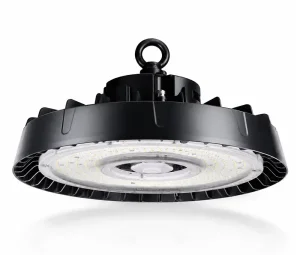
High-Quality Durable UFO High Bay LED Light – Long Lifespan
Explore Technical Specs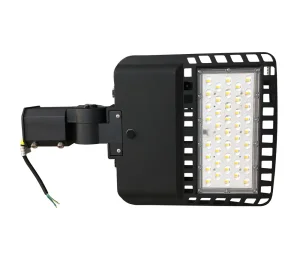
OEM LS-L Series Shoebox Street Light for Urban & Area Lighting
Explore Technical Specs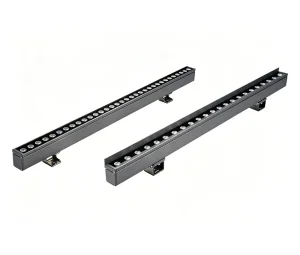
Best RGB Wall Washer – Effortless Commercial Decoration with Precision
Explore Technical Specs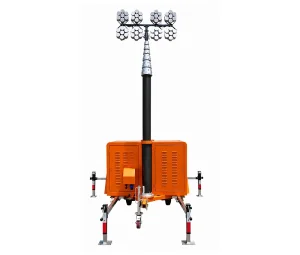
High-Quality High Brightness 12m Mobile Light Tower
Explore Technical Specs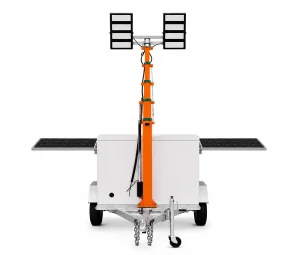
High-Quality 7M Solar Mobile Light Tower
Explore Technical Specs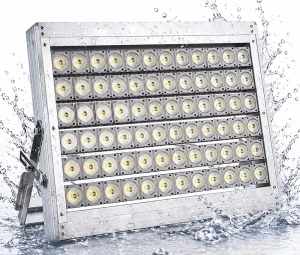
LS-FLN Titans Series LED Marine Light for Offshore Applications
Explore Technical Specs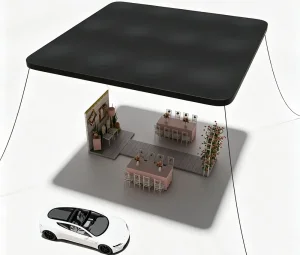
OEM Easy-Setup Helium Balloon Sun Shade - Overhead Diffusion
Explore Technical Specs