Certified Industrial Production
Heavy-Duty & Extreme Environment Product Showcase: Part I
Precision-machined LED fixtures engineered for extreme thermal operational envelopes, corrosive offshore atmosphere resistance, and certified hazardous industrial locations.
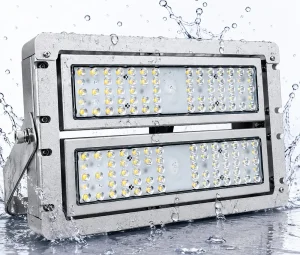
OEM LS-ARE Ocean Series LED Marine Light for Boats, Docks, Harbors & Underwater Applications Factories, Manufacturers
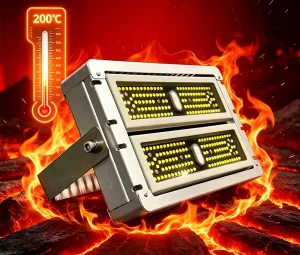
Best Ultra High Temperature LED Light - Rated 200°C (392°F) with IP68 Waterproof Protection Factory, Manufacturers
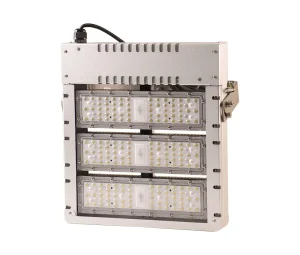
OEM High Temperature LED Flood and High Bay Light Rated 80°C Factories, Suppliers
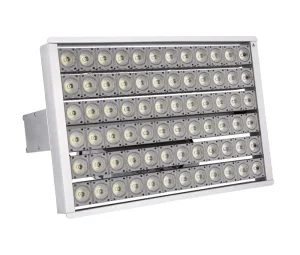
High-Quality High Temperature LED Light Rated 90°C(194°F) Suppliers, Manufacturers
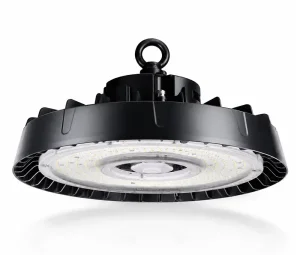
High-Quality Durable UFO High Bay LED Light – Long Lifespan & High Lumen Output Factories, Manufacturer
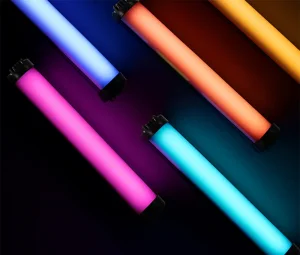
OEM Commercial Underwater Video Lights – 2-Meter Depth, Infinite Creative Effects for Every Shoot Factory, Supplier
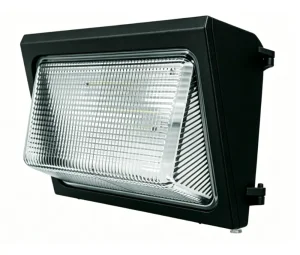
Best Wall Pack LED Light – Secure & Efficient Exterior Building Lighting Factories, Manufacturers
Industry Macro Analysis
The Global Industrial Explosion-Proof Lighting Landscape
Navigating safety mandates, thermodynamic compliance, and energy transition across modern processing facilities.
The commercial and industrial market for industrial explosion-proof lighting is experiencing a fundamental structural shift. Driven by rigorous occupational safety directives, environmental ESG mandates, and the rapid retirement of energy-inefficient high-intensity discharge (HID) and high-pressure sodium (HPS) sources, global industrial enterprises are overhauling their hazardous location infrastructure. In locations where flammable vapors, combustible gases, volatile liquid droplets, or combustible dust clouds reside, illumination is not simply an architectural utility—it is a critical safety barrier engineered to prevent catastrophic ignition events.
Historically, traditional explosion-proof fixtures relied on heavy cast-iron enclosures with thick borosilicate glass globes designed exclusively around containment (flameproof protection type Ex d / Class I Division 1). These legacy systems exhibited notorious shortcomings: massive parasitic thermal dissipation, low luminous efficacy (often sub-60 lm/W), fragile lamp envelopes vulnerable to mechanical vibration, and exorbitant maintenance costs associated with hazardous lamp relamping cycles. Today’s industrial landscape demands modern solid-state LED luminaires built with copper-free die-cast aluminum alloys (A383 / ADC12), multi-stage nano-ceramic anti-corrosive powder coatings, precision secondary optical polymers, and galvanically isolated power conversion electronics capable of enduring rigorous 100,000-hour continuous life cycles.
160+
Lumen/Watt System Efficacy
≤ 300°C
Max Ambient Tolerance Engineered
IP68 / IK10
Ingress & Impact Mechanical Rating
Zero
Flamepath Breach Failure Rate
Strategic Engineering Observation: The core design philosophy of explosion proof lighting has expanded beyond passive enclosure containment (Ex d). Modern Tier-1 engineering embraces integrated increased safety (Ex e), encapsulation (Ex m), and restricted breathing concepts, which collectively minimize total system heat generation, lower external surface temperatures (ensuring compliance with stringent T4, T5, and T6 temperature classes), and dramatically shrink overall physical mass.
Furthermore, international harmonization across regulatory frameworks—principally the ATEX Directive 2014/34/EU in Europe, the international IECEx certified equipment scheme across the Asia-Pacific and Middle East, and North America's NEC 500 / NEC 505 / UL 844 standards—has elevated the technical barrier to entry. Global EPC (Engineering, Procurement, and Construction) contractors no longer procure standard off-the-shelf fixtures. They insist on fully traceable, certified OEM/ODM manufacturers capable of delivering bespoke optical distribution curves (IES/LDT files), third-party thermal simulation datasets, and verified metallurgical compliance.
Advanced Manufacturing Ecosystem
Chinese Factory Efficiency: The Modern OEM/ODM Advantage
How hyper-clustered supply chains, robotic tooling, and rigorous quality management optimize industrial luminaire procurement.
For multinational industrial procurement directors, procuring explosion-proof and severe-environment lighting from top-tier Chinese manufacturing hubs—particularly the Pearl River Delta industrial cluster—delivers unmatched competitive value. What sets specialized Chinese factories apart in the high-stakes explosion-proof market is not low-cost manual assembly, but rather high-precision automation, complete vertical supply-chain clustering, and agile custom engineering.
Vertical Mechanical Integration
Direct in-house high-tonnage die-casting, robotic 5-axis CNC machining of precise explosion-proof flame-path gaps (down to ≤0.1mm tolerance), and automated electrostatic powder coating lines running non-stop with zero third-party delay.
Advanced Electronic Assembly
High-speed SMT surface-mount pick-and-place lines running Class-A tier LED emitters (Osram, Lumileds, Cree), paired with automated automated optical inspection (AOI) and industrial potting systems that guarantee bubble-free encapsulation.
Agile Rapid Prototyping
While legacy Western conglomerates often take 6 to 9 months to modify an optical bracket or driver enclosure, optimized Chinese OEM factories complete mold design, thermal CFD verification, tooling fabrication, and functional sampling in 3 to 4 weeks.
This unprecedented manufacturing velocity empowers global energy operators, mining conglomerates, and marine vessel builders to commission tailor-made explosion proof luminaires calibrated to their exact project drawings without enduring punitive lead times. Furthermore, specialized Chinese testing laboratories feature in-house hydrostatic pressure test tanks (capable of testing beyond 4.0 MPa to verify structural casing yield strength), spectrophotometers, goniophotometers for IES file generation, thermal cycling environmental chambers (-50°C to +300°C), and 1,000-hour C5-M marine salt spray test rigs.
Field Engineering & Environments
Hazardous Area Classifications & Critical Industrial Environments
Mapping luminaire architecture to volatile vapor, combustible dust, offshore marine, and metallurgical zones.
| Hazard Environment | NEC / CEC Standard (North America) | ATEX / IECEx Standard (Global) | Required Luminaire Architecture & Protection Type |
|---|---|---|---|
| Continuous Flammable Gas/Vapor | Class I, Division 1 | Zone 0 / Zone 1 | Flameproof (Ex d), Intrinsic Safety (Ex ia/ib), Cast Copper-Free Aluminum Housing, Tempered Glass |
| Intermittent Flammable Gas/Vapor | Class I, Division 2 | Zone 2 | Increased Safety (Ex ec/e), Sealed Non-Sparking Enclosures, Restrained Breathing (Ex nR) |
| Combustible Dust Clouds | Class II, Division 1 | Zone 20 / Zone 21 | Dust Ignition-Proof (Ex tb), Completely Dust-Tight Enclosure (IP66/IP67), Controlled Outer Surface Temp |
| Intermittent Combustible Dust | Class II, Division 2 | Zone 22 | Dust-Protected (Ex tc), Minimal Ingress Enclosure (IP65), Continuous Heat Dissipation Finning |
| Ignitable Fibers & Flyings | Class III, Division 1 & 2 | Zone 21 / Zone 22 (Dust-Fibers) | Smooth External Geometry to prevent fiber accumulation, Low T-Ratings, IK09/IK10 Impact Shields |
Petrochemical & Offshore Platforms
Exposed to volatile hydrogen sulfide (H2S), hydrocarbon condensates, and aggressive oceanic saline mist. Luminaires require marine-grade 316 stainless steel brackets, fluorocarbon coating, and C5-M anti-corrosion protection.
Steel Smelting & High-Heat Foundries
Directly above blast furnaces, annealing lines, and forging cranes where ambient ceiling temperatures soar to 80°C–200°C. Standard commercial LEDs melt within hours; custom high-temp units employ remote driver topologies.
Paint Booths & Chemical Synthesis
High-density airborne organic solvent vapors (MEK, toluene, acetone). Demands strict T5/T6 temperature classifications, anti-static external powder finishes, and smooth luminaire bodies that prevent paint overspray accumulation.
Grain Elevators & Mining Processing
Extremely fine suspended agricultural or coal dust forms explosive air-fuel suspensions. Luminaires must feature zero internal cavity breathing, seamless silicone seals, IK10 polycarbonate or borosilicate lenses, and low surface heat.
Future-Proof Engineering
Technological Frontiers in Industrial Explosion-Proof Lighting
How modern advancements in thermal dynamic modeling, intelligent controls, and materials science reshape the sector.
As the fourth industrial revolution (Industry 4.0) penetrates the petrochemical, energy, and process manufacturing sectors, the expectations placed upon explosion proof luminaires have evolved beyond simple baseline illumination. Leading OEM engineering departments are implementing groundbreaking innovations:
Intelligent DALI-2 & Wireless Ex-IoT
Integration of intrinsically safe (Ex ia/ib) wireless transceivers (Zigbee Pro, Bluetooth Mesh, LoRaWAN) into luminaire housings, enabling facility-wide real-time remote dimming, occupancy sensing, predictive maintenance, and emergency power diagnostic reports without compromising flameproof containment boundaries.
Micro-Channel Vapor Chamber Cooling
Transitioning beyond standard passive aluminum heat fin designs. Utilizing aerospace-derived copper micro-groove heat pipes and sintered vapor chambers to rapidly draw localized junction heat away from ultra-dense LED dies (Tj < 75°C), effectively extending driver and phosphor life in heavy furnace applications.
Ultra-Safe LiFePO4 Emergency Topologies
Replacing legacy nickel-cadmium batteries with intrinsically sealed, explosion-proof lithium iron phosphate (LiFePO4) storage banks. These smart modules feature integrated thermal cutoff protection, automated 90-minute or 180-minute self-test cycling, and operational integrity down to -40°C.
These cutting-edge features allow plant operators to convert legacy lighting networks into intelligent digital backbones capable of asset tracking, environmental gas monitoring, and dynamic perimeter illumination without installing dedicated conduit runs.
Total Cost of Ownership (TCO)
Global Procurement Criteria & Engineering Specification Guide
Evaluating capital expenditure versus operational risk: what every procurement director must verify before issuing a PO.
Procurement of explosion-proof industrial luminaires entails liability calculations far beyond initial fixture unit pricing. In high-risk operating environments, the financial impact of a single lighting failure encompasses plant shutdowns, specialized high-elevation hazardous access permits (often requiring certified rope-access technicians or crane platforms), hot-work permit clearances, and severe regulatory non-compliance fines. A rigorous procurement evaluation must inspect five foundational parameters:
1. Metallurgical Purity
Insist on verified low-copper aluminum alloy content (<0.05% copper). High-copper aluminum mixtures rapidly oxidize in the presence of saline ocean air or chemical vapors, leading to micro-fissures along flamepath joints.
2. Photometric DIALux Validation
Ensure the supplier supplies authentic IES / LDT photometric files verified by third-party goniophotometers. Accurate beam distributions (from narrow 10° spot optics to 120° wide high-bay floods) eliminate costly over-illumination and glare.
3. Driver Architecture & Transient Protection
Severe heavy industrial grids experience intense inductive voltage spikes. Fixtures must feature internal 6kV, 10kV, or optional 20kV surge protective devices (SPD), along with ultra-wide input ranges (90–305VAC or 347–480VAC).
4. Flamepath Joint Quality
Examine whether the factory utilizes cylindrical threaded flame paths or precision-ground flat spigot joints. Threaded joints must guarantee at least 5 fully engaged threads; flat joints require surface finishes with Ra ≤ 6.3 μm.
TCO Math in Hazardous Facilities: Replacing a 400W Metal Halide fixture consuming 455W (including ballast losses) with an engineered 150W Ex-LED high bay yielding 160 lm/W slashes electrical draw by 67%. Factoring in the elimination of biannual relamping in high-risk zones, complete payback is routinely achieved within 11 to 14 operational months.
Custom Project Deliverables
Heavy-Duty & Extreme Environment Product Showcase: Part II
High-temperature linear fixtures, deep-sea marine systems, mobile tactical towers, and flexible specialty illumination.
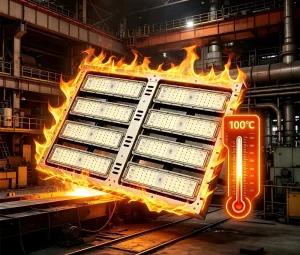
High-Quality High Temperature LED Light Rated 100°C(212°F), IP68 Waterproof Factories, Factory
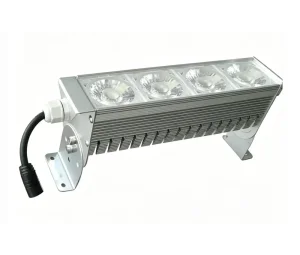
High-Quality LED Linear Strip Light for Industrial, Commercial & Architectural Applications Factories, Factory
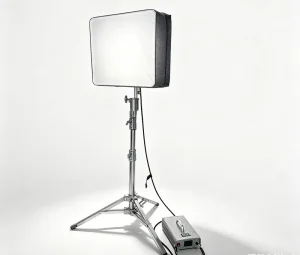
High-Quality Flexible LED Mat - Powerful, Flicker‑Free Lighting That Conforms to Any Surface Factories, Supplier
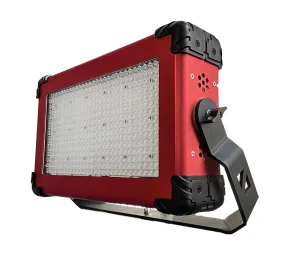
Best Revolutionary Underwater LED Film Light - 30-Meter Depth, Zero Housing Required Suppliers, Manufacturers
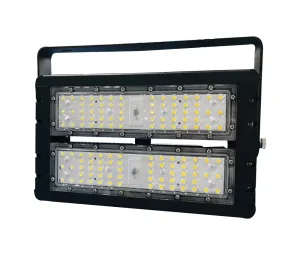
High-Quality 12V/24V DC LED Flood Light for Portable & Solar Applications Factories, Supplier
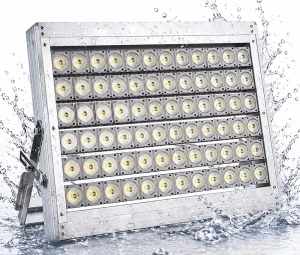
High-Quality LS-FLN Titans Series LED Marine Light for Deep Sea & Offshore Applications Factories, Manufacturers
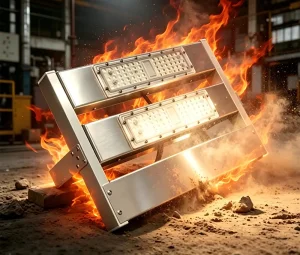
Best Tailored High Temperature LED Light with Highly Dustproof Configuration Factory, Manufacturers
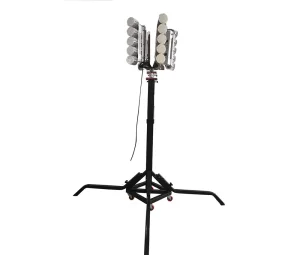
OEM Economic 4m Mobile Light Tower Factory, Manufacturer
Authoritative Engineering FAQ
Technical & Procurement FAQ for Industrial Operators
Direct engineering answers to complex hazardous location luminaire specification questions.
What is the fundamental engineering difference between Ex d (Flameproof) and Ex e (Increased Safety)?
Ex d (Flameproof / Explosion Proof) assumes that flammable gases will enter the luminaire casing and ignite; the housing is engineered to mechanically withstand internal explosion pressure without rupturing and to cool the escaping hot gases across precision-machined flamepaths so they cannot ignite the external ambient atmosphere. Ex e (Increased Safety), by contrast, applies elevated engineering margins to ensure that no arcs, sparks, or excessive external surface temperatures can occur under both normal operation and specified abnormal conditions. Modern high-efficiency industrial luminaires frequently combine both methods (e.g., an Ex d internal optical or driver module contained inside an Ex e terminal compartment).
How do temperature classifications (T-Ratings) impact fixture selection?
The Temperature Class (T1 to T6) determines the maximum absolute outer surface temperature that the luminaire can reach under full operational load in its maximum rated ambient temperature. In chemical environments with volatile vapors possessing low auto-ignition temperatures (such as Carbon Disulfide at 90°C), a T6 rating (≤85°C) is compulsory. Installing a luminaire rated only for T3 (≤200°C) could ignite the ambient vapor cloud regardless of whether a physical spark occurs. Our factory verifies every thermal class rating using thermal imaging and contact thermocouples inside calibrated environmental chambers.
How can an LED luminaire operate continuously in 100°C, 150°C, or 200°C ambient zones?
Standard LED chips and electrolytic capacitors rapidly degrade above 85°C. To achieve reliable operation at 100°C–200°C, our custom OEM engineering physically decouples the sensitive electronic LED drivers into an isolated, thermally protected housing placed away from direct radiation sources, or integrates extreme-grade solid-state driver topologies utilizing ceramic capacitors and high-temperature silicon carbide (SiC) semiconductors. Additionally, specialized ceramic-substrate LED emitters with gold-wire bonding and ultra-pure silicone encapsulants are utilized to prevent thermal lumen depreciation.
What measures are taken to guarantee marine C5-M anti-corrosion compliance?
To satisfy ISO 12944 C5-M (Marine Heavy Corrosivity) protocols, we start with precision-cast ADC12 aluminum with copper content strictly kept below 0.05%. The castings undergo a multi-stage chemical pre-treatment (acid wash, deoxidation, and zirconium-based conversion passivation) followed by electrostatic application of thermosetting fluorocarbon or epoxy powder coatings at a minimum thickness of 120μm. All exterior fasteners, hinges, and mounting brackets are precision-machined exclusively from marine-grade SUS316 stainless steel.
What documentation and quality reports are delivered with OEM industrial orders?
Every shipment includes comprehensive Factory Acceptance Testing (FAT) dossiers: certified goniophotometric IES/LDT testing files, electrical isolation and dielectric withstand test records, ingress protection (IP66/IP67/IP68) verification certificates, hydrostatic casing pressure test sign-offs, spectral color fidelity (CRI/CCT) data, and metallurgical raw material mill certificates.
Can you provide customized optical distribution curves for crane, tower, and linear rack applications?
Yes. Through in-house optical tooling, we supply customized TIR (Total Internal Reflection) optical lenses ranging from ultra-narrow 10° and 15° pencil beams for tall offshore derrick lighting, to asymmetric forward-throw beams for perimeter security and wall packs, to wide batwing distributions specifically engineered to eliminate high-bay glare down aisleways and pipe racks.
Initiate Your Project-Specific OEM/ODM Technical Consultation
Submit your hazardous area classification parameters, facility AutoCAD layouts, or ambient thermal requirements. Our senior application engineering team will provide comprehensive DIALux photometric simulations, thermal analysis, and quotation-ready datasheets within 24 hours.
Connect With Our Hazardous Lighting Engineers