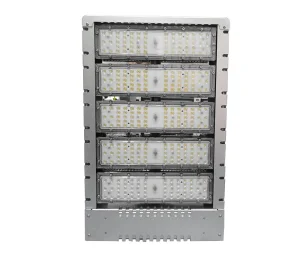
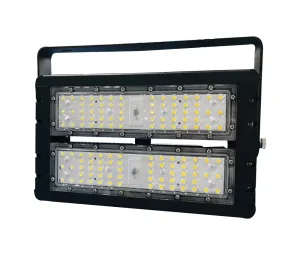
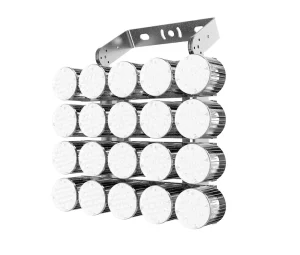
Featured Industrial & Specialized LED Solutions
Explore our certified heavy-duty luminaires designed for harsh industrial applications and high-bay installations.
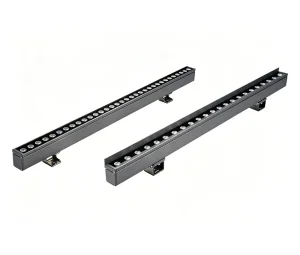
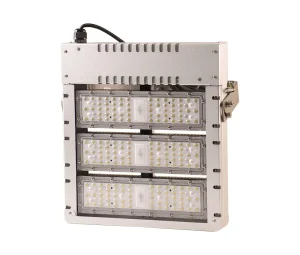
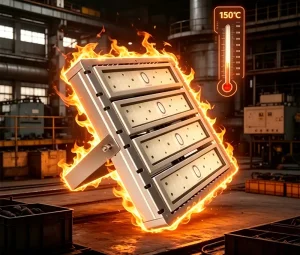
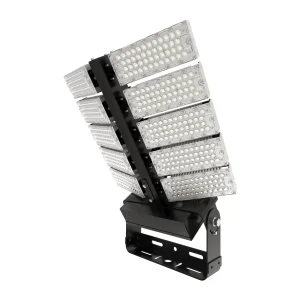
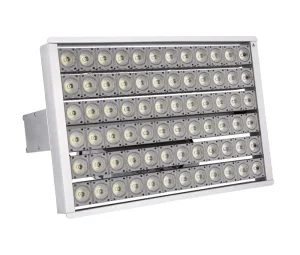
OEM High Temperature LED Flood and High Bay Light Rated 80°C Factories, Suppliers
View Product Details
Engineering Validation by Numbers
Quantitative benchmarks demonstrating our operational reliability across severe global industrial deployments.
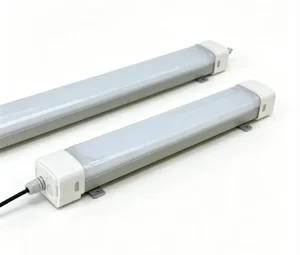
OEM IP66 Tri-Proof LED Lighting Architecture & Industrial Trends
An authoritative engineering analysis of material science, thermal dissipation, optical dispersion, and OEM contract manufacturing standards.
1. Executive Summary & Global Commercial Landscape
The global industrial lighting market is undergoing a structural transition toward hermetically sealed, high-efficiency solid-state luminaires. Known universally as Tri-Proof LED Lights (signifying water-proof, dust-proof, and corrosion-proof capabilities), these specialized linear fixtures serve as critical illumination infrastructure across demanding operational environments. In heavy chemical plants, food processing facilities, sub-zero cold storage logistics hubs, and coastal maritime ports, standard commercial lighting succumbs rapidly to ingress, thermal fatigue, and chemical degradation.
According to modern industrial engineering data, luminaire breakdown in extreme environments is primarily triggered by moisture condensation, corrosive chemical vapors (such as ammonia, sulfur dioxide, and chlorine derivatives), and mechanical impact. OEM factories specializing in IP66 Tri-Proof LED lights are deploying advanced material matrices—incorporating extruded 6063-T5 aluminum alloys, Bayer UV-stabilized polycarbonate, and PMMA (poly-methyl methacrylate) co-extrusions—to extend operating life cycles past 100,000 operational hours under continuous thermal stress.
Information Gain Insight: Unlike standard IP65 fixtures engineered solely for light rain or low-pressure water sprays, certified IP66 Tri-Proof LED Lights are engineered to withstand powerful water jets (100 liters/min at 100 kPa pressure from any direction) without fluid ingress. Furthermore, when paired with an IK10 impact rating, these fixtures eliminate shattered glass hazards in sanitary food production zones.
2. Technical Deep Dive: Material Science & Structural Engineering
Achieving reliable IP66 protection while sustaining optical efficacy over 160 lm/W demands sophisticated thermal management and precision seal chemistry. Below is an engineering overview of key structural components manufactured by OEM factories:
| Subsystem Component | Material / Specification | Engineering Function & Advantage |
|---|---|---|
| Housing Extrusion | 6063-T5 Aluminum / High-Impact PC | Optimal thermal dissipation pathway; prevents thermal throttling of LED junction ($T_j < 75^\circ\text{C}$). |
| Optical Diffuser | Optical Polycarbonate (PC) or PMMA | Anti-glare micro-prismatic optical layout; 92% light transmittance; high UV yellowing resistance. |
| Sealing Gasket | Continuous Pour Silicone / Fluorosilicone | Memory-retention seal resisting chemical washdowns, high-pressure spray, and extreme temperature fluctuations. |
| Fasteners & Latches | 316 Marine-Grade Stainless Steel | Corrosion immunity against high-salinity air, acidic vapors, and alkaline sanitizing chemicals. |
| LED Light Engine | High-Efficacy SMDs (Bridgelux/Lumileds) | Sub-3 MacAdam ellipse color consistency; LM-80 certified LED chips operating at low current drive. |
| Power Conversion | Class I/II Isolated Constant Current Driver | Integrated 6kV/10kV surge protection; THD < 10%; Active PFC > 0.97; 1-10V & DALI dimming protocols. |
3. Localized Industrial Application Scenarios
The versatility of OEM Tri-Proof LED Lights translates into distinct installation protocols depending on the micro-climate of the industrial site:
- Food & Beverage Processing Facilities: Requires NSF and HACCP compliance. Smooth exterior housings prevent bacterial accumulation. IP66/IP69K sealing allows nightly high-temperature washdowns using caustic sodium hydroxide solutions.
- Chemical Plants & Refineries: Demands robust corrosion resistance (C4/C5-I atmospheric corrosivity categories). PMMA optical covers withstand airborne solvent hydrocarbons without clouding or micro-cracking.
- Cold Storage & Refrigerated Warehousing: Fixtures must initiate immediately at ambient temperatures down to -30°C (-22°F). Silicone gaskets remain elastic, preventing vacuum condensation when temperatures oscillate during defrost cycles.
- Automotive & Heavy Assembly Manufacturing: Demands high visual acuity (CRI > 90) combined with anti-glare micro-prismatic optics (UGR < 19) to optimize quality control along robotic and manual assembly lines.
- Agriculture & Livestock Barns: High concentrations of corrosive ammonia gas ($NH_3$) rapidly destroy standard aluminum heat sinks. Gas-tight polycarbonate enclosures with specialized vent valves protect internal electronics.
4. Technical Roadmap & Future Outlook: Smart Lighting Integration
The next evolutionary phase of OEM IP66 Tri-Proof LED lights centers around Industry 4.0 digital integration. Modern factories are transitioning from standalone luminaires to interconnected lighting networks:
- DALI-2 & D4i Ecosystems: Integrated sensors harvest operational data including real-time power consumption, LED driver internal temperature, and total operational hours, enabling predictive maintenance.
- Microwave Occupancy & Daylight Harvesting: High-frequency 5.8GHz microwave motion sensors embedded behind IP66 poly-carbonate diffusers trigger automated step-dimming without compromising the watertight seal.
- Emergency Battery Backup Modules: Integrated LiFePO4 battery packs deliver up to 3 hours of continuous emergency illumination at 10-20% rated power during main grid power failures.
OEM/ODM Customization Capabilities
Tailor-made manufacturing solutions engineered to your precise photometric, electrical, and brand requirements.
Photometric Optimization
Custom beam angles (60°, 90°, 120°, and asymmetric distribution) using specialized internal optics for precise lux distribution in high-bay aisles or wide open production areas.
Electrical Engineering
Support for universal voltage ranges (100-277V AC, 347-480V AC high-voltage industrial grids, or low-voltage 12V/24V/48V DC solar-compatible setups).
Certified Testing & QA
100% factory pressure testing, integrating sphere color analysis, thermal shock cycling, and IPX6 water chamber validation prior to shipment.
Frequently Asked Questions for Sourcing Managers & Engineers
Expert answers addressing compliance, material selection, installation, and manufacturing lead times.
What is the practical difference between IP65, IP66, and IP69K Tri-Proof lights?
IP65 fixtures are rated against low-pressure water sprays. IP66 fixtures withstand high-pressure water jets (100 kPa) from any angle, making them suitable for heavy outdoor rain or industrial washdowns. IP69K is the highest standard, protecting against close-range, high-temperature (80°C) steam cleaning at high pressure (up to 10,000 kPa).
Should I choose Polycarbonate (PC) or PMMA diffusers for chemical plants?
For physical impact resistance (vandalism, falling tools), Polycarbonate is ideal due to its IK10 rating. However, for environments with intense chemical vapors, oils, or ammonia (e.g., livestock farms or petrochemical refineries), PMMA offers superior chemical resistance and zero UV yellowing over time.
How does an OEM factory ensure linkable/through-wiring reliability?
OEM continuous-run Tri-Proof lights utilize internal heavy-duty copper busbars ($1.5\text{mm}^2$ or $2.5\text{mm}^2$) and quick-connect push-in terminal blocks. Dual IP66 cable glands at both ends ensure that daisy-chaining multiple fixtures does not compromise ingress sealing.
What MOQ and lead times apply for custom OEM/ODM production runs?
Standard OEM customization (custom branding, specific wire lengths, packaging) typical MOQs start at 100 units with lead times of 12-18 business days. Full ODM projects requiring custom extrusion tooling take approximately 35-45 days.
High-Performance Extreme Environment Solutions
Browse our complete catalog of specialized, marine, high-temperature, and solar-compatible LED fixtures.
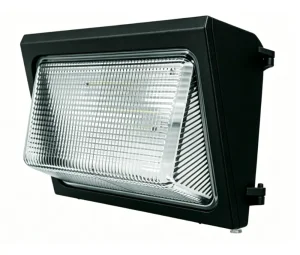
Best Wall Pack LED Light – Secure & Efficient Exterior Building Lighting Factories, Manufacturers
View Product Details