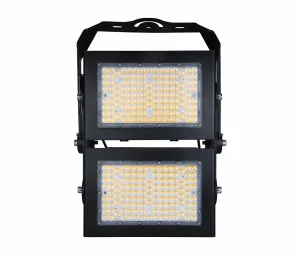
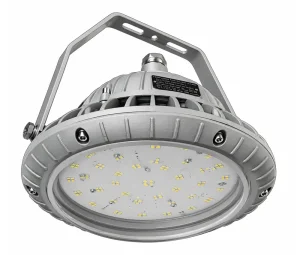
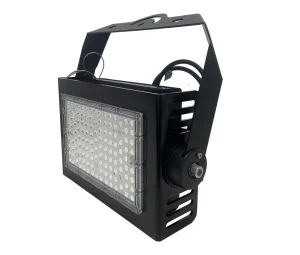
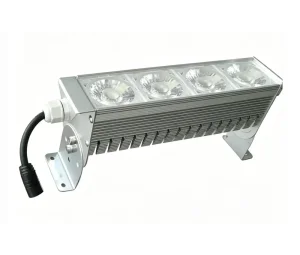
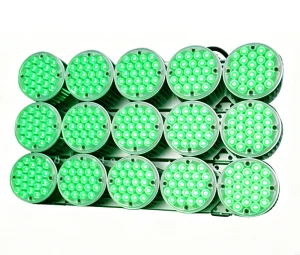
Featured OEM Industrial & High-Output Luminaires
Explore our core engineered lighting series designed for severe environmental parameters, extreme temperatures, and high-mast installations.
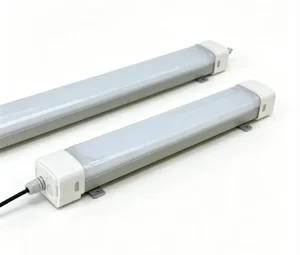
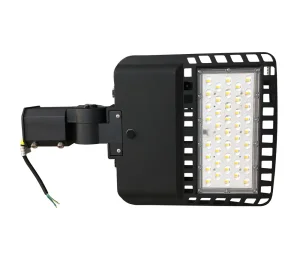
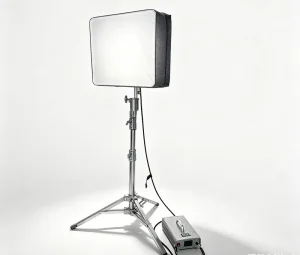
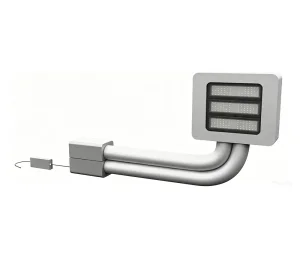
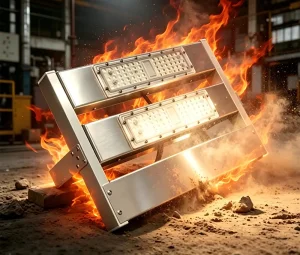
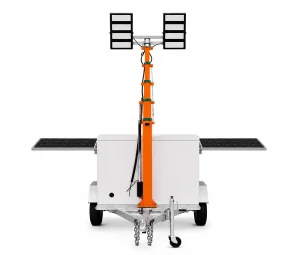
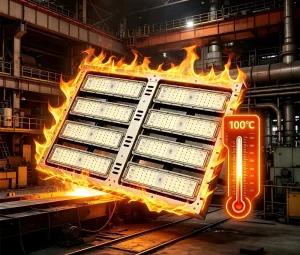
Engineering Benchmarks in High-Bay & Arena Illumination
Data-driven performance metrics reflecting our OEM engineering standards for high-mast, stadium, and extreme environment deployments.
Executive Summary: The Technological Shift in High-Power LED Stadium Lighting
A comprehensive analytical guide for EPC contractors, lighting engineers, municipal procurement heads, and sports venue managers.
The global transition from traditional High-Intensity Discharge (HID) and Metal Halide (MH) systems to advanced solid-state LED sports lighting represents one of the most significant infrastructure upgrades in commercial and municipal engineering. High-power stadium luminaires are no longer mere illumination tools; they are complex electro-optical systems requiring rigorous thermal management, precise beam steering, digital flicker suppression for ultra-high-definition broadcasting, and intelligent IoT integration.
As a specialized OEM LED stadium light supplier and manufacturer, our engineering core focuses on solving the critical physics bottlenecks of high-power LED deployment: lumen depreciation driven by junction temperature elevation, optical spill light that causes light pollution and spillover into residential zones, and electrical harmonic distortion under heavy dynamic loads. Achieving high performance demands an integrated manufacturing ecosystem capable of customized thermal modeling, rapid optical prototyping, and rigorous environmental stress testing.
Information Gain Key Insight: Standard floodlights cannot meet sports lighting specifications. High-mast sports venues require specialized asymmetric optic distribution, high TLCI (Television Lighting Consistency Index > 90), low spill-light cutoffs (GR < 45), and specialized thermal paths capable of maintaining LED junction temperatures ($T_j$) under 75°C in high ambient heat.
1. Global Commercial & Industrial Market Dynamics of Sports Illumination
The global LED stadium lighting market is accelerating due to three main factors: strict energy efficiency mandates, the rise of 4K/8K ultra-high-definition television broadcasting standards, and dark-sky regulatory compliance (such as IDA guidelines). Municipalities and venue operators face mounting pressure to reduce operational expenditures while improving lighting quality for athletes and viewers.
Total Cost of Ownership (TCO) Optimization
Legacy 2000W Metal Halide fixtures typically consume over 2200W including ballast losses and require re-lamping every 3,000 to 5,000 hours. A precision-engineered 800W to 1200W LED stadium floodlight achieves equivalent or superior Lux levels on the playing field while slashing power consumption by 55%–65% and operating maintenance-free for over 100,000 hours.
Broadcast Compliance & Flicker Suppression
Modern sports venues host cameras shooting at 300 to 1,000 frames per second (fps) for slow-motion replays. Standard LED drivers produce subtle output ripple that causes intolerable screen flickering during slow-motion playback. OEM stadium lights require custom DC drivers with output ripple below 1%, achieving TLCI > 95 and CRI > 90.
2. Advanced Engineering: Thermal Management and Optical Precision
High-power LED sports fixtures range from 400W up to 2400W per module. At these extreme energy densities, heat dissipation becomes the single leading cause of luminaire degradation. Excessive heat degrades encapsulation materials, shifts color temperature (CCT), and accelerates lumen decay.
A. Phase-Change Pure Copper Heat Pipe & Vapor Chamber Cooling
Our OEM manufacturing lines integrate 3D vapor chamber technology and cold-forged aluminum heatsinks with thermal conductivity ratings exceeding 230 W/m·K. By embedding phase-change heat pipes directly against the metal-core printed circuit board (MCPCB), thermal resistance between the chip junction and ambient air is minimized to less than 0.12°C/W.
B. Precision Optical Lens Arrays & Asymmetric Beam Control
Light distribution in high-mast applications requires precise control to project lumens uniformly over distances ranging from 30 to 100 meters without blinding players or spectators. We utilize optical-grade PMMA/PC materials with ultra-low absorption coefficients (<0.02%) to engineer customized asymmetric light angles (e.g., 15°, 30°, 45°x90°, 60°x120°).
| Optic Profile / Beam Angle | Target Mounting Height | Primary Field Application | Glare Rating (GR) Impact |
|---|---|---|---|
| Ultra-NARROW (10° / 15°) | 45m - 80m High Masts | Professional Arenas, High-Pylon Stadium Corners | GR < 40 with Visor Shield |
| Asymmetric Medium (30° x 60°) | 25m - 45m Towers | Football Pitches, Rugby Fields, Track & Field | GR < 42 Optimized Cutoff |
| Asymmetric Wide (45° x 90°) | 15m - 25m Poles | Tennis Courts, Basketball Arenas, Training Grounds | GR < 45 Uniform Spread |
| Symmetric Broad (90° / 120°) | 8m - 15m Low Masts | Industrial Logistics Hubs, Apron Lighting, Parking | Standard High-Bay Profile |
3. The Ecosystem Advantage of Chinese OEM/ODM Manufacturing
Sourcing high-power LED sports lighting from dedicated Chinese OEM manufacturers provides global procurement directors with distinct competitive advantages in engineering customization, cost structures, supply chain integration, and rapid production turnaround.
- End-to-End Vertical Integration: From die-casting aluminum housing design, surface treating (electrophoresis and anti-corrosion powder coating), SMT high-speed chip placement, to automated optical goniophotometer testing, fully integrated facilities ensure strict quality control at every phase.
- Rapid Engineering Prototype Cycles: Utilizing CAD thermal modeling, Dialux EVO optical simulation, and rapid 3D mold prototyping allows turnkey custom fixture developments to transition from concept drawings to functional samples within 14 to 21 days.
- Economies of Scale in Purchasing Power: Deep partnerships with Tier-1 component suppliers (such as Cree, Lumileds, Osram, Mean Well, Inventronics) enable OEM suppliers to secure top-bin LEDs and industrial-grade drivers at highly competitive price points.
- Severe Environment Testing Labs: Qualified OEM factories house on-site reliability labs, including salt-spray chamber testing (ISO 9227 compliant), IP68 hydro-pressure tanks, IK10 mechanical impact pendulums, and thermal shock chambers (-40°C to +100°C).
4. Localized Application Scenarios & Tailored Configurations
Broadcast Stadiums
Requires HDTV TLCI > 95, DMX512 dynamic light show control, zero stroboscopic effect, and strict glare control for high-speed camera angles.
Marine Ports & Harbors
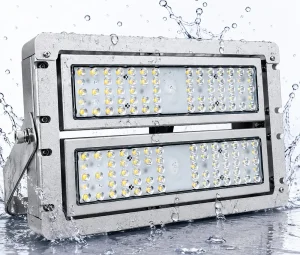
Requires IP68 waterproofing, C5-M anti-corrosion marine powder coating, stainless steel 316 brackets, and heavy-vibration dampening mountings.
High-Temperature Plants
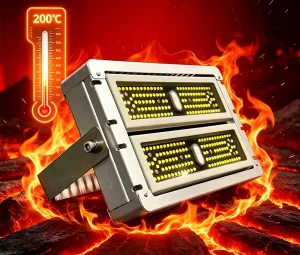
Industrial foundries and steel mills require remote driver enclosures, ceramic substrates, and cooling fins engineered for ambient heat up to 80°C–300°C.
5. Industry Future Trends: Smart Controls, Dark-Sky Compliance & Sustainability
The next decade of stadium and high-mast illumination is defined by digital integration and environmental stewardship. Modern fixtures must natively support DALI-2, DMX512-A, and RDM bi-directional communication protocols, allowing operators to run dynamic pre-game dynamic light shows, dim lights down during non-event hours, and monitor driver health metrics remotely via IoT cloud gateways.
Furthermore, stringent Dark-Sky initiatives require strict zero-uplight optical designs ($ULR = 0\%$) to eliminate atmospheric light scatter and protect surrounding ecosystems. High-efficiency LEDs combined with zero-spill optic visors ensure that every lumen produced lands precisely within the targeted playing area.
Frequently Asked Questions (Procurement & Engineering)
Addressing technical, operational, and commercial inquiries for global B2B buyers and project engineers.
What defines an OEM/ODM partnership with a specialized stadium light manufacturer?
How do you guarantee broadcast-quality lighting for 4K and 8K television coverage?
What certifications and testing reports do your stadium luminaires carry?
How are wind resistance and mechanical stability calculated for high-mast installations?
What thermal protection measures prevent early lumen degradation in hot climates?
What is the standard lead time for OEM stadium lighting project orders?
Additional OEM High-Mast, Marine & Specialty Fixtures
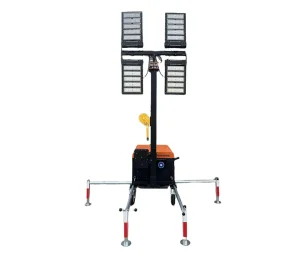
Discover specialized lighting units built for extreme heat, marine immersion, high-power RGB landscapes, and mobile light towers.