Industrial Luminaire Precision
OEM Outdoor Court Lighting Factory & Supplier
Precision Photometric Architecture, HDTV Glare Suppression, and Rugged Die-Cast Thermal Engineering for Multi-Sport Stadiums, Tennis Hubs, and Municipal Arenas Worldwide.
Direct-From-Factory Solutions
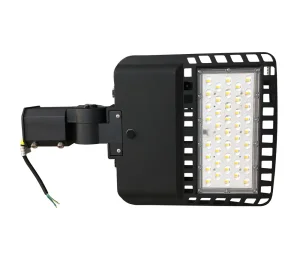
High-Efficiency Project Lineup (Phase I)
Engineered for outdoor sport arenas, high-load municipal yards, and aggressive environmental zones.
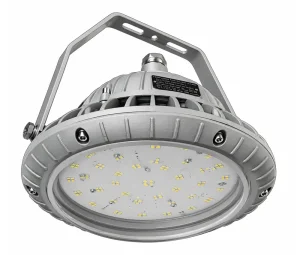
Best Explosion proof LED Light – Safe, Durable, Industrial Illumination
Request Technical File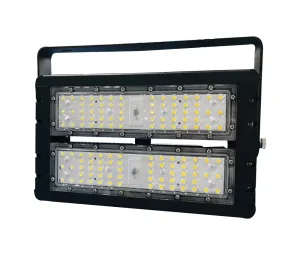
High-Quality 12V/24V DC LED Flood Light for Portable & Solar Applications
Request Technical File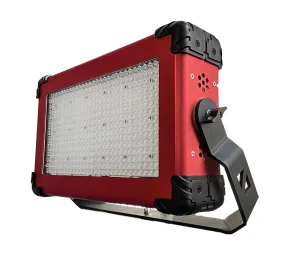
Best Revolutionary Underwater LED Film Light - 30-Meter Depth
Request Technical File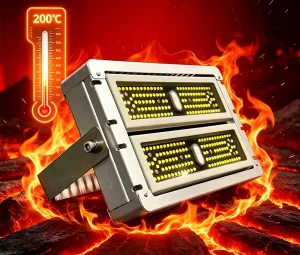
Best Ultra High Temperature LED Light - Rated 200°C (392°F)
Request Technical File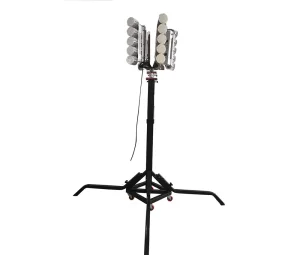
OEM Economic 4m Mobile Light Tower Factory, Manufacturer
Request Technical File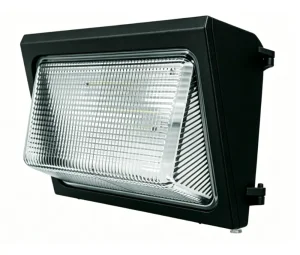
Best Wall Pack LED Light – Secure & Efficient Exterior Building
Request Technical File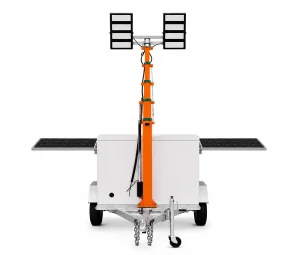
High-Quality 7M Solar Mobile Light Tower Factories, Supplier
Request Technical File170+
Lumens Per Watt System Efficacy
< 0.2%
Flicker Factor (4K Broadcast Ready)
IP68
Submersible & High-Pressure Ingress
100,000h
L70 Lifetime Calculated @ 55°C
Technical Whitepaper: B2B Specifications
Macro-Industry Dynamics in Outdoor Court Illumination
Transitioning from metal halide legacy systems to hyper-efficient solid-state architecture requires a deep understanding of photometric control, thermal kinetics, and regulatory standards.
TCO Optimization & Capital Efficiency
Global procurement teams prioritize total cost of ownership (TCO) over initial fixture purchase price. Industrial-grade LED court luminaires reduce operational expenditures by 68% in energy consumption and slash maintenance truck rolls on high-mast configurations from twice yearly to virtually zero over an eight-year cycle.
Asymmetrical Polar Distribution (UGR < 19)
Unlike standard wide-angle floodlights, court lighting requires custom-tailored TIR (Total Internal Reflection) PMMA lenses. This ensures razor-sharp cutoff angles that eliminate court spillover, prevent skyglow, and preserve high vertical illuminance without blinding players serving into the baseline.
Standards Alignment: EN 12193 & IES RP-6-15
Compliance with global governing bodies is mandatory for project sign-offs. Our OEM engineering ensures strict Class I, Class II, and Class III uniformity ratios (U1 > 0.7, U2 > 0.5), delivering flicker-free profiles for ultra-slow-motion HDTV broadcasting across tournament tennis and collegiate basketball stadiums.
System Engineering Benchmarks
Outdoor Sport Lighting: Standard vs. OEM Industrial Architecture
A granular side-by-side engineering comparison illustrating why commercial-grade fixtures fail under severe environmental thermal stresses.
| Performance Criterion | Generic Commercial LEDs | Lsledsus OEM Engineered System | Procurement Advantage |
|---|---|---|---|
| Optical Uniformity (Cv / U0) | 0.45 – 0.55 (Severe hot spots) | 0.72 – 0.85 (Hyper-uniform distribution) | Zero Glare Blind Spots |
| Thermal Interface Structure | Stamped sheet aluminum / passive fins | 6063-T5 Extruded AL with Phase-change Heatpipes | Tj < 65°C @ 45°C Amb |
| Driver Isolation Topology | Integrated driver (suffers LED thermal soak) | Remote Gear-Tray with Galvanic Isolation | Ground-Level Servicing |
| Surge Suppression Rating | 4kV / 6kV basic varistor | 10kV / 20kV Type 1+2 Cascaded SPD | Lightning Immune |
| Corrosion Resistance Rating | Standard powder coat (< 240 hrs ASTM B117) | Marine AkzoNobel Fluorocarbon (> 1,000 hrs) | Coastal Salt-Fog Proof |
Future-Proof Systems
Technology Roadmap: Smart Arena Eco-Systems
Pioneering the intersection of micro-optics, IoT sensor integration, and intelligent power management.
DALI-2 & DMX512-RDM Dynamic Staging
Integrated protocols allow millisecond-response theatrical entertainment, dynamic court-side victory celebrations, and precise zone-based scheduling for training, match play, or municipal maintenance without power cycling.
AI-Powered Adaptive Lux Scheduling
Ambient light sensor feedback networks communicate directly with the fixture driver matrices. High-precision lumen maintenance controllers adjust output dynamically to compensate for atmospheric conditions and dusk transitions, locking lux levels precisely to set parameters.
Structural Aerodynamics & EPA Reduction
By conducting extensive CFD (Computational Fluid Dynamics) wind tunnel simulations, our low-profile fin design minimizes Effective Projected Area (EPA), dramatically reducing pole structural load and foundation concrete requirements in cyclone-prone zones.
Worldwide Engineering Assurance
Turnkey Compliance & Global B2B Support
End-to-end certification readiness and customized logistics tailored to meet statutory regional demands.
Multi-Jurisdictional Certifications
Every luminaire family is comprehensively validated for safety and electromagnetic emission profiles: UL 1598, DLC Premium 5.1 for North American energy rebates, CE, RoHS, CB, and ENEC for European compliance, as well as SAA and RCM for Australasia.
Complimentary DIALux Photometric Studies
We eliminate purchasing risk. Provide our engineering wing with court layouts, mounting elevations, and target lux figures; our senior lighting architects deliver turnkey 3D rendering reports with point-by-point false-color isolux diagrams within 24 hours.
OEM/ODM White-Label Precision
We empower lighting brands, contractors, and national distributors through comprehensive bespoke branding: custom laser-etched metal casings, tailored beam angle molds, specialized bracketry, and custom-engineered CCT/CRI configurations.
Extreme-Duty Systems
High-Efficiency Project Lineup (Phase II)
Specialized heavy-duty luminaires designed for severe temperature, roadway, and stadium deployment.
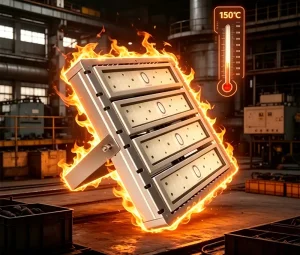
High-Quality Extreme High Temperature LED Light - Rated 150°C
Request Technical File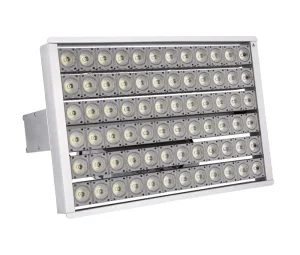
High-Quality High Temperature LED Light Rated 90°C(194°F)
Request Technical File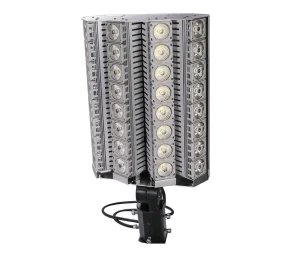
Best LS-STN Series Asymmetric LED Street Light for Roadway
Request Technical File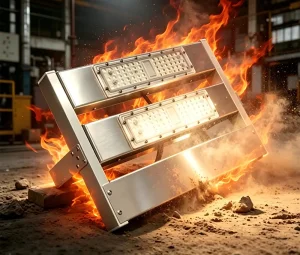
Best Tailored High Temperature LED Light Dustproof
Request Technical File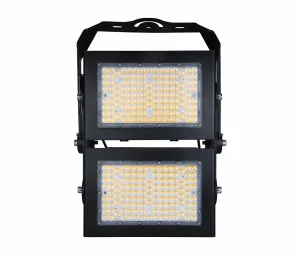
OEM Vega LED Sports Field Light - Robust Design, Optics
Request Technical File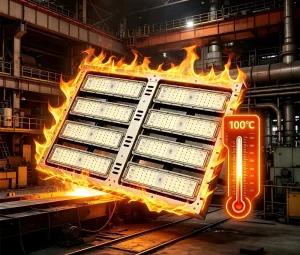
High-Quality High Temperature LED Light Rated 100°C(212°F)
Request Technical File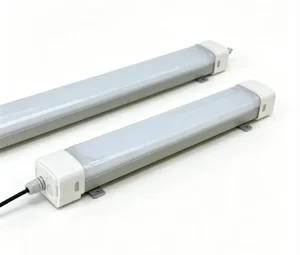
High-Quality IP65-IP67 Triproof LED Light – Waterproof, Dustproof
Request Technical File
High-Quality Flexible LED Mat - Powerful, Flicker‑Free Lighting
Request Technical File
Informed Decision Making
Outdoor Court Illumination FAQ
Crucial queries submitted by engineering consultants, athletic directors, and lighting contractors.
How does asymmetrical optics prevent glare for fast-paced racquet sports?
Asymmetrical optical lenses orient peak candela intensity downward at designated angles (typically 50° to 65°) rather than firing directly from the center. This design ensures that the front edge of the fixture acts as a natural physical cutoff visor. When athletes track high-trajectory lobs or overhead tennis serves, the light source is shielded from their direct line of sight, maintaining UGR ratings well below the stringent threshold of 19 while driving light deep into the opposite baseline.
What are the key differences between Class I, Class II, and Class III court requirements?
Under both IES RP-6-15 and EN 12193 benchmarks, court lighting is segregated by competition tier: Class I applies to elite national and international professional tournaments with large spectator volumes, demanding 500 to 750+ lux maintaining a uniformity coefficient (Emin/Eave) greater than 0.7. Class II serves mid-tier competitive matches, regional clubs, and collegiate athletics requiring 300 to 500 lux with uniformity above 0.6. Class III covers residential, recreational, and standard coaching applications, typically requiring 200 lux with uniformity above 0.5.
Can existing 1000W-1500W Metal Halide fixtures be retrofitted directly 1-for-1?
Yes. Our OEM luminaires provide direct 1-to-1 physical and electrical replacements. A standard 1500W Metal Halide luminaire consuming over 1650 system watts can be replaced with our 450W–600W LED court fixture. We furnish bespoke cross-arm adaptors, universal slip-fitter yokes, and matched remote driver configurations that mount directly onto preexisting high-mast bolt patterns without necessitating structural pole recalculation or cabling rewiring.
What measures are taken to guarantee reliability in humid and saline coastal areas?
Fixtures intended for shoreline courts utilize low-copper A380 die-cast aluminum coated with a multi-stage chromate conversion process followed by thermoset super-durable TGIC polyester powder or marine-grade AkzoNobel fluorocarbon paint. All exterior fasteners and mounting hardware are constructed exclusively from 316-grade stainless steel, passing rigorous 1,000-hour ASTM B117 neutral salt spray trials with zero galvanic or peeling corrosion.
What documentation is provided for OEM procurement and tender approval?
We provide a comprehensive procurement data package required for engineering sign-off: NVLAP-accredited IES LM-79 photometric test reports, LM-80/TM-21 lumen maintenance projections, complete DIALux project calculation files, thermal imaging validation reports under maximum ambient load, structural EPA wind drag calculations, and stamped factory certificates of origin and conformity.