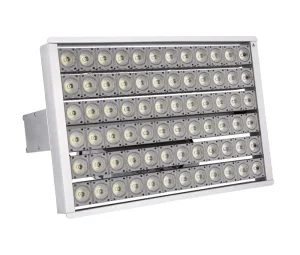
Featured Industrial Illumination & Mobile Mast Systems
Factory-direct OEM specifications manufactured to rigorous international tolerances, featuring modular drivers, vibration-isolated mast mounts, and certified heat-dissipating alloys.
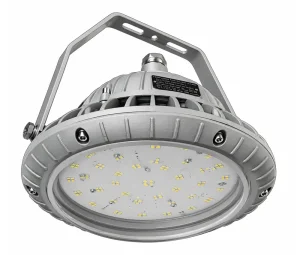
Best Explosion proof LED Light – Safe, Durable, Industrial Illumination Suppliers
Configure Model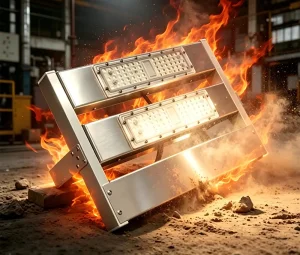
Best Tailored High Temperature LED Light with Dustproof Configuration
Configure Model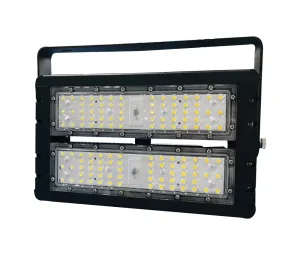
High-Quality 12V/24V DC LED Flood Light for Portable & Solar Systems
Configure Model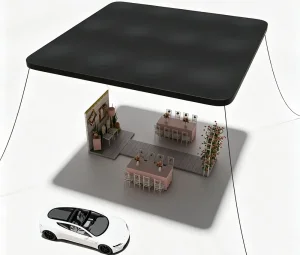
OEM Helium Balloon Sun Shade - Truss-Free Overhead Diffusion System
Configure Model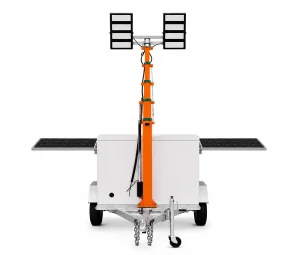
High-Quality 7M Solar Mobile Light Tower - Fully Autonomous Mast
Configure Model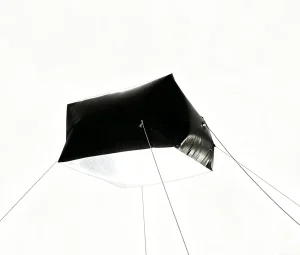
High-Quality Helium Balloon LED Light - Truss-Free Aerial Illumination
Configure Model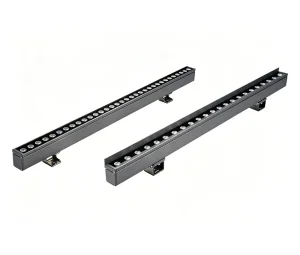
Best RGB Wall Washer – Effortless Architectural Linear Precision
Configure Model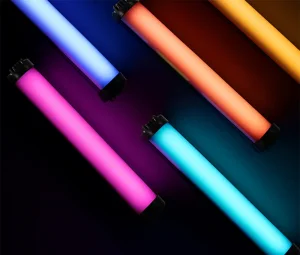
OEM Commercial Submersible Video Lights – Sub-Surface Broadcast Grade
Configure ModelMacro Industry Solutions: The Technological Transition in Temporary Illumination
The global portable lighting tower sector is experiencing an unprecedented structural transformation driven by stringent carbon mitigation mandates, high diesel logistics costs, and the rapid technological maturity of solid-state high-flux LED optics.
Photometric Efficacy Revolution (>180 lm/W)
Traditional metal-halide fixtures operating at 70–85 lm/W with extreme restrike delays (up to 15 minutes) are now obsolete. Contemporary OEM portable lighting systems harness high-lumen density multi-die LED arrays delivering up to 195 lumens per watt. This delivers an immediate 75% reduction in electrical load, allowing a 4x300W LED array to fully replace a legacy 4000W metal halide rig while achieving superior candela uniformity across the target zone.
Decarbonization & Hybrid Powertrain Shift
Industrial operators are rapidly phasing out unthrottled, continuous-running diesel generators. Through intelligent DC microgrid controllers, variable-speed Stage V / Tier 4 Final engines, and high-density Lithium Iron Phosphate (LiFePO4) storage banks, our hybrid light towers cut engine operating hours from 14 hours per night down to less than 2.5 hours, slashing fuel consumption and CO2 emissions by up to 88% per unit annum.
Acoustic & Urban Environmental Governance
Metropolitan utility overhauls, tunneling projects, and airport apron maintenance impose stringent noise thresholds, typically below 65 dBA at 7 meters. Pure battery-electric and photovoltaic mast systems provide true zero-decibel, emission-free operation, eliminating the public nuisance factor, local air pollution, and permitting delays inherent to conventional mechanical combustion rigs.
Global Commercial Landscape: Capex vs. Fleet Lifecycle Optimization (TCO)
Fleet managers and equipment rental conglomerates across North America, Europe, Australia, and the Middle East are evaluating procurement through the lens of Levelized Cost of Illumination (LCOI).
| Operating Parameter | Legacy Metal Halide Tower (4x1000W) | Standard Diesel-LED Tower (4x350W) | LSLEDSUS OEM Hybrid-Solar Mast |
|---|---|---|---|
| Continuous Fuel Burn | 2.2 - 2.8 Liters / Hour | 0.8 - 1.1 Liters / Hour | 0.18 - 0.28 Liters / Hour (Cycle-Charge) |
| Routine Service Cycle | Every 250 Operating Hours | Every 500 Operating Hours | Every 1,000 to 1,500 Operating Hours |
| Carbon Emissions (Annual) | ~21,500 kg CO2 equivalent | ~7,800 kg CO2 equivalent | < 1,900 kg CO2 equivalent (Solar-Assisted) |
| Cold-Start Lux Delay | 10 to 15 min restrike delay | Instantaneous (<100 ms) | Instantaneous with Automatic Photocell Dimming |
| Calculated 3-Year TCO | High (Constant fuel + ballast failure) | Moderate (Standard maintenance overhead) | Lowest (Payback realized within 14–18 months) |
Localized Compliance, Safety Engineering & Global Certification Frameworks
Deploying high-mast mobile lighting equipment globally demands compliance with regional highway trailer regulations, hazardous location directives, and optical safety mandates.
Trailer Chassis & Highway Homologation
Every mobile chassis is custom-engineered to regional vehicular standards: DOT / FMVSS in North America with dual electric braking systems; ADR (Australian Design Rules) with mine-spec secondary tow chains and heavy-duty torsion axles; and European Whole Vehicle Type-Approval (ECWVTA) with overrun inertial brakes, certified lighting arrays, and crash-rated retractable drawbars.
Hazardous Atmosphere Approvals (Ex / ATEX)
Refineries, offshore oil platforms, and underground mining operations require certified flameproof and non-sparking configurations. Our specialized hazardous-location lighting series features pressure-tested copper-free aluminum housings, borosilicate toughened lenses, and hermetically sealed driver enclosures rated for ATEX & IECEx Zone 1, Zone 2, Zone 21, and Zone 22 environments.
Optical Safety, Glare & Dark Sky Compliance
High-luminance roadside paving and airport tarmac operations enforce strict limits on upward waste light and glare angles (CIE 150:2017). Our proprietary asymmetric optical lenses direct 100% of the luminous flux into the functional working footprint, achieving a Glare Rating (GR) < 45 and zero upward luminaire distribution (U0), safeguarding adjacent highway lanes and preserving aviation visibility.
Mission-Critical Operational Applications & Engineered Field Deployments
Standard commercial floodlights consistently fail under extreme ambient heat, heavy mechanical vibration, and corrosive marine conditions. OEM portable towers are specifically built for demanding applications.
Open-Pit Mining & Heavy Excavation
Haul roads and active extraction benches require continuous high-mast illumination capable of surviving constant low-frequency mechanical vibration from 400-ton haulers. Our heavy-duty mining masts integrate high-tensile hot-dip galvanized steel, stainless steel hydraulic lines, silicone dampening gimbals, and IP68 fixtures designed to withstand abrasive mineral dust and severe blasting concussions.
Continuous Highway Resurfacing & Infrastructure
Nighttime highway construction requires rapid repositioning as paving trains advance. Our self-propelled and compact towable hydraulic mast light towers deploy to full 9-meter elevation in under 25 seconds via push-button electro-hydraulic winches, featuring 355° rotational articulation to illuminate trenching and asphalt lines without repositioning the trailer.
Disaster Recovery & Tactical Emergency Response
In the wake of cyclonic events, seismic disasters, or grid blackouts, rapid deployment and fuel independence are paramount. Our autonomous solar-battery light towers deliver instant emergency illumination alongside onboard 24V/110V/230V auxiliary power breakout boxes, powering mobile field hospitals, satellite communications gear, and rescue command posts without relying on localized fuel logistics.
Technological Roadmap (2025–2030): Next-Generation Smart Tower Architecture
The convergence of IoT telematics, advanced solid-state energy storage, and automated optical beam-forming is shaping the future of autonomous mobile illumination.
Intelligent MPPT & High-Cycle LiFePO4
Integration of high-yield bifacial monocrystalline photovoltaic wings with 99% conversion efficiency Maximum Power Point Tracking (MPPT) micro-inverters. Deep-cycle prismatic LiFePO4 chemistry yielding >4,000 cycles at 80% Depth of Discharge (DoD), backed by intelligent CAN-bus Battery Management Systems (BMS).
Global IoT Cloud Telematics & Geofencing
Full cloud-synchronized edge modems transmitting real-time operational diagnostics: GPS telemetry, battery state-of-health, fuel level sensors, photocell status, and remote mast raise/lower triggers. Predictive maintenance algorithms detect luminaire degradation or engine anomalies before field failures occur.
Modular Hydrogen Fuel-Cells & Adaptive Optics
Replacement of auxiliary combustion generators with solid-state proton-exchange membrane (PEM) hydrogen fuel-cell capsules, delivering true continuous 72-hour zero-emission runtimes. Dynamic motorized beam-shaping lenses adjust beam spread automatically based on mast height and target GPS coordinates.
Engineering & Procurement FAQ: In-Depth Specifications
Detailed answers for mechanical engineers, fleet directors, and procurement specialists specifying OEM portable lighting towers.
How does an OEM solar/hybrid light tower maintain continuous autonomy during prolonged inclement weather?
Our hybrid systems utilize a dual-redundancy power topology. The primary stage relies on a high-capacity LiFePO4 battery bank sized for 24 to 36 hours of continuous discharge, replenished during daylight by multi-directional bifacial solar panels. If solar insolation falls below the threshold required to restore nominal battery state-of-charge, an automated smart-controller triggers the onboard ultra-quiet diesel generator (such as a Kubota or Yanmar Tier 4 Final unit). The engine runs under optimum load exclusively to recharge the battery bank (typically taking 2 to 3 hours), then automatically shuts down, preventing inefficient wet-stacking caused by continuous low-load engine idling.
What wind load ratings are engineered into your vertical hydraulic and pneumatic masts?
Every LSLEDSUS mast is finite-element analyzed (FEA) and physical-proof tested to resist wind speeds of up to 100 km/h (28 m/s; 62 mph) when fully extended to heights between 7 and 12 meters with our four-point independent outrigger stabilization system deployed. Mast sections are fabricated from structural Q345B steel or marine-grade 6061-T6 extruded aluminum with dual-sheave stainless steel hoisting cables, automatic mechanical safety locks, and integrated mast-tilt interlocks that prevent trailering while elevated.
How do you manage thermal dissipation when light towers operate in ambient temperatures exceeding 50°C?
For deployment in desert environments (e.g., Middle Eastern or Western Australian mine sites), standard heatsinks suffocate. We engineer specialized extruded 6063-T5 aluminum modular thermal fin assemblies with integrated sintered copper heat-pipes. Drivers are housed in isolated thermal compartments separated from the LED junction box. Utilizing premium LED chips (such as Osram or Lumileds) operated at conservative current densities (50% below maximum drive current ratings), our fixtures maintain junction temperatures (Tj) well below 75°C, ensuring zero lumen depreciation and sustained L70 lifespans beyond 50,000 hours in 50°C to 55°C ambient conditions.
What customization scope is supported under your factory OEM / ODM lighting tower contracts?
Our OEM services cover complete end-to-end bespoke manufacturing. You can specify: chassis dimensioning and tow hitch types (Pintle, 50mm ball, DIN eye); trailer road approvals (DOT, ADR, ECWVTA); bespoke paint/powder-coat RAL color matching with C5-M marine-grade anti-corrosion prep; engine brand integration (Perkins, Kubota, Kohler, Yanmar); mast mechanics (vertical hydraulic, pneumatic telescopic, manual winch); custom optical distributions (narrow 15° beam for high-throw security vs. wide asymmetric road-lighting optics); and deep CAN-bus/IoT integration tailored to your proprietary fleet management platform.
Specialized High-Output Illumination & Mast Fixtures
Explore additional precision-engineered lighting fixtures engineered for high-heat manufacturing, offshore marine installations, stadiums, and heavy-duty portable masts.
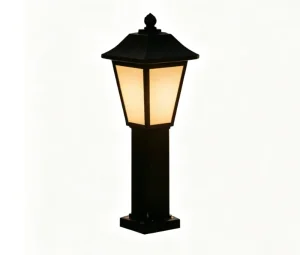
OEM Garden LED Light – Durable Landscape & Pathway Illumination
Configure Model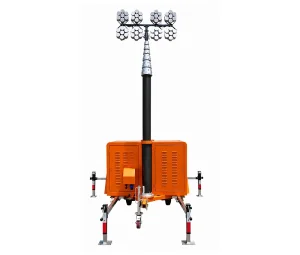
High-Quality High Brightness 12m Mobile Light Tower Factory
Configure Model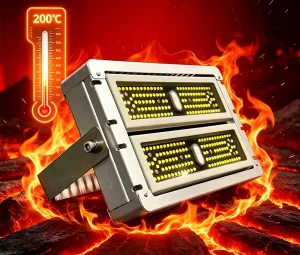
Best Ultra High Temperature LED Light - Rated 200°C (392°F) IP68
Configure Model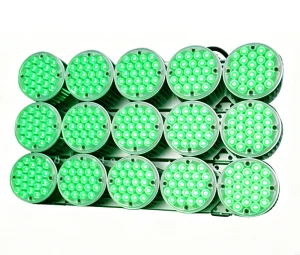
Best RGB Flood Lights - 1000W High Tower & Grand Landscape Fixture
Configure Model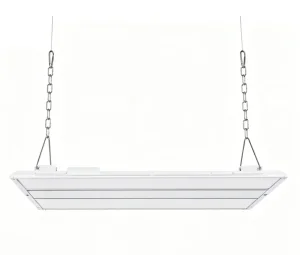
High-Quality Linear High Bay LED – Bright, Smart-Controlled Series
Configure Model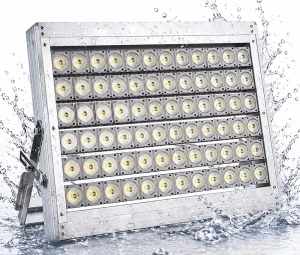
LS-FLN Titans Series LED Marine Light for Deep Sea & Offshore
Configure Model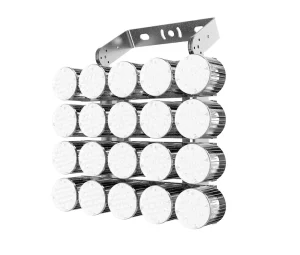
High-Quality Arena LED Stadium Light – Ultra‑Compact High Efficacy
Configure Model