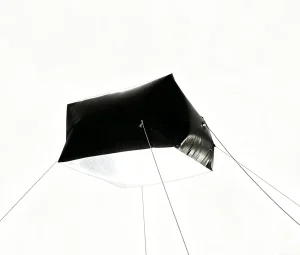
High-Quality Helium Balloon LED Light - Truss-Free Aerial Illumination with Optimized Helium Efficiency
Explore Specifications
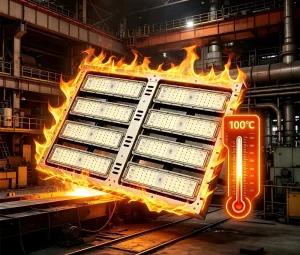
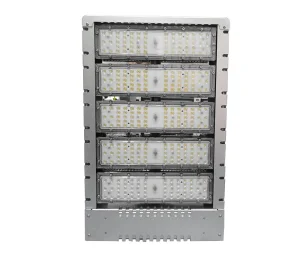
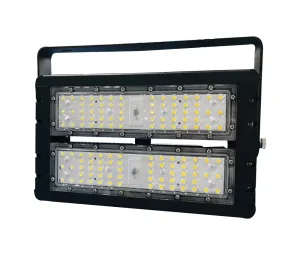
Explore our foundational enterprise solutions, integrating high-temp solid-state drivers, marine-grade corrosion defense, and industrial-rated aerial floodlight optics.
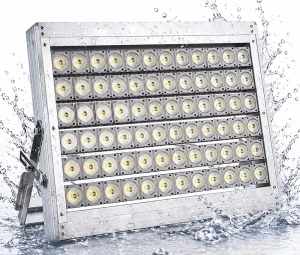
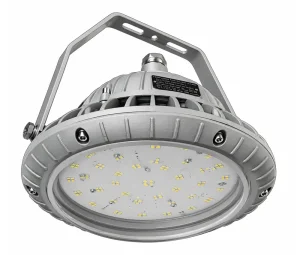
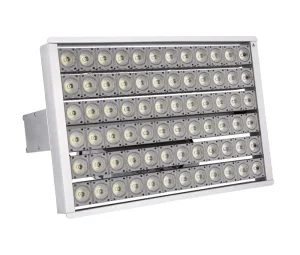
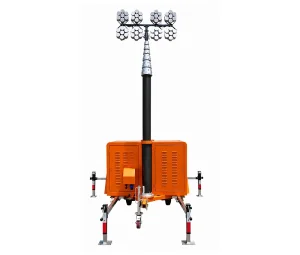
Modern consumer outdoor gear, tactical expedition hardware, and commercial eco-resort operators demand a transformational leap from rudimentary white illumination to precision-calibrated chromatic photonics.
In the contemporary outdoor equipment ecosystem, an OEM RGB Color Camping Light is no longer categorized merely as a recreational lantern; it represents an advanced converged platform of multi-spectrum solid-state emitters, electrochemical energy storage, and embedded firmware control. Historically, portable outdoor lighting was constrained by incandescent and early monochromatic phosphor-converted white LEDs, which lacked adaptability, had inefficient thermal throttling, and offered rudimentary battery runtimes. Today, global enterprise buyers—ranging from tier-one outdoor retail private labels to disaster-relief procurement agencies—require hyper-customized luminaire solutions that balance atmospheric ambient rendering (RGB/RGBW/RGB-CCT), biological circadian safety, emergency optical signaling (NATO-spec SOS/strobe protocols), and industrial-grade environmental resiliency.
As a seasoned B2B original equipment manufacturer and design house, our manufacturing framework bridges laboratory-grade optoelectronic engineering with high-throughput automated assembly. We address the core vulnerabilities traditionally associated with commercial camping lanterns: premature lumen depreciation, moisture-induced electrolytic driver failure, inaccurate chromaticity coordinates, and substandard lithium-ion thermal management. By implementing micro-prismatic diffuse optical covers, high-grade aircraft aluminum heat dissipation fins, and military-standard silicon seals, our OEM supply chain delivers turnkey luminaires designed to withstand severe mechanical drop shocks, extreme ambient temperatures (-30°C to +55°C), and extended immersion in aquatic environments.
Moving beyond basic 3-in-1 chips, our luminaires incorporate dedicated warm-white (2200K) and cool-white (6500K) channels alongside high-purity RGB dies, achieving over 16.8 million colors with a Color Rendering Index (CRI) exceeding Ra 96 for natural skin tones and biological visual comfort.
Engineered with integrated tier-1 automotive-grade 21700 or prismatic LiFePO4 cells, governed by hardware-redundant Battery Management Systems featuring over-charge, over-discharge, short-circuit, and dual NTC thermal throttling with USB-PD bi-directional fast charging.
Every enclosure is built with ultrasonic robotic welding or double-shot injection molding utilizing Bayer high-impact polycarbonates and UV-stabilized silicone gaskets, ensuring absolute hermeticity against high-pressure water jets and continuous submersion.
Comprehensive engineering data comparing commercial retail consumer standards against industrial and professional OEM camping luminaire specifications.
| Engineering Parameter | Commercial Grade (Standard Retail) | Industrial OEM Standard (Our Factory) | Mission-Critical / Tactical Spec |
|---|---|---|---|
| LED Emitter Configuration | Standard RGB 5050 SMD LEDs (Low CRI Ra <70) | High-Binning RGBW / RGB-CCT 3535 (Ra ≥95, R9 >80) | Military-Spec Lumileds / Cree Dual Spectrum + IR Strobe |
| Luminous Flux Output | 100 – 350 Lumens (Heavy Thermal Stepdown) | 500 – 1,800 Lumens Continuous (Active Thermal Reg.) | Up to 3,500 Lumens Turbo with Optical Collimation |
| Battery Chemistry & Cycle Life | Recycled 18650 Li-ion cells (300 cycles to 70%) | Grade-A 21700 NMC or LiFePO4 (≥1,200 cycles to 80%) | Solid-State / Extreme Temp LiFePO4 (≥2,500 cycles) |
| Driver Topology | Low-frequency PWM dimming (Noticeable flicker) | Constant Current Reduction (CCR) + >25kHz Ultra-PWM | Zero-Ripple Hybrid Synchronous Buck-Boost IC |
| Ingress Hermeticity | IPX4 (Splash-proof only, unsealed battery port) | Certified IP67 / IP68 Submersible with O-ring Seals | IP69K High-Pressure Steam Washdown & Salt Spray Tested |
| Drop & Impact Resistance | IK04 (Brittle ABS plastic body, snaps easily) | IK08 (Bayer UV-stabilized Polycarbonate + Rubber Armor) | IK10 (CNC Machined Aircraft T6-6061 Hard Anodized) |
| Wireless Control Ecosystem | Infrared Remote (Line-of-sight <3m) or None | BLE 5.2 Mesh, Tuya Smart / Matter over Thread | Encrypted Sub-GHz RF Long-Range Mesh (Up to 1.5km line-of-sight) |
Global procurement directors must account for the Total Cost of Ownership (TCO) rather than focusing exclusively on the initial bill of materials (BOM). When distributing private-label consumer goods or deploying institutional illumination assets across national parks, glamping resorts, and emergency stations, field failures resulting from water ingress or dead cells generate catastrophic warranty returns. Our OEM testing regime subjects random sample units from each production run to continuous 48-hour salt-fog chambers, 1.5-meter drop tests onto solid concrete across six directional axes, and spectrophotometer verification in integrating spheres to ensure that batch-to-batch color temperature delta (SDCM) remains strictly within 3 steps.
Architecting multi-functional portable lighting systems tailored to specific vertical operational constraints, atmospheric ambiances, and tactical endurance requirements.
For high-end wilderness lodges, geodesic domes, and safari retreats, lighting must enhance the landscape architecture while offering intuitive guest comfort. Our RGBW solutions integrate ambient mood programming, warm candle-flicker simulation (1800K), and seamless automated grouping via wireless BLE mesh. Centralized resort controllers can dynamically orchestrate thousands of distributed battery-powered lanterns for unified twilight lighting themes without the infrastructure expense of trenching underground electrical cables.
Vehicular expeditioners require multi-voltage versatility. Our luminaires are engineered with dual magnetic base mounts, M8 tripod threads, and direct 12V/24V DC automotive solar integration. The inclusion of amber and deep-red (660nm) optical spectrum channels prevents night-vision bleaching and minimizes the attraction of insect swarms, while the robust aluminum housing functions as an auxiliary thermal sink during continuous maximum-lumen area illumination.
During seismic events, hurricanes, or critical power grid disruptions, tactical command centers require reliable autonomous photonics. Our industrial emergency camping lights provide 120-hour minimum low-glow runtimes, integrated high-capacity battery reverse output for field telemetry devices, and universal international visual SOS frequency strobe arrays visible for over 3.5 kilometers in unobstructed terrain.
Maintenance, Repair, and Operations (MRO) teams in civil engineering, pipeline monitoring, and ship hull inspections utilize our specialized RGB color lights for visual flaw contrast enhancement. By toggling specific narrow-band green or cyan spectra, non-destructive surface crack detection and chemical leak identifications are magnified significantly compared to standard high-glare white light fixtures.
Pioneering advancements across solid-state electrochemistry, smart home protocol unifications, and algorithmic power optimization for high-efficiency mobile illumination platforms.
Transitioning proprietary BLE stacks into certified Matter-over-Thread mesh integration, allowing smart outdoor camping luminaires to seamlessly bridge with commercial IoT networks without requiring cloud gateways.
Pioneering semi-solid and all-solid-state electrolyte cell integration into portable outdoor housings, expanding working thermal thresholds to -40°C ~ +85°C while eliminating thermal runaway fire risks.
Integrating flexible, high-efficiency micro-perovskite solar cells directly into the outer curvature of the lantern casing, enabling continuous trickle charging under ambient daylight and low-angle forest canopies.
Embedding localized edge-AI sensor arrays that automatically analyze ambient light temperature, human pupil dilation, and battery residual curves, micro-adjusting driver duty cycles for maximum visual acuity and runtime.
Ensuring complete product safety, cross-border tariff optimization, hazardous materials testing, and localized warranty fulfillment across North America, Europe, and Asia-Pacific markets.
Our OEM manufacturing facility operates under strict ISO9001, ISO14001, and BSCI social compliance protocols. Every finished product model family holds certified test reports for CE (LVD/EMC), RoHS 2.0, FCC Part 15B, REACH, and UL 153 / UL 2743 standards for consumer electrical and power bank safety.
Cross-border distribution of integrated lithium battery systems requires rigorous HazMat compliance. We maintain certified UN38.3 test summaries, MSDS documentation, and drop-tested air/sea freight packaging (PI966/PI967) to ensure smooth international maritime and air cargo clearance without port holdups.
From custom CNC tooling and structural mold design to laser-etched corporate logos, Pantone-matched silicone chassis armoring, custom blister packaging, and tailor-made firmware UI transitions, our engineering teams offer end-to-end turnkey realization from initial concept rendering to mass output.
Essential technical, commercial, and operational clarifications for corporate sourcing managers, brand owners, and industrial lighting distributors.
For standard chassis models with custom logo engraving and tailored retail packaging, our MOQ starts at 500 units. For complete private-tooling ODM projects requiring custom injection molds, specialized PCB driver development, and bespoke optical lenses, our standard tooling MOQ begins at 2,000 to 3,000 units, with tooling costs credited back once volume milestones are met.
Low-grade consumer lanterns use cheap low-frequency PWM dimming (<1kHz), resulting in visible stroboscopic flicker that strains human eyesight and ruins smartphone video capture. We implement Constant Current Reduction (CCR) circuitry combined with ultra-high frequency PWM (>25,000Hz), ensuring completely flicker-free performance certified to IEEE 1789-2015 standards.
Every OEM battery assembly incorporates an intelligent hardware and firmware Battery Management System (BMS). We employ dual NTC thermal sensors monitoring both the cell core and the aluminum heatsink. Circuitry includes active over-voltage cutoff, secondary under-voltage protection, auto-recovering short-circuit protection, and flame-retardant V0-grade isolation barriers around all internal battery brackets.
Yes. Our in-house software engineering team develops customized native iOS and Android SDKs, complete with custom branding, color pickers, music-sync modes, timer scenes, and mesh grouping controls. Alternatively, we can integrate pre-certified Tuya, Smart Life, or Matter-compatible wireless modules to accelerate time-to-market.
Rather than relying merely on theoretical CAD sealing models, our manufacturing facility employs multi-stage quality control: 100% of manufactured housings undergo negative-pressure air hermeticity testing on the automated SMT line before battery assembly. Finished products undergo simulated immersion testing in automated 1-meter deep hydrostatic pressure tanks per IEC 60529 testing standards.
Rapid 3D photopolymer prototyping and functional circuit samples are delivered within 7 to 10 business days. Upon design freeze and tooling authorization, plastic injection and aluminum die-cast tooling requires 25 to 35 calendar days. Mass production lead times typically range from 30 to 45 days, depending on batch volumes and specialized raw material allocations.
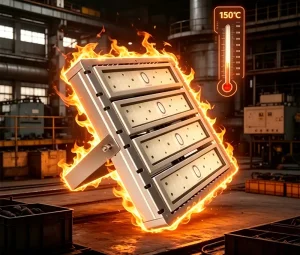
Beyond portable camping electronics, our factory manufactures heavy-duty industrial fixtures engineered to withstand temperatures up to 300°C, deep marine immersion, and hazardous industrial atmospheres.