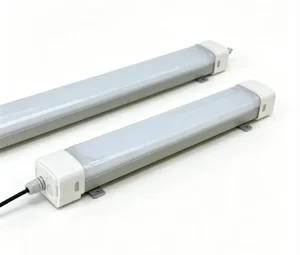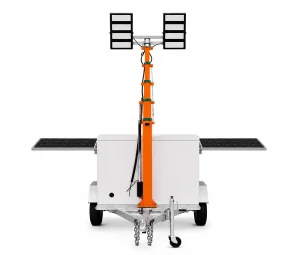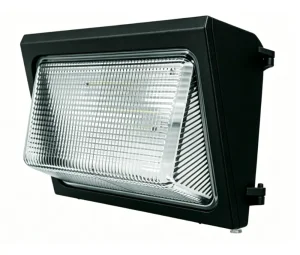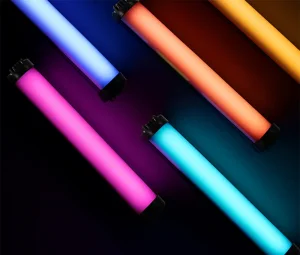
Featured Subsea & Heavy Industrial Lighting Systems
Executive Summary: The Evolution of Subsurface & Industrial Marine Illumination
The global underwater and harsh-environment illumination sector is undergoing a fundamental structural transition. Driven by expanding offshore renewable operations, subsea robotic exploration (ROVs and AUVs), deep-water aquaculture, and municipal waterfront modernizations, the requirement for highly durable, hydrostatically sealed OEM lighting systems has reached unprecedented demand.
Historically, subsea and underwater lighting solutions suffered from high thermal degradation, galvanic corrosion in saline environments, and catastrophic seal failure due to micro-fractures under variable pressure regimes. Today, top-tier global OEM underwater lights suppliers combine advanced metallurgical alloys (such as 316L stainless steel, titanium, and hard-anodized marine aluminum), hermetic glass-to-metal bonding techniques, and specialized optical refractor lenses. These systems achieve continuous operating lifespans exceeding 50,000 hours even when subjected to extreme hydrodynamic drag, thermal shocks, and saline immersion.
This comprehensive engineering whitepaper examines the global industrial status of underwater and severe-environment LED lighting, details critical material selection and optical physics, outlines the multi-year technology roadmap, and serves as an authoritative procurement framework for commercial buyers, naval architects, and industrial plant managers worldwide.
Global Commercial & Industrial Market Dynamics
The international market for specialized underwater and heavy industrial lighting is expanding at a CAGR of 8.4%, expected to exceed multi-billion-dollar valuations within the decade. OEM manufacturers play a central role in delivering customized photometrics for distinct global industrial sectors.
Subsea Robotics & Exploration
Unmanned Underwater Vehicles (UUVs), ROVs, and deep-sea research submersibles require high-density, low-footprint LED luminaires capable of operating at depths exceeding 2,000 meters. OEM suppliers provide pressure-compensated driver topologies and ultra-narrow optical spot beams designed to penetrate dense turbidity.
Offshore Energy & Marine Infrastructure
Oil rigs, wind turbine foundations, and harbor installations demand continuous IP68/IP69K illumination to ensure round-the-clock inspection safety. OEM fixtures must withstand constant salt spray, physical wave impact, and cyclic hydrostatic pressure variations without structural delamination.
Industrial Sumps & Nuclear Containment
Beyond traditional oceanography, underwater lighting is vital inside land-based industrial processing units, nuclear cooling channels, and chemical settling tanks. These extreme environments require specialized glass lenses and chemically inert housings resistant to radiation and aggressive liquids.
Subsea Technical Architecture & Metallurgical Selection
Designing durable submerged luminaires requires solving three interconnected engineering constraints: thermal management within stagnant fluid boundary layers, optical refraction index matching, and galvanic isolation.
| Housing Material Class | Tensile Strength / Yield | Corrosion Resistance | Optimal Application Scenario |
|---|---|---|---|
| Titanium Grade 5 (Ti-6Al-4V) | 880 MPa / 828 MPa | Immune to marine pitting; zero galvanic reaction | Deep-sea submersibles (>3,000m depth), high-salinity industrial tanks |
| 316L Stainless Steel | 485 MPa / 170 MPa | High resistance (PREN ≥ 25); requires sacrificial anode protection | Commercial docks, heavy-duty marine floodlighting, underwater video production |
| Hard-Anodized Aluminum (6061-T6) | 310 MPa / 276 MPa | Moderate; requires 50μm Type III hard anodizing coating | Lightweight ROV mounts, municipal pool/fountain installations, sports lighting |
| Thermally Conductive Polymers | 120 MPa / 95 MPa | Total chemical immunity | Low-power architectural landscape lighting, warm-water aquaculture pools |
Subsea Optical Refraction Index Adjustment
Unlike air-bound LED luminaires where light transitions from polycarbonate/glass into air ($n \approx 1.00$), underwater optics encounter water ($n \approx 1.333$). This significant shift reduces refraction angles, narrowing beam profiles and causing unexpected hotspot concentration if standard air optics are utilized.
Leading OEM underwater lights suppliers utilize specialized total internal reflection (TIR) optical matrices engineered specifically for liquid interfaces. By pre-compensating for liquid refractive indices, custom optics eliminate edge chromatic aberration, preserve high beam uniformity (>0.85), and maximize central beam intensity (candela output per watt).
Localized Application Scenarios & Engineering Deployment
Different underwater and industrial applications present unique physical operational demands. OEM design flexibility allows tailoring drive current, spectral output, and mechanical mounting configurations to site-specific conditions.
1. Submersible Commercial Videography
Cinematography and marine inspection demand high Color Rendering Index (CRI > 95, TLCI > 98) without flickering at high camera frame rates (>1000 FPS). OEM video lights integrate constant-current ripple-free drivers, specialized spectrum emitters (including deep red and cyan filling), and 2-meter to 100-meter depth ratings.
2. High-Temperature Industrial Sumps
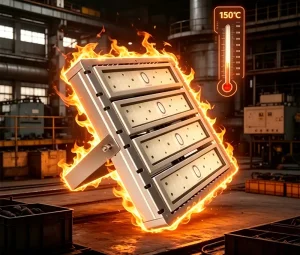
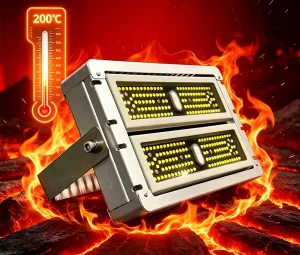
In chemical manufacturing and power plant cooling reservoirs, water temperatures can spike above 80°C to 150°C. Standard LED drivers fail instantly. OEM suppliers deploy remote driver enclosures (placing sensitive electronics outside the thermal zone) coupled with silicone-sealed high-temperature LED boards rated up to 200°C continuous ambient operation.
3. Industrial Aquaculture photoperiod control
Commercial salmon and tuna fish farming rely on precise narrow-spectrum blue-green (460nm-520nm) submerged light arrays to regulate fish photoperiods, accelerating growth while suppressing parasite infestations. OEM customization enables multi-channel monochromatic tuning controlled via RS485 or DMX protocols.
OEM Manufacturing Ecosystem & Strategic Customization Process
Partnering with a dedicated OEM underwater lights supplier streamlines product development from initial CAD fluid dynamic simulation to certified mass production.
Thermal & Hydro Photometrics
Computer-aided ANSYS modeling of fluid dissipation and oceanographic beam refraction.
CNC Alloy Machining
5-axis precision machining of 316L stainless steel or titanium blocks with sub-micron tolerances.
Hermetic Sealing & Encapsulation
Dual O-ring fluoroelastomer sealing paired with optical-grade silicone potting compound.
Hyperbaric Testing
100% unit validation in pressure chambers simulating 1.5x maximum rated operation depth.
Frequently Asked Questions: Subsea & Industrial Lighting Procurement
Technical clarification for procurement officers, naval architects, and B2B project managers.
What is the key difference between IP68 and IP69K for underwater industrial fixtures?
IP68 certifies continuous submersion under specified pressure conditions (e.g., 50 meters for 72 hours). IP69K adds protection against high-pressure, high-temperature washdowns (up to 100 bar at 80°C). Industrial marine applications often require dual IP68/IP69K certification to ensure both subsea reliability and deck-cleansing durability.
How do OEM suppliers prevent galvanic corrosion when mounting metal lights on ocean vessels?
Galvanic corrosion occurs when dissimilar metals contact in salt water. OEM suppliers utilize isolation gaskets (delrin or PTFE bushings), electropolished 316L housing surfaces, or sacrificial zinc/magnesium anodes to ensure structural integrity over years of continuous marine deployment.
Can underwater LED fixtures be operated out of the water safely?
Standard underwater LEDs rely on water for heat dissipation. Operating them in air can lead to thermal runaway. However, custom OEM lights engineered with active thermal foldback circuits automatically dim the LEDs when operated in air, restoring full lumen output upon re-submersion.
What engineering modifications are required for high-temperature submerged environments (>80°C)?
For high-heat fluids (such as hot springs, power station discharges, or industrial heat exchangers), standard FR4 circuit boards and epoxy potting fail. OEM solutions utilize aluminum-core PCBs, fluororubber seals, remote-mounted power supplies, and ceramic-packaged LEDs rated for elevated ambient temperatures.
Industrial, Marine & High-Bay Product Solutions