Priority Deployment Catalog
Specialized Heavy-Industrial & Hazard-Rated Luminaires for Tokyo
Engineered to meet the stringent Class I, Div 1/2, Zone 1/21 gas and vapor explosion-risk criteria across the Tokyo Bay industrial rim.
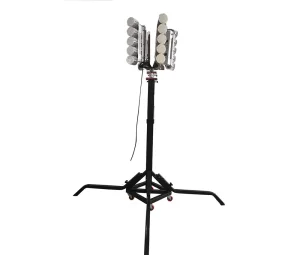
Tokyo Infrastructure OEM 4m Mobile Hazard Light Tower
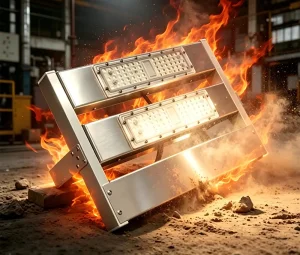
Tokyo Industrial High-Temp & Dust-Sealed LED Fixture
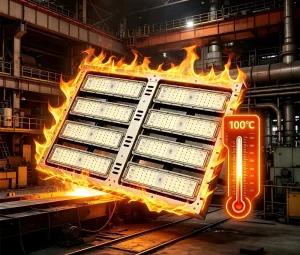
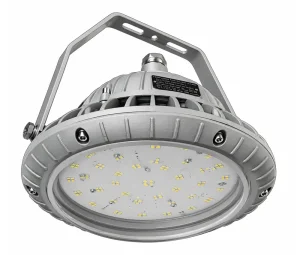
Tokyo Port Marine IP68 High-Temp LED Floodlight (100°C)
Regional Field Dynamics
Industrial Landscape of Tokyo: Operating Realities in the Keihin Zone
The Greater Tokyo Metropolitan Area and the adjacent Keihin Industrial Belt represent one of the world's most dense concentrations of high-stakes manufacturing, power generation, and advanced chemical operations.
Procuring explosion-proof LED luminaires in Tokyo is fundamentally distinct from standard industrial installations elsewhere in East Asia. As the economic nexus of Japan, Tokyo sits adjacent to the massive petrochemical installations, LNG storage terminals, and hydrogen bunkering hubs along Tokyo Bay—spanning Shinagawa, Ota Ward, Kawasaki, and Yokohama. In this hyper-compact urban-industrial interface, plant managers and lead electrical contractors operate under the dual mandate of zero-defect workplace safety and extreme spatial efficiency.
Under the Fire Service Act of Japan and the High Pressure Gas Safety Act (METI), hazardous environments where volatile vapors, paints, thinners, liquefied natural gas, and synthetic hydrogen are produced, stored, or processed require certified explosion-proof equipment. Historically, facilities relied on heavy, power-hungry high-pressure sodium or metal-halide explosion-proof fixtures. Today, Tokyo’s rigorous climate transition targets (Tokyo Green Transformation / GX Initiative) require facilities to radically cut baseline electrical consumption while simultaneously improving luminous efficacy, reducing relamping labor costs, and maintaining unyielding safety compliance.
Critical Factors Governing Tokyo Industrial Illumination
When selecting an explosion-proof light manufacturer for projects across Kanto, four non-negotiable operational barriers must be resolved:
- Seismic Resilience (Taishin-Kōzō): Tokyo is located in one of the planet's most seismically active zones. Explosion-proof fixtures suspended from ceiling beams, catwalks, or processing columns must withstand rapid lateral accelerations up to 2.0G without structural sheared bolts, dislodged lenses, or fractured internal driver modules.
- Tokyo Bay Marine Corrosion (C5-M Classification): Luminaires installed across the port facilities of Koto, Shinagawa, and coastal Ota are continuously exposed to marine airborne salts, high relative humidity (exceeding 85% during typhoon season), and industrial acid gasses. Fixture bodies must be machined from marine-grade copper-free aluminum (<0.1% copper) with heavy-duty fluorocarbon powder coatings.
- Hydrogen Bunkering & Class IIC Environments: Tokyo is leading Japan’s nationwide transition into a hydrogen society, deploying commercial hydrogen refueling facilities for fuel-cell electric buses and light trucks. Hydrogen has an exceptionally low ignition energy (0.02 mJ) and belongs to Gas Group IIC, necessitating advanced flameproof (Ex d) or increased safety (Ex eb) enclosures engineered specifically for rapid thermal dissipation.
- Space Constriction in Subterranean Infrastructure: Tokyo's underground utility tunnels, subway substations, and storm-water flood prevention complexes (such as the Metropolitan Area Outer Underground Discharge Channel) demand ultra-low-profile, high-output LED fixtures that deliver uniform beam spreads without producing intolerable glare in low-ceiling working clearances.
Enterprise Procurement Framework
What Global EPCs & Tokyo Facility Directors Demand
Comparing the technical engineering parameters between generic industrial lighting and purpose-built explosion-proof luminaires deployed in Tokyo's hazardous manufacturing zones.
| Engineering Parameter | Standard Commercial LED | Generic Ex-Lighting | Lsledsus Tokyo-Spec Heavy Industrial |
|---|---|---|---|
| Hazardous Zone Suitability | Unclassified Safe Zones Only | Zone 2 (Gas) / Zone 22 (Dust) | Zone 1, 2 (Gas Groups IIA, IIB, IIC) & Zone 21, 22 (Dust) |
| Japanese Standard Harmony | Basic PSE Certification | General IECEx test paper | TIIS / JNIOSH / JIS C 60079 Technical Harmony Protocol |
| Thermal Endurance Range | -10°C to +40°C | -20°C to +50°C | -40°C to +80°C / Tailored Core Models up to 300°C |
| Anti-Seismic & Vibration Retention | None (Standard bracket) | Single eye-bolt mount | Dual Safety Cable Rigging + 2.0G Anti-Shear Bracketry |
| Lens & Enclosure Integrity | Standard Polycarbonate | Basic Tempered Glass | Shock-Resistant Borosilicate Lens (IK10) + Ex-d Gap Seal |
| Corrosion Resistance Class | Standard C2 / Indoor | C3 Industrial | ISO 12944 C5-M Marine Coastal / 1000h Salt Spray Verified |
| Luminous Maintenance (L70) | 30,000 Hours | 50,000 Hours | > 100,000 Hours (Mean Well / Inventronics Industrial Drivers) |
Flameproof Isolation Architecture
Our Ex-d chambers isolate internal arc flashes or thermal ignition from surrounding gases. Machined flame-paths cool escaping gas below the autoignition temperature of atmospheric ethylene, propane, and hydrogen.
Independent Thermal Bypassing
Heat kills LEDs in confined industrial housings. We isolate the electrical driver cavity from the LED emitter board using thermal air gaps and aircraft-grade heat pipes, preventing heat concentration even in 80°C ambient temperatures.
Precision Polar Optics
Tokyo workspaces require targeted lux distribution without wasting light in unwanted zones. We engineer anti-glare optical distribution angles (30°, 60°, 90°, 120°) ensuring uniform illumination across valves, control panels, and walkways.
Engineered Field Deployments
Turnkey Lighting Solutions Across Tokyo's Core Industrial Sectors
Tailored engineering answers addressing extreme heat, volatile combustible dust, and high-salinity coastal environments.
1. Petrochemical Refineries & LNG Terminals along Tokyo Bay
In refining distillation columns, valve manifolds, and offshore tanker discharge docks, volatile hydrocarbons (including benzene, toluene, and methane) pose constant gas ignition threats. We supply flameproof (Ex d IIC T6) floodlights and linear pendant fixtures finished in an electrostatically applied, corrosion-inhibiting epoxy coating. Equipped with stainless steel mounting brackets (SUS316) and dual gland entries, these luminaires eliminate galvanic corrosion while delivering clean 5000K daylight visibility for night operations and safety audits.
2. Semiconductor Fabrication & Chemical Storage Facilities
Across the western Kanto technology corridors, precision cleanrooms and specialized chemical vapor deposition (CVD) suites utilize pyrophoric and volatile specialty gases (such as silane, arsine, and flammable solvent vapors). Luminaires deployed in these clean spaces must not only guarantee non-sparking electrical containment but also prevent particle accumulation. Our smooth-contoured, IP66/IP68 sealed explosion-proof fixtures eliminate crevices, resist aggressive cleanroom chemical washdowns, and are available with UV-filtered amber optics to protect photolithography processes.
3. Subterranean Rail Infrastructure, Tunnels & Flood Chambers
Tokyo’s underground transport web and stormwater drainage complexes encounter moisture saturation, particulate brake dust, and localized explosive sewer gas pockets. Traditional fixtures suffer rapid seal degradation and driver burnout. We deliver heavy-duty, IP68 rated explosion-proof luminaires equipped with integrated 10kV/20kV surge suppressors capable of absorbing high-energy voltage spikes caused by electric rail operations and emergency generator switches.
4. Emergency Disaster Relief & Municipal Off-Grid Lighting
Following seismic events or typhoons, hazardous recovery sites frequently encounter gas leaks, broken fuel pipelines, and loss of main power. Our portable, explosion-proof mobile lighting masts and battery-supported floodlights provide immediate, non-sparking illumination for first responders, utility repair teams, and metropolitan defense agencies working directly inside hazardous collapse perimeters.
Innovation Horizon 2026-2030
Technical Roadmap: The Next Generation of Explosion-Proof Lighting
Advancing smart sensor integration, lightweight metallurgy, and thermal engineering to meet Tokyo's evolving industrial landscape.
The industrial illumination sector is undergoing an architectural shift away from heavy, cast-iron legacy housings toward precision-engineered, smart-enabled fixtures. As an innovative manufacturer serving Tokyo, Lsledsus focuses its research and development on four distinct technological tracks:
1. Smart IoT & Sensor Fusion
Integrating intrinsic safe (Ex i) BLE mesh nodes, thermal heat sensors, and gas detection telemetry inside explosion-proof light bodies. Fixtures act as distributed environmental monitors across Tokyo processing bays without requiring separate explosion-proof sensor enclosures.
2. Super-Alloy Thermal Dispersion
Utilizing aerospace-grade phase-change copper micro-heat pipes and graphene heat sinks. This cuts overall luminaire weight by 40%—drastically reducing the structural load on older Tokyo factory roofs and improving seismic stability.
3. Optical Glare-Suppression Arrays
Developing custom micro-prismatic borosilicate lenses that maintain Unified Glare Ratings (UGR) below 19. This protects crane operators, chemical batchers, and inspectors working in confined spaces from blinding glare.
Furthermore, the drive toward hydrogen production facilities requires continuous development in sealing science. While standard propane or methane gases present a maximum experimental safe gap (MESG) of roughly 0.9 mm, hydrogen demands an MESG of under 0.29 mm. Our latest flameproof manufacturing techniques employ CNC multi-axis milling to guarantee thread profiles and planar joint tolerances with microscopic accuracy, ensuring total flame quenching in hydrogen environments.
Japanese Regulatory Framework
Localized Support & Japanese Compliance Architecture
How Lsledsus assists EPCs, contractors, and local distributors in navigating Japanese explosion-proof compliance and safety certifications.
In Japan, the importation and installation of electrical equipment in hazardous environments are subject to strict regulatory oversight. The Ministry of Economy, Trade and Industry (METI), alongside the Ministry of Health, Labour and Welfare (MHLW), establishes strict codes executed through testing bodies such as the Technology Institution of Industrial Safety (TIIS).
Historically, foreign manufacturers faced severe hurdles navigating TIIS certification due to localized testing criteria and unique documentation standards. As international harmonization progresses around the IEC 60079 series (JIS C 60079), Lsledsus provides complete engineering and technical documentation to streamline domestic compliance:
- IECEx & ATEX Direct Traceability: Every luminaire comes supported by complete IECEx test reports and certificates from recognized Notified Bodies (such as TÜV SÜD or DEKRA), providing the technical baseline needed for Japanese domestic homologation and site-specific inspections.
- Japanese Standard Terminal & Conduit Compatibility: Fixtures come pre-machined or supplied with precision brass or stainless adaptors supporting standard Japanese G-thread (parallel pipe thread JIS B 0202) alongside international NPT and metric thread conduits.
- Seismic Installation Hardware Kits: We supply certified SUS304/SUS316 safety tether cables, anti-loosening spring washers, and shock-absorbing drop-rod mounting brackets designed to meet local earthquake building codes.
- Dialux Photometric Engineering Support: Our technical team delivers custom DIALux lighting simulations using verified IES and LDT files, calculating exact floor lux levels, wall uniformity, and glare ratings before project sign-off.
Technical Clarifications
Frequently Asked Questions: Tokyo Explosion-Proof Lighting
Authoritative answers to core engineering, certification, and procurement questions encountered by Japanese engineering firms.
What is the difference between Ex d (flameproof) and Ex e (increased safety) for Tokyo installations?
Ex d (flameproof) luminaires are built to withstand an internal explosion. If flammable gases enter the fixture and ignite, the robust housing contains the pressure while the precision flame-path cools escaping gases below the ignition temperature of the external atmosphere. Ex e (increased safety) relies on design measures to prevent internal sparks, arcs, and excessive temperatures from occurring altogether. For Tokyo's high-risk Zone 1 chemical and hydrogen environments, Ex d IIC enclosures remain the standard choice for reliable containment.
How do Lsledsus fixtures address earthquake risks in Tokyo factory facilities?
Earthquake safety is built into our mechanical design. All heavy ceiling-mount fixtures feature redundant secondary suspension safety cables made from high-tensile stainless steel, preventing fixtures from falling if primary anchor bolts shear under dynamic stress. Our mounting brackets are reinforced with heavy gussets rated to endure seismic vibrations up to 2.0G, verified via vibration table simulations.
Can Lsledsus explosion-proof luminaires be installed in coastal Tokyo Bay facilities with salt-spray exposure?
Yes. Tokyo Bay installations (in Shinagawa, Yokohama, and Kawasaki) face high coastal salinity and industrial sulfur gases. Our explosion-proof luminaires use copper-free ADC12 or A380 aluminum alloy, pre-treated with chemical passivation and coated with multi-layer baked fluorocarbon powder. Fixture fasteners, glands, and mounting arms are forged from marine-grade SUS316 stainless steel, passing 1,000-hour neutral salt spray tests under ISO 12944 C5-M guidelines.
What temperature classes (T-Ratings) are available for hydrogen and chemical facilities?
We provide fixtures certified across T1 through T6 ratings. In plants handling low-ignition-point chemicals or hydrogen, T6 (maximum outer surface temperature ≤ 85°C) or T5 (≤ 100°C) is required. Our advanced heat sinks keep the external housing temperature well below auto-ignition thresholds, even when running at 100% load in elevated summer ambient conditions.
Do you offer customized OEM manufacturing and bespoke mounting options?
Yes. Over 40% of our production supports custom OEM engineering. We customize mounting hardware (ceiling, 25° stanchion, wall-mount, pendant, or floodlight trunnion), adapt thread entries to Japanese standard G-threads or NPT, modify beam distribution angles, integrate remote driver boxes for high-heat zones, and match factory brand specifications.
How can Tokyo contractors verify lighting levels and beam uniformity prior to purchase?
Our applications engineering team provides comprehensive DIALux photometric studies at no charge. By importing your facility's CAD layouts, mounting heights, and hazardous zone classifications, we calculate exact illuminance (lux), uniformity ratios, and glare assessments to guarantee compliance with JIS and industrial safety guidelines before production begins.
Complete Heavy-Duty Catalog
Specialized Industrial & Infrastructure Fixtures for Greater Tokyo
From high-temperature steel mill luminaires to mobile mast towers and waterproof architectural washers, explore our complete industrial portfolio.
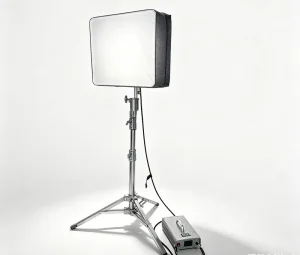
Tokyo Precision Industrial Flexible LED Surface Mat
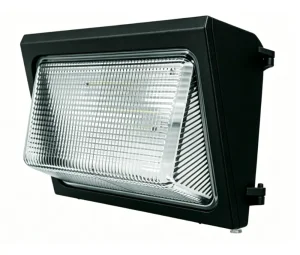
Tokyo Logistics Facility Secure Exterior Wall Pack LED
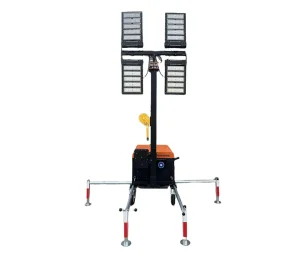
Tokyo Bay Terminal Wholesale 6m Mobile Light Tower
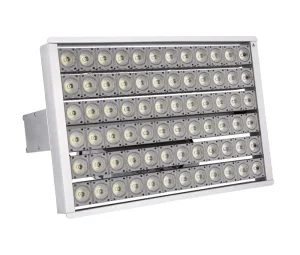
Tokyo Industrial High-Temp LED High Bay Rated 90°C
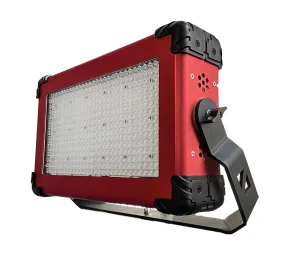
Tokyo Underwater Film & Marine Inspection LED Light
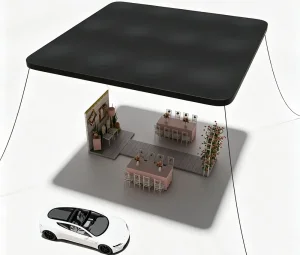
Tokyo Urban Rescue Helium Balloon Diffused Light
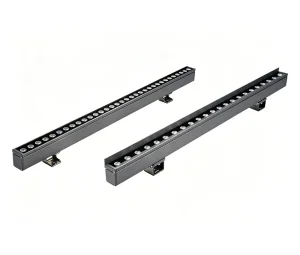
Tokyo Waterfront Architectural Precision RGB Wall Washer
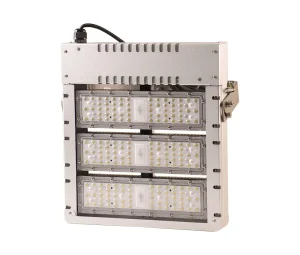
Tokyo Industrial High-Temp Flood & High Bay Light (80°C)
Ready to Upgrade Your Tokyo Industrial Lighting?
Connect directly with our engineering team for photometric layouts, custom mounting adaptations, explosion-proof certificate packages, and factory-direct pricing for your project.