
Premier Technical Deployments
Featured Industrial Luminaires for Key Sri Lankan Infrastructure
Precision-engineered solid-state lighting architectures designed to withstand intense tropical humidity, coastal marine corrosion, and remote operational grids.
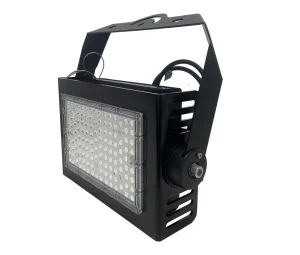
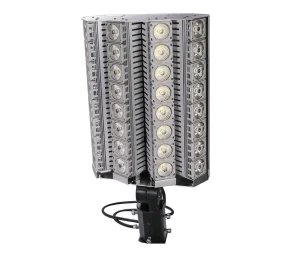
Port of Colombo & Mining 48V DC Heavy-Duty Mobile Tower Flood Light
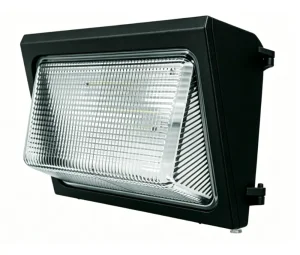
Katunayake EPZ Commercial Exterior Wall Pack LED Luminaire
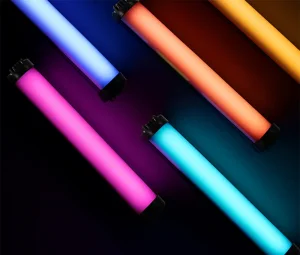
Sri Lanka Marine Research & Cinematography 2M Underwater Light
Macro-Industrial Overview
Sri Lanka Industrial Illumination: Market Realities, Economic Transitions & Local Demand
Sri Lanka occupies a pivotal geostrategic vantage point in the Indian Ocean, commanding primary East-West international shipping routes. As the island nation modernizes its trade, manufacturing, and transport infrastructure, commercial and industrial lighting procurement has transitioned from transactional, commodity-based lamp replacement to capital-intensive, reliability-centered engineering investments. Key development zones—including the Port City Colombo Special Economic Zone (SEZ), the expanded container terminals of the Port of Colombo, the southern maritime gateway of Hambantota International Port, and Export Processing Zones (EPZs) administered by the Board of Investment (BOI) such as Katunayake, Biyagama, and Seethawaka—demand illumination systems engineered to survive the most rigorous tropical maritime parameters on earth.
Industrial facilities in Sri Lanka contend with extreme climatic stresses. Relative humidity consistently fluctuates between 75% and 92% throughout the year, compounding the corrosive impact of hyper-saline maritime air classified under ISO 12944 as C5-M (Marine Extreme). Furthermore, local power infrastructure, while undergoing rapid stabilization, remains vulnerable to voltage fluctuations, high harmonic distortion, and acute monsoon lightning transients. In this environment, generic commercial-grade luminaires fail prematurely, resulting in excessive downtime, elevated maintenance overhead, and compromised worker safety. Sourcing directly from verified high-technology manufacturing facilities guarantees lighting hardware fortified with heavy-duty surge suppression, active thermal management, and robust anodized metallurgical coatings.
C5-M Marine Anti-Corrosion
Utilizing high-purity die-cast aluminum alloys treated with fluorocarbon electro-deposition and stainless 316 hardware, engineered to resist 2,000+ hours of ASTM B117 salt fog exposure along coastal harbors.
Monsoon Surge Hardening
Equipped with multi-stage 10kV/20kV surge protection devices (SPD) conforming to IEC 61643-11 standards, protecting semiconductor junctions from seasonal inter-cloud electrical storms.
Thermal Boundary Resilience
Engineered with finned copper heat-pipe conduction and remote driver topologies capable of sustaining non-stop operation in hot workshop ceilings up to 80°C, 150°C, and custom-engineered 300°C environments.
Global Benchmark Analysis
Global Optoelectronic Innovations vs. Sri Lanka's Field Demands
Balancing worldwide net-zero emissions mandates with resilient localized execution across high-heat manufacturing, shipping logistics, and agricultural processing.
185+
Lumen / Watt System Efficacy
300°C
Engineered Ambient Peak
IP68
Submersible Ingress Rating
100,000h
L80B10 Design Lifespan
Global Industry Convergence
Globally, the commercial and industrial lighting industry is decoupling from simple incandescent/HID retrofits toward interconnected optoelectronic ecosystems. Driven by European Union circular economy directives and ASHRAE 90.1 energy baselines, global plants mandate luminous efficiencies exceeding 170–190 lm/W, DALI-2 addressability, and autonomous day-lighting harvest algorithms. Furthermore, Dark-Sky compliance and precise optical cut-offs are prioritized to prevent unwanted luminous spillage into biological reserves.
The Local Sri Lankan Adaptation Vector
In Sri Lanka, operational realities demand that these high-efficiency architectures be hardened against harsh environmental factors. In tea manufacturing drying lofts across Nuwara Eliya and Kandy, ambient heat combined with combustible organic dust requires dust-ignition-proof certifications and sustained thermal management. In garment and textile manufacturing facilities across the Western Province, color rendering indexes (CRI Ra > 90, R9 > 50) and zero stroboscopic flicker (PstLM < 0.5, SVM < 0.4) are strictly mandatory to ensure inspection accuracy and prevent worker ocular fatigue during complex sewing operations.
Environmental Stress Factors Comparison
- Coastal Atmospheric Salinity: ISO C5-M Extreme (Sri Lanka Ports)
- Grid Voltage Stability: ±18% Fluctuation (Suppression Mandated)
- Industrial Roofline Temperature: 55°C – 85°C (Unconditioned Metal Roofing)
- Lightning Transient Susceptibility: Level IV High Isokeraunic Zone
Sector-Specific Engineering
Macro-Industry Solutions for Key Sri Lankan Commercial Verticals
Turnkey luminaire selection and optical planning engineered to resolve the exact pain points of key economic sectors.
Deepwater Maritime Ports & Logistics Hubs
Target Locations: Colombo South Port (JCT, CICT, SAGT, CWIT) & Hambantota International Port.
Engineering Matrix: High-mast floodlighting (400W–2000W) with narrow asymmetric optics (15°/30°) delivering uniform 50–100 lux across container storage aprons without casting blinding glare into gantry crane operator cabins. Marine-grade die-cast enclosures with breather valves balance internal and external pressure differentials, preventing condensation under extreme monsoon showers.
High-Volume Garment & Textile Export Plants
Target Locations: Katunayake, Biyagama, Meerigama, and Koggala Export Processing Zones.
Engineering Matrix: Linear high-bay luminaires engineered with micro-prismatic glare diffusers (UGR < 19) delivering >500 lux across high-speed fabric cutting and stitching tables. Phosphor-converted LEDs with full-spectrum color fidelity (CRI Ra 92+) allow quality inspectors to distinguish micro-shade deviations under reliable, consistent conditions.
Agro-Processing & Tea Manufacturing Lofts
Target Locations: Central Highlands (Nuwara Eliya, Hatton, Kandy, Badulla) and Low-Country Rubber Estates.
Engineering Matrix: Industrial high-temperature and dust-tight IP65/IP66 fittings. Heavy-duty heat pipe assemblies dissipate heat efficiently in drying and withering rooms where temperatures frequently top 60°C. Fully sealed optical cavities prevent combustible organic tea fluff from igniting on optical surfaces.
Technology Roadmap
Engineering Horizons: The 10-Year Industrial Lighting Evolution
Strategic pathways navigating solid-state illumination, micro-grid renewables, AI sensor nodes, and phase-change thermal packaging.
Phase 1: Present
Gallium Nitride on Silicon Efficacy
Mass adoption of GaN chips achieving 200+ lm/W cold-junction efficiency. Integration of separated remote drivers to eliminate junction-level heat accumulation in unconditioned steel mills and factories.
Phase 2: Near-Term
Smart City Mesh & LoRaWAN Integration
Municipal deployment of intelligent street luminaires across Western Province expressways utilizing LoRaWAN mesh communication, self-reporting driver anomalies, and adaptive traffic-density dimming.
Phase 3: Strategic
Solar-Hybrid DC Micro-Grid Towers
Migration of mobile light towers to high-density LiFePO4 battery banks paired with bifacial monocrystalline solar arrays, delivering 100% emission-free nocturnal lighting for mining, roadworks, and rail development.
Phase 4: Frontier
Active Cryogenic & Ceramic Thermal Packaging
Ultra-extreme environment luminaires combining direct-bonded copper (DBC) ceramic substrates and liquid phase-change cooling, enabling long-term survival in foundries exceeding 300°C ambient temperatures.
Procurement Matrix
Industrial Lighting Engineering Specification Matrix
Compare key electrical, optical, and mechanical parameters before generating tender specifications or bills of quantities.
| Application Environment | Recommended System | Ingress / Impact | Operating Temperature | Surge Rating | Key Optical Feature |
|---|---|---|---|---|---|
| Coastal Ports & Docks | LS-FLN Titans Marine Series | IP68 / IK10 | -40°C to +65°C | 20kV (IEC 61643) | Asymmetric Narrow / 316 Stainless Bracket |
| Steel Foundries & Furnaces | Tailored Active High-Temp Fixture | IP66 / IK09 | Up to +300°C (572°F) | 10kV Remote Driver | Fused Borosilicate Glass Optic, No PC Degradation |
| Professional Stadiums & Arenas | Arena LED Stadium 3000W | IP66 / IK10 | -30°C to +55°C | 20kV Driver Enclosure | TLCI > 90, Ultra-Low Glare Visor, Flicker-Free 4K |
| Expressways & Urban Roads | LS-STN Asymmetric Street Luminaire | IP66 / IK09 | -30°C to +50°C | 10kV Surge Arrester | Batwing Type II/III Distribution, Dark Sky Friendly |
| Remote Infrastructure & Mining | 7M Solar Mobile Light Tower | IP65 Mobile Rig | -20°C to +50°C | Low-Voltage DC Bus | High-Flux 360° Rotational Masts, 48V High Efficiency |
Heavy-Duty Series Showcase
Industrial, Marine & Extreme Temperature Systems for Sri Lanka
Explore specialized lighting solutions tested under severe thermal, mechanical, and marine parameters.
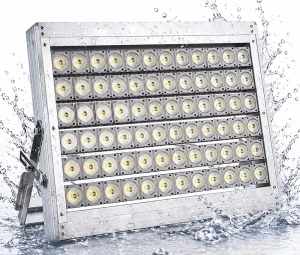
Hambantota Deep-Sea Offshore LS-FLN Titans Marine Flood Light
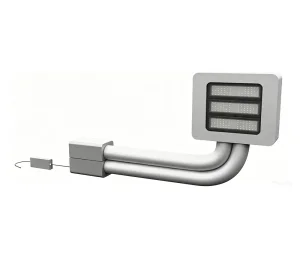
Sri Lanka Steel & Glass Plants Active 300°C High-Temp LED
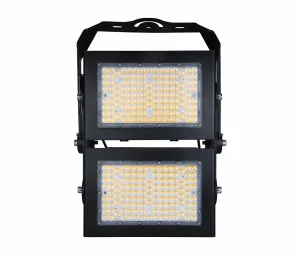
Sri Lanka Cricket & Multi-Sport Club Vega Adjustable Field Light
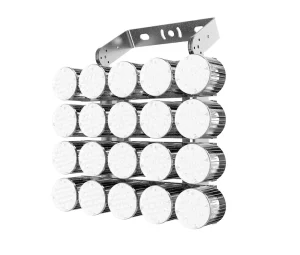
International Broadcast Arena LED Stadium Light up to 3000W
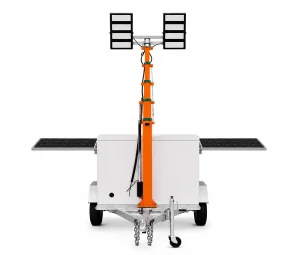
Sri Lanka Highway Development 7M Autonomous Solar Mobile Light Tower
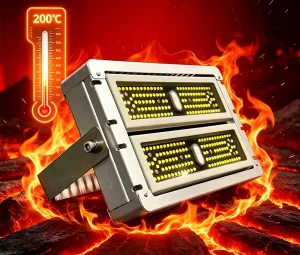
Ultra High Temperature 200°C Rated IP68 Waterproof Luminaire
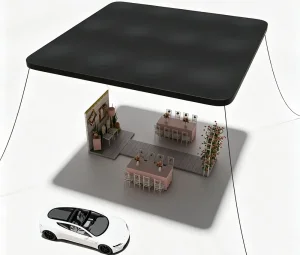
Sri Lanka Tourism & Film Easy-Setup Helium Balloon Sun Shade
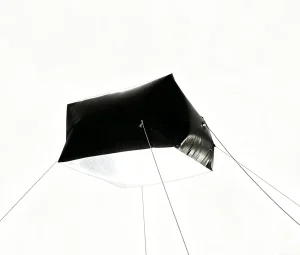
Emergency & Film Production 360° Helium Balloon Aerial Light
Frequently Asked Questions
Engineering & Procurement FAQ for Sri Lankan Industrial Clients
Direct engineering answers addressing voltage instability, maritime salt corrosion, BOI industrial zone compliance, and customized OEM lead times.
How do your industrial luminaires withstand Sri Lanka's intense C5-M coastal salt spray in Colombo and Hambantota?
Our maritime floodlights, street lights, and harbor high bays undergo a multi-stage chemical pretreatment process followed by thermoset architectural powder coating conforming to Qualicoat Class 2 standards. Fasteners, brackets, and external hardware are made of 316-grade austenitic stainless steel. Optical chambers are sealed with silicone O-rings providing continuous IP67 to IP68 hermetic isolation. Furthermore, breathing membranes prevent internal pressure drops, preventing moisture and corrosive salt crystals from penetrating the internal optoelectronic circuitry during severe tropical temperature changes.
What protections are implemented against Sri Lanka's grid voltage swings and lightning surges?
Our drivers are designed with an ultra-wide AC input range of 90V to 305V (with optional 347V–480V industrial input) to maintain stable luminous output during Ceylon Electricity Board (CEB) line dips and surge transients. We integrate dedicated two-stage surge suppression devices (SPD) tested for line-to-line 10kV and line-to-ground 20kV strikes per IEEE C62.41.2 and IEC 61000-4-5 guidelines, shielding the internal semiconductors against severe monsoonal lightning impulses common in Sri Lanka.
Can your high-temperature LED lights operate directly above tea processing driers and rubber vulcanization kilns?
Yes. Standard commercial fixtures experience catastrophic phosphor degradation and electrolytic capacitor dry-out above 50°C. Our specialized high-temperature product families are engineered for continuous ambient environments of 80°C, 100°C, 150°C, and custom active cooling models rated up to 300°C (572°F). We utilize pure sintered copper heat-pipe conduction arrays, ceramic-packaged LEDs, and remote driver topologies placed outside the thermal boundary, ensuring 50,000+ hours of continuous operation in extreme heat zones.
Do your sports luminaires comply with international broadcast standards for Sri Lankan cricket stadiums?
Yes. Our Arena and Vega series are engineered to meet ICC, FIFA, and FIBA Class I/II/III lighting requirements. They feature a Television Lighting Consistency Index (TLCI) > 90, color rendering index Ra > 90, and a flicker factor < 0.2%, ensuring ultra-smooth, slow-motion 4K HDTV broadcast playback. Advanced asymmetric TIR (Total Internal Reflection) optics direct light onto the playing field while minimizing upward waste light and glare for players and spectators.
What is the logistical lead time for custom OEM/ODM luminaire production and delivery to Colombo port?
Standard production runs for customized industrial configurations (tailored optics, specific CCT, specialized brackets, and photometrics) take 15 to 25 business days. Sea freight transit from Shenzhen/Guangzhou ports to the Port of Colombo takes approximately 10 to 14 days. We provide comprehensive export customs documentation, factory quality inspection certificates, photometric IES files, and test reports to support smooth customs clearance through Sri Lanka Customs and the Board of Investment (BOI).
Accelerate Your Industrial Infrastructure Project
Partner with an experienced industrial LED manufacturer. Contact our optical engineering team today for DIALux photometric simulations, comprehensive BOM analysis, and project-specific pricing for your installations in Sri Lanka.