
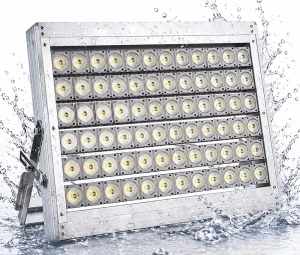
Primary Maritime Equipment Line
Chicago Harbor & Heavy Offshore Marine Lighting Series
Engineered for severe Lake Michigan wave impacts, inland waterway tugboat operations, and industrial port terminals requiring long-lifespan luminaire efficiency.
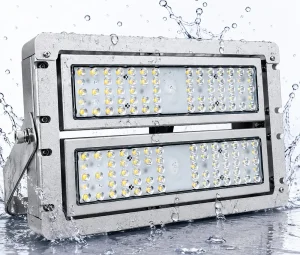
Chicago Harbor & Port Dock OEM LS-ARE Ocean Series LED Marine Light
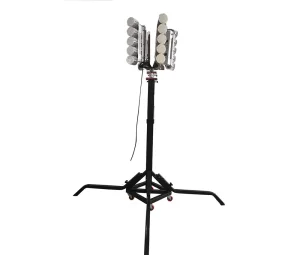
Chicago Marine Terminal Mobile 4m Light Tower
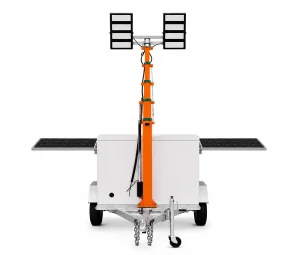
Chicago Waterfront Green-Energy 7M Solar Mobile Light Tower
Chicago Maritime & Industrial Lighting Ecosystem: Executive Whitepaper Summary
Chicago functions as the preeminent multi-modal logistics hub of North America, connecting Lake Michigan and the Great Lakes Seaway system to the Mississippi River Basin via the Illinois Waterway. Marine facilities throughout Calumet Harbor, Iroquois Landing, the Chicago Sanitary and Ship Canal, and regional shipyards handle millions of tons of bulk cargo, steel, dynamic liquid energy, and containerized freight annually. Operating within this critical nexus demands specialized industrial marine lighting engineered to overcome sub-zero freeze-thaw cycles, aggressive salt-laden freshwater spray, heavy diesel engine vibration, and rigorous US Coast Guard (USCG) safety mandates.
This whitepaper analyzes the structural engineering standards, optical efficiency criteria, thermal management breakthroughs, and procurement metrics defining top-tier Marine Light Factories in Chicago. Whether retrofitting legacy high-pressure sodium (HPS) floodlights across barge docking slips or deploying IP68-rated underwater luminaires on deep-draft commercial vessels, industrial procurement officers require direct access to manufacturing-grade technical specifications, transparent compliance metrics, and verified total-cost-of-ownership (TCO) benchmarks.
IP68
Submersible Marine Rating
200°C
Extreme Engine Temp Class
160+
Lm/W Efficacy Standard
100K
Hours L70 B10 Lifespan
Material Science & Thermal Engineering for Great Lakes Marine Environments
Standard industrial lighting fixtures consistently fail in the Chicago waterfront ecosystem due to unique environmental stress combinations. The transition from intense sub-zero winter temperatures (-25°C) to high thermal loads inside enclosed vessel engine compartments (up to 200°C) causes micro-fracturing in low-grade aluminum alloys and degradation of conventional silicone gaskets. Advanced marine light factories must incorporate proprietary metallurgical and optical engineering to maintain operational integrity.
A360 Marine-Grade Metallurgy
Die-cast copper-free aluminum housing (<0.1% Cu) finished with a 100-micron electro-statically applied fluorocarbon powder coating withstands 5,000+ hours of ASTM B117 salt-spray testing without surface pitting or structural oxidation.
Hermetic Dual IP68 & IP69K Sealing
Equipped with fluorosilicone O-rings and automated robotic liquid gasket dispensing. Luminaires are completely resistant to high-pressure hot water washdowns (100 bar at 80°C) during vessel maintenance and dock decontamination.
Phase-Change Thermal Drivers
High-temperature driver technology utilizes phase-change thermal interface materials (TIM) and remote driver enclosures, preventing thermal runaway even in enclosed ship engine bays rated up to 150°C - 200°C ambient temperatures.
Engineering Specification Comparison Matrix
| Performance Metric | Standard Commercial LED Fixture | Legacy HPS / Metal Halide | LSLEDSUS Chicago Marine Standard |
|---|---|---|---|
| Ingress Protection Rating | IP65 (Dust-proof, splash-resistant) | IP54 - IP65 | IP68 Continuous Immersion & IP69K Washdown |
| Housing Material | Recycled Standard Aluminum (High Cu) | Sheet Metal / Cast Iron | A360 Copper-Free Die-Cast Alloy (316 SS Hardware) |
| Luminous Efficacy | 90 - 110 Lm/W | 40 - 70 Lm/W | 160 - 180 Lm/W (High Output Optics) |
| Operating Temp Range | -10°C to 40°C | -20°C to 50°C (Slow Restrike) | -40°C to +80°C (High-Temp Line up to +200°C) |
| Vibration Resistance | 1G to 2G Standard | 0.5G (Fragile Filament) | 5G to 10G Multi-Axis USCG / MIL-STD-810G |
| Corrosion Warranty | 1 Year Limited | None | 5 to 10 Year Marine Finish Guarantee |
Chicago Commercial Sourcing Strategy: Direct Factory OEM vs. Local Distribution
When procurement directors evaluate marine lighting suppliers in Chicago, a key strategic consideration is balancing localized inventory support with direct-from-factory OEM engineering capability. While local supply houses in Illinois stock standardized replacement parts, large-scale harbor developments, shipyard retrofits, and commercial vessel construction require bespoke optical distributions, specialized input voltages (e.g., 277-480V AC, 24V-48V DC marine supply), and custom mounting brackets.
Partnering directly with premier industrial lighting manufacturers like LSLEDSUS (Shenzhen Industry Hub) delivers significant information gain and economic advantages:
Custom Photometric Engineering
Our in-house optical engineering team generates site-specific DIALux photometrics within 24 hours. We eliminate light pollution along Chicago’s urban waterfront while guaranteeing precise lux levels across cargo yards and navigation channels.
30-50% TCO Capital Reduction
By bypassing multi-tier middleman markups while maintaining rigid ISO9001 quality assurance and premium components (Osram LEDs, Meanwell/Inventronics drivers), procurement budgets are maximized without compromising safety.
Tailored OEM/ODM Capability
Need specialized marine explosion-proof certifications (Class I Div 2), tailored color temperatures (amber for fog penetration), or custom laser-etched branding for regional Chicago contractors? Direct OEM production delivers exact specs.
Technology Roadmap: Next-Generation Marine & Port Lighting Technologies
The marine illumination sector is experiencing a rapid technological transition toward smart connectivity, dynamic optical tuning, and renewable microgrid integrations. As the Port of Chicago advances its carbon-neutral sustainability goals, lighting systems are evolving from static illumination points to intelligent network nodes.
Smart NMEA 2000 & DALI-2 Controls
Integration of digital addressable lighting interfaces (DALI-2) and vessel-wide NMEA 2000 marine networks enables automated dimming schedules, condition-based operational monitoring, and instant driver diagnostic telemetry directly to shipboard bridge systems or harbor master dashboards.
Narrow Amber Spectrum Optics
High-volume inland waterway traffic along the Chicago Sanitary and Ship Canal frequently encounters dense fog and zero-visibility blizzards. 590nm long-wavelength narrow spectrum amber optics penetrate heavy vapor particles far more effectively than standard 6000K white LEDs, dramatically enhancing tug and barge safety.
Autonomous Solar-Hybrid Towers
Deploying heavy-duty mobile solar lighting towers along un-grid-connected breakwaters and temporary port expansion zones provides autonomous 365-day operation. Integrated lithium iron phosphate (LiFePO4) battery banks withstand deep freeze states without energy degradation.
Chicago Regulatory Compliance & Marine Standards Certification
Installing non-compliant lighting fixtures along Great Lakes waterways or commercial vessels risks severe US Coast Guard citations, OSHA non-compliance fines, and insurance policy invalidation. Marine luminaires supplied by top factories undergo rigorous testing to comply with American Bureau of Shipping (ABS), Underwriters Laboratories (UL), and international IEC standards.
| Certification Standard | Technical Scope & Scope of Application | Operational Compliance Requirement |
|---|---|---|
| UL 1598A (Marine Supplemental) | Luminaires installed on salt-water vessels & offshore docks | Requires non-corrosive hardware, silicone gaskets, strict moisture immersion proofing. |
| USCG 33 CFR Part 67 | Navigation light obstruction requirements for bridges & berths | Mandates specific chromaticity, beam angles, and 2nm to 5nm visibility range. |
| Class I, Division 2 (HAZLOC) | Fuel docks, chemical barge terminals along Calumet River | Prevents internal electrical sparks from igniting flammable ambient vapor gases. |
| MIL-STD-167-1A | Mechanical vibration testing for shipboard equipment | Ensures internal LED arrays and solder joints withstand continuous hull vibrations. |
Comprehensive Industrial & Marine Catalog
Complete High-Temp, Marine & Heavy Industrial Lighting Systems
Explore our extended range of high-temperature LED lights, mobile towers, shoebox corridor luminaires, and severe-environment industrial high bays engineered for Chicago enterprises.
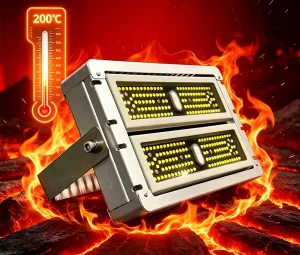
Chicago Industrial Engine Room Ultra High-Temp 200°C IP68 LED Light
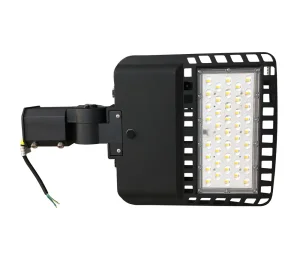
Chicago Port Access & Freight Corridor LS-L Shoebox LED Light
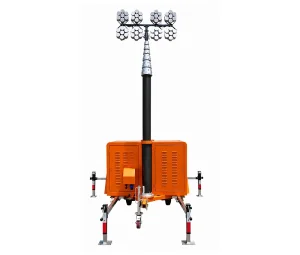
Chicago Shipyard & Drydock High-Brightness 12m Mobile Light Tower
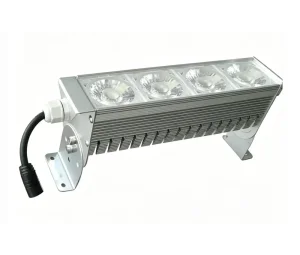
Chicago Marine Architecture & Vessel Corridor LED Linear Strip Light
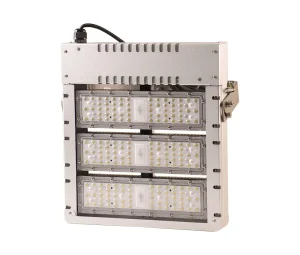
Chicago Port Logistics & Warehouse 80°C High-Bay LED Floodlight
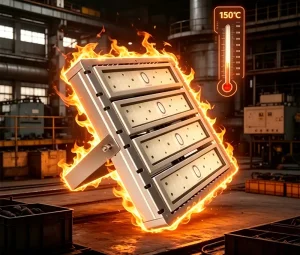
Chicago Marine Steam Vessel Extreme High-Temp 150°C IP68 LED Light
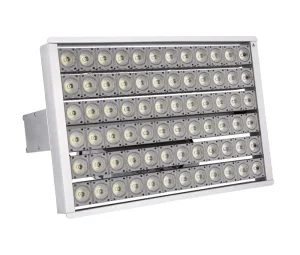
Chicago Inland Waterway Tugboat Heavy-Duty 90°C LED Light
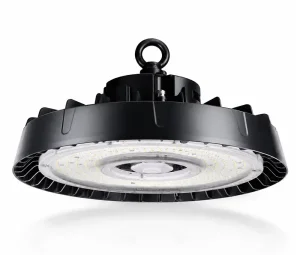
Chicago Naval Maintenance Shed High-Output UFO High Bay LED Light
Chicago Marine Lighting Procurement FAQ (Search Intent Mining)
In-depth technical answers addressing key intent queries from marine engineers, port authority purchasing directors, and Chicago industrial contractors.
What makes marine lights engineered for Lake Michigan different from standard ocean saltwater fixtures?
Lake Michigan presents a unique combination of severe sub-zero thermal cycling (-25°C to -30°C in deep winter), heavy freshwater ice accretion, and industrial chemical runoff near Calumet Harbor. Unlike static ocean environments, Great Lakes marine luminaires require extreme thermal-shock resistance in glass lenses, high-impact polycarbonate optical diffusers (IK10 rated), and specialized anti-icing housing geometries that prevent heavy ice build-up from tearing fixtures off mounting brackets.
How does IP68 rating ensure long-term reliability on Chicago tugboats and barges?
An IP68 ingress protection rating certifies that the light fixture is hermetically sealed against dust and completely continuous immersion in water under specified hydrostatic pressure conditions. For Chicago tugboats operating in shallow canal locks or navigating wave deck splashes, IP68 prevents moisture intrusion that causes internal driver corrosion, short-circuits, and lens fogging.
What high-temperature lighting solutions are recommended for ship engine rooms and boiler bays?
For commercial vessel engine rooms, steam turbine spaces, and boiler areas where ambient temperatures reach 80°C to 200°C, standard commercial LEDs degrade within months. We supply specialized High-Temperature LED Lights featuring remote power supply enclosures, heavy copper heat-pipe sink arrays, and high-temp rated Nichia/Osram LED chips rated for up to 100,000 hours of continuous high-heat service.
Can LSLEDSUS provide custom DIALux photometric reports for Chicago port development tenders?
Yes. Our senior lighting design team generates comprehensive DIALux EVO photometric layouts detailing illuminance (lux/fc), uniformity ratios, glare evaluations (UGR), and 3D rendering. This ensures your engineering tender fully meets OSHA harbor safety standards and US Coast Guard visibility regulations prior to order placement.
What is the typical lead time for custom marine OEM fixture production and Chicago delivery?
Standard production runs for customized OEM marine fixtures are completed in 10 to 15 business days at our main manufacturing facility. Air freight delivery to Chicago O'Hare (ORD) takes 5 to 7 days, while ocean freight to Midwest logistics terminals takes 25 to 30 days. Emergency dockside replacement shipments can be expedited upon request.
Partner with a World-Class Marine Lighting Manufacturer
Upgrade your Chicago vessel fleet, harbor terminal, or industrial facility with high-efficacy, IP68 waterproof, high-temperature LED systems. Contact our senior engineering team today for factory-direct pricing, customized photometrics, and sample evaluations.