
Melbourne Urban & Arterial Roadway Series
Engineered specifically for Australian AS/NZS 1158 lighting categories, featuring high optical efficiency, zero upper light ratio, and smart city connectivity.
Melbourne's Urban Infrastructure & Smart Lighting Paradigm Shift
As Greater Melbourne accelerates toward its projected population milestone of 8 million residents by 2050, the demand for resilient, energy-efficient, and intelligent outdoor public lighting has reached an unprecedented zenith. Metropolitan local government areas (LGAs)—ranging from the City of Melbourne, City of Port Phillip, and City of Yarra to outer-growth corridors in Wyndham, Hume, and Whittlesea—are currently executing massive infrastructure modernizations. Central to this paradigm shift is the systematic replacement of legacy High-Pressure Sodium (HPS) and Metal Halide (MH) luminaires with advanced solid-state LED systems designed to satisfy stringent Australian and New Zealand Standards (AS/NZS 1158).
The municipal and industrial landscape of Victoria presents a unique set of technical requirements for street lighting suppliers and manufacturers. Melbourne's coastal and temperate climate subjects outdoor infrastructure to intense environmental stressors: persistent salt spray along Port Phillip Bay, high ultraviolet radiation indices during summer peak months, sudden localized ambient thermal spikes exceeding 45°C, and severe winter rainstorms. Furthermore, Victoria's commitment to net-zero emissions under the Victorian Climate Change Act 2017 requires municipal lighting projects to achieve maximum luminous efficacy (lumen-per-watt efficiency exceeding 160 lm/W) while minimizing lifecycle carbon footprints and operational maintenance costs.
Strategic Insight for Australian Procurement Executives: Selecting street light suppliers in Melbourne is no longer merely an exercise in fixture unit cost comparison. It requires an integrated evaluation of optical cutoff precision, thermal dissipation architecture, smart IoT control readiness (Zhaga/NEMA socket standardization), and compliance with the Victorian Energy Upgrades (VEU) program.
Beyond municipal transit corridors and suburban collector roads, Melbourne's industrial logistics hubs—such as the Port of Melbourne, Western Freight Precinct, and industrial parks surrounding Tullamarine Airport—demand high-power LED luminaires capable of operating continuous 24/7 duty cycles. Luminaires deployed in these zones must feature robust ingress protection (IP66/IP68), high impact resistance (IK10), and specialized optical distributions (Type II, Type III, and Type IV) to eliminate glare, suppress spill light into adjacent residential corridors, and maximize pole spacing ratios to lower overall capital expenditure (CAPEX).
Technology Roadmap: Photometric Engineering & IoT Intelligence
State-of-the-art optical physics, thermal management, and smart control integration engineered for modern smart cities.
Precision Asymmetric Optics
Engineered with high-transmittance optical PMMA lenses, minimizing Threshold Increment (TI) and maximizing Uniformity (U0 & UL) in strict adherence to AS/NZS 1158.1.1 Category V (Vehicular Traffic) and Category P (Pedestrian) standards.
Smart IoT Control Sockets
Standardized 7-pin ANSI C136.41 NEMA receptacle or Zhaga Book 18 socket architecture. Plug-and-play integration with cellular NB-IoT, LoRaWAN, and Zigbee Smart Central Management Systems (CMS).
Advanced Thermal Dissipation
Cold-forged ADC12 aluminum housing with integrated aerodynamic convection channels. Maintains junction temperatures ($T_j$) well below 75°C under ambient 50°C road surface conditions, ensuring L90B10 lifespan >100,000 hours.
The core technological competitive advantage of top-tier street light manufacturers supplying Melbourne lies in optical customization and control granularity. Modern municipal procurement tenders increasingly penalize luminaire designs that produce glare or dark spots between light poles. By utilizing customized asymmetric light distribution curves, our street lights allow urban planners to expand pole-spacing intervals from 30 meters to 45+ meters without sacrificing illuminance uniformity ($U_0 > 0.40$). This reduction in required pole density yields massive CAPEX savings for civil infrastructure projects across Victoria.
Furthermore, ecological sustainability and wildlife preservation have become non-negotiable criteria in Australian urban planning. Luminaires deployed near coastal zones (such as Brighton, St Kilda, and Mornington Peninsula) or eco-sensitive river corridors require Dark-Sky compliant full-cutoff optical configurations (0% Upward Light Ratio / ULR). Advanced CCT tuning—ranging from warm 2700K/3000K amber-rich spectra to minimize nocturnal fauna disturbance, to crisp 4000K/5000K high-CRI white light for critical highway interchanges—enables customized deployment tailored to specific environmental zones.
Quantitative Superiority in Municipal Deployments
Empirical engineering benchmarks validated across high-density road networks and heavy industrial precincts.
Australian Compliance Framework & Local Technical Support
Navigating the complex regulatory landscape of Australian public lighting requires a manufacturer with deep domain expertise and robust quality assurance protocols. Luminaires supplied into Melbourne and greater Victoria must strictly conform to a matrix of national and state-specific standards. Foreign products lacking appropriate certification face severe regulatory hurdles, project rejection, and potential liability risks.
AS/NZS 1158 Compliance Matrix
Our street light portfolio is fully tested and accredited against AS/NZS 1158.1.1 (Category V - Vehicular Traffic) for arterial roads, freeways, and intersections, as well as AS/NZS 1158.3.1 (Category P - Pedestrian & Area Lighting) for residential streets, footpaths, cycleways, and public plazas. Photometric IES/LDT files are generated by independent NATA-accredited (National Association of Testing Authorities) laboratories, enabling civil lighting designers to perform precise Dialux and Relux simulations.
Electrical Safety, RCM & EMC Accreditation
All supplied fixtures carry the Regulatory Compliance Mark (RCM) and full compliance documentation under the Australian Electrical Equipment Safety Scheme (EESS). Internal LED drivers (including MeanWell, Inventronics, and Philips Xitanium series) feature integrated surge protection devices (SPD) capable of withstanding 10kV/20kV transient voltage spikes, protecting municipal infrastructure against severe lightning strikes and electrical grid fluctuations across Victoria.
VEU (Victorian Energy Upgrades) Scheme Readiness
To maximize return on investment for council upgrades and private asset management companies, our luminaires are engineered to meet the high-efficiency criteria mandated by the Victorian Energy Efficiency Target (VEET / VEU). Registered fixtures enable commercial buyers and EPC contractors to claim substantial Energy Efficiency Certificates (VEECs), dramatically reducing upfront equipment acquisition costs and shortening payback periods to under 2.4 years.
China Industry 4.0 Manufacturing: Supply Chain Resilience & OEM Agility
How advanced manufacturing, automated SMT lines, and direct factory engineering empower Melbourne distributors and EPC contractors.
For Melbourne electrical wholesalers, municipal procurement authorities, and turnkey infrastructure contractors, sourcing direct from an established China Industry 4.0 LED street light manufacturer offers an unbeatable combination of technical agility, rapid scalability, and cost efficiency. Operating state-of-the-art production facilities in Shenzhen and Guangdong manufacturing hubs, our production engine seamlessly bridges high-level R&D with mass-scale fabrication.
Our manufacturing workflow utilizes high-speed automated Surface Mount Technology (SMT) lines equipped with 3D Automated Optical Inspection (AOI) and inline solder paste inspection (SPI). This eliminates human assembly error at the component level, ensuring that every LED chip package (utilizing top-tier Lumileds, Cree, or Osram LED dies) achieves optimal thermal bonding and electrical conductivity.
Every single street light housing undergoes automated robotic silicone gasket dispensing to achieve IP66/IP68 airtight seals, followed by rigorous helium leak detection testing and salt chamber corrosion testing. Prior to dispatch, 100% of finished luminaires undergo a continuous 48-hour high-temperature burn-in test at elevated ambient temperatures, accompanied by automated electrical power cycling.
Custom OEM/ODM Engineering: We understand that Australian projects often require tailored physical mounting adaptors, specialized pole tenons (ranging from 42mm to 60mm side-entry spigots), custom powder-coat paint finishes (RAL color matching for heritage or contemporary architectural zones), or pre-wired NEMA control nodes. Our engineering team provides fast-turnaround 3D CAD modeling, photometrics, and sample prototyping within 7 to 10 working days.
Tailored Lighting Solutions Across Greater Melbourne Sectors
Freeways & Highway Arterials
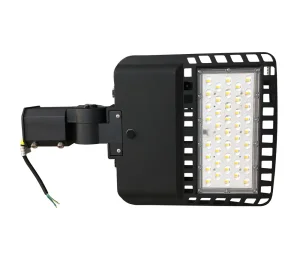
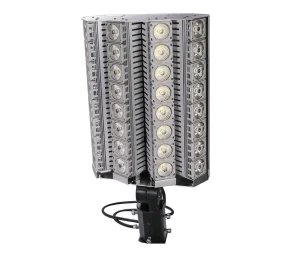
High-lumen output street lights (150W–320W) designed for major transit corridors such as the Monash Freeway (M1), CityLink, and Western Ring Road. Low glare ratings (TI < 10%) ensure driver safety at high speeds.
Suburban Residential Streets
Compact, highly efficient 20W–60W luminaires meeting AS/NZS 1158 Category P3/P4. Built with warm CCT options, zero sky-glow optics, and integrated daylight sensors for municipal council subdivisions.
Industrial Logistics Parks
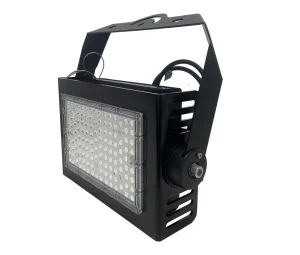
Heavy-duty area floodlights and shoebox fixtures deployed across Laverton North, Dandenong South, and Broadmeadows freight hubs. Superior IK10 shock resistance to withstand heavy machinery operations.
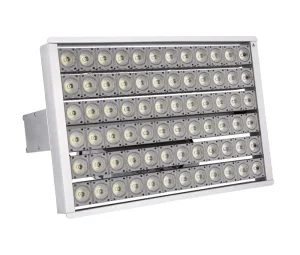
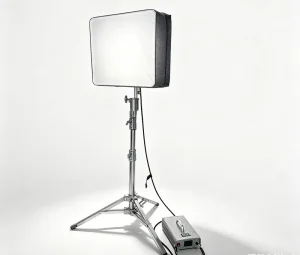
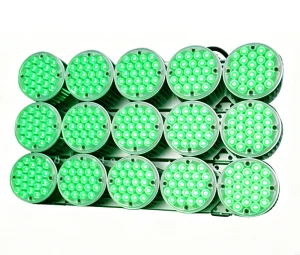
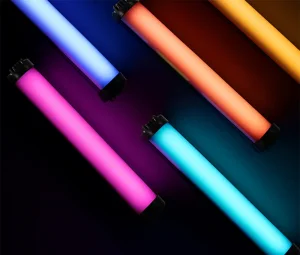
Industrial, Commercial & Specialized Lighting Systems
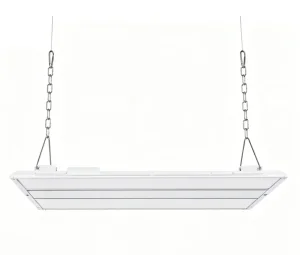
High-performance LED solutions tailored for extreme environments, marine ports, mining, high-bay warehousing, and commercial sites.
Frequently Asked Questions for Melbourne B2B Buyers
Clear engineering and commercial guidance for lighting engineers, wholesalers, and municipal contractors.
How do your LED street lights comply with VicRoads and AS/NZS 1158 standards?
Our street lights are designed and tested to comply fully with AS/NZS 1158.1.1 (Category V for arterial roads) and AS/NZS 1158.3.1 (Category P for pedestrian zones). We supply complete photometric IES files generated by independent accredited laboratories, verifying compliance with illuminance, glare control (TI), and uniformity metrics required by Victorian councils and road authorities.
What protection measures are built in against Melbourne's coastal salt spray?
Luminaires intended for coastal installation (e.g., Port Phillip Bay municipal areas) feature marine-grade copper-free aluminum die-cast housings coated with dual-layer fluorocarbon electrostatic powder painting. Fixtures undergo 5,000-hour ASTM B117 salt spray testing and carry IP66/IP68 ingress seals with 316 stainless steel external hardware to prevent galvanic corrosion.
Are these fixtures compatible with Smart City IoT platforms?
Yes. Every luminaire can be factory-fitted with a standardized 7-pin ANSI C136.41 NEMA receptacle or Zhaga Book 18 bottom socket. This enables seamless integration with plug-and-play smart photocells, motion sensors, and Central Management System (CMS) controllers utilizing cellular NB-IoT, LoRaWAN, or Zigbee communication protocols.
What lead times can Australian distributors and contractors expect?
Standard production cycles for OEM orders range between 2 to 3 weeks following technical sign-off. Air freight samples can be delivered to Melbourne within 5 to 7 business days, while bulk containerized sea shipments directly to the Port of Melbourne typically arrive within 16 to 22 transit days, supported by complete customs clearance documentation.
Can you provide customized mounting brackets and spigot dimensions?
Absolute precision customization is one of our core advantages. We supply adjustable side-entry and post-top slip-fitters accommodating 42mm, 48mm, 60mm, and 76mm tenons with -15° to +15° tilt angle calibration increments, allowing effortless retrofit installation onto existing Victorian timber, concrete, or steel lighting poles.
What warranty terms support major public infrastructure projects?
We back our commercial and municipal street light series with a comprehensive 5-year to 10-year factory warranty. This covers total luminaire output (maintaining >90% lumen maintenance over 50,000 hours), driver performance, housing structural integrity, and IP seal reliability under Australian environmental operating conditions.