
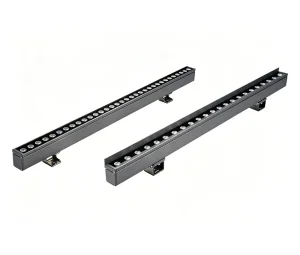
Featured Heavy-Duty Lighting Systems
Russia-Grade Architectural & High-Power RGB Solutions
Engineered specifically for extreme thermal stability, long-range optical projection, and continuous heavy-industrial performance across Russian federal districts.
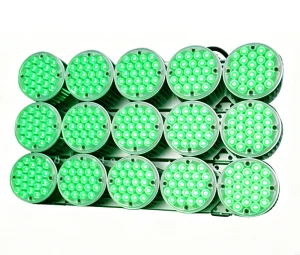
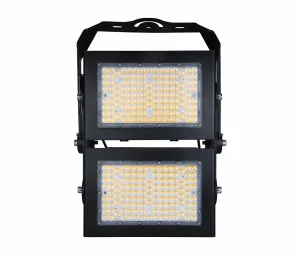
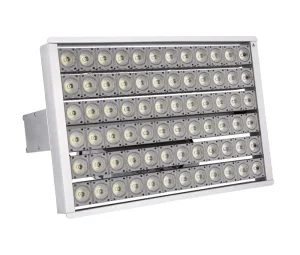
1. Industrial & Commercial RGB Lighting Landscape in Russia
The Russian Federation represents one of the world's most demanding procurement environments for high-power RGB, architectural, and heavy-industrial LED luminaires. Following significant macroeconomic shifts and structural supply chain realignments, the Russian market for commercial architectural illumination and industrial signaling lights has experienced a rapid acceleration in technology modernization.
Urban revitalization programs across primary metropolitan regions—such as Moscow’s massive municipal illumination initiatives, St. Petersburg’s bridge and historic facade lighting projects, and rapidly expanding urban infrastructure in Novosibirsk, Yekaterinburg, Kazan, and Nizhny Novgorod—have raised the standard for dynamic RGB LED systems. Importers and system integrators no longer evaluate lighting products solely on initial lumens per watt; instead, they prioritize long-term structural durability under severe environmental stress, full DMX512/RDM protocol interoperability, and stringent Eurasian Conformity (EAC) compliance.
Furthermore, Russia's industrial corridor—spanning the heavy metallurgical plants in the Urals, oil refining complexes in West Siberia, and maritime logistics hubs in Vladivostok and Murmansk—requires high-power RGB signal floodlights, high-bay luminaires, and specialized linear wall washers that operate continuously without thermal optical degradation or electronic failure.
-50°C
Cold Resistance Rating
IK10
Impact Resistance
150 lm/W
RGBW Module Efficiency
100,000h
L70/B10 Service Life
2. Thermal & Mechanical Engineering for Russian Sub-Zero Operations
Standard commercial-grade RGB lights manufactured for temperate climates fail prematurely when exposed to Russian winter conditions. Operating in exterior environments where temperatures routinely drop to -40°C in Central Russia and below -50°C in Siberian and Arctic installations presents severe engineering challenges:
Sub-Zero Cold Driver Cold-Start
Standard LED power supplies suffer component lockup, electrolytic fluid freezing, and surge failure when powered on at -40°C. Professional Russian-grade RGB fixtures utilize specialized Mean Well or custom OEM drivers equipped with cold-start thermistors and ultra-low temperature solid-state capacitors rated down to -55°C.
Fluorosilicone Seal Gaskets
Standard NBR or rubber gaskets harden and crack under freezing conditions, leading to seal breach and moisture ingress. China’s premier exporting factories apply military-grade fluorosilicone double-ring gaskets that maintain elasticity between -60°C and +200°C, ensuring IP67/IP68 ingress integrity.
Pressure Equalization Valves
Rapid temperature swings between high-power RGB operating heat (+65°C die temperature) and freezing ambient air create intense internal vacuum pressure. Integrated PTFE hydrophobic breathable breather valves equalize pressure differentials, preventing moisture suction and lens fogging.
| Performance Metrics | Standard Commercial RGB Light | Russia-Optimized Industrial RGB Light |
|---|---|---|
| Operating Temperature | -20°C to +40°C | -50°C to +60°C |
| Housing Material | Die-cast ADC12 Aluminum | 6063-T5 Extruded Aluminum / High-Purity ADC12 |
| Optics Protection | Standard Acrylic / PC Lens | IK10 Toughened Tempered Glass (4mm-8mm) |
| Control Protocol | IR / RF Remote / Basic DMX | DMX512-A / RDM / Art-Net via Isolated Bus |
| Corrosion Resistance | Basic Powder Coating (200h Salt Spray) | AkzoNobel Marine-Grade Coating (1,000h+ ASTM B117) |
3. Global Trends in High-Output RGB & Architectural Illumination
The global industrial and commercial RGB lighting sector is transitioning from decorative static illumination to high-throughput dynamic architectural communication. Key worldwide shifts shaping current procurement trends include:
Transition to RGBW & RGBWW Quad-Color Chips
Traditional 3-in-1 RGB chips often struggled to output crisp, high-CRI white light (producing a muddy blue-grey white). Global procurement has shifted heavily toward 4-in-1 (RGBW - Red, Green, Blue, 6000K White) and 5-in-1 (RGBWW - with 2700K Warm White) CREE or Osram LED chip arrays. This enables architectural structures to deliver vibrant colored displays during light shows while maintaining compliant, warm white architectural floodlighting for regular evening schedules.
Bi-Directional RDM (Remote Device Management)
Large-scale municipal RGB deployments require real-time system monitoring. Modern global projects mandate RDM protocols over DMX512 lines, enabling lighting technicians to remotely auto-address fixture IDs, check LED module junction temperatures, measure voltage drops, and receive automated maintenance warnings without ascending service towers or cranes in sub-zero winter conditions.
4. China's Factory Efficiency Advantage for Russian B2B Sourcing
For Russian B2B buyers, wholesalers, and general contractors, sourcing high-performance RGB lights directly from specialized tier-1 manufacturing hubs in Shenzhen, Zhongshan, and Guangzhou provides decisive commercial and technical advantages:
Vertical Manufacturing Integration
Leading Chinese LED factories house complete in-house production cycles: SMT surface mounting lines, CNC aluminum casing machining, automated powder coating, optical lens molding, and robotic silicone potting. This vertical integration guarantees 30% to 45% unit cost efficiency compared to regional assembly plants.
Rapid OEM/ODM Customization
Whether a project requires specialized 10° narrow optical beam angles for super-tall towers, custom voltage inputs (e.g., 12V/24V DC or 48V DC low voltage for underwater usage), or custom cold-weather wiring harnesses (H07RN-F extreme cold cables), Chinese engineering teams deliver prototype modifications in 5–7 days.
Rigorous Quality Assurance & EAC Support
Export-oriented Chinese factories adhere strictly to ISO9001 management systems, providing complete IES photometry test files, thermal imaging camera reports, integrating sphere spectral data, and official EAC certification documentation necessary for smooth custom clearance at Russian border check-points.
5. Specialized Application Scenarios Across Russian Municipalities
Deployment of high-quality RGB lighting in Russia covers distinct physical environments, each demanding specific physical configurations:
Commercial Facades & Skyscrapers (e.g., Moscow City)
High-rise glass and aluminum facades require ultra-slim linear RGB wall washers with integrated glare shields and precise 15°x45° asymmetric optical lenses. Linear fixtures must feature anti-glare louvers to prevent light pollution into interior office floors while painting continuous uniform color across 100-meter vertical spans.
Bridge & Maritime Waterfronts (e.g., St. Petersburg & Vladivostok)
Moisture, salt fog, and continuous wind vibration demand IP68 heavy-duty RGB floodlights constructed with marine-grade stainless steel hardware (316 Fasteners) and 1,000-hour anti-corrosion fluorocarbon surface treatment. Luminaires installed along Neva River bridges must withstand freeze-thaw cycles without lens seal degradation.
6. Enterprise B2B Procurement & Technical Verification Framework
Before issuing purchase orders for large-scale RGB light shipments destined for the Russian market, procurement directors and engineering consultants should verify the following five critical engineering milestones:
- Thermal Cycling Validation (-50°C to +50°C): Request 100-cycle thermal shock test reports executed inside environmental test chambers to ensure printed circuit boards (PCBs) do not experience trace cracking or solder joint shear failure.
- DMX Signal Isolation: Ensure all high-power RGB luminaires incorporate optical isolation (Opto-Isolators) on DMX signal input/output terminals to prevent high-voltage electrical surges from damaging controller networks.
- IK Impact Rating Verification: For ground-recessed RGB wall washers or low-mount floodlights exposed to heavy snow-clearing machinery and ice falling from roof eaves, mandate minimum IK09 or IK10 tempered glass construction.
- Optical Distribution Files (IES/LDT): Demand full Goniophotometer IES photometric files generated for all RGB channels turned on simultaneously as well as individual color channels for accurate Dialux illumination simulations.
- Custom Tariff & Logistics Packaging: Confirm that the factory uses reinforced 5-ply honeycomb export cartons and heavy wooden palletizing designed for 6,000km+ rail freight transit across the Eurasian land bridge.
Extended Industrial Product Catalog
Complete Specialized Lighting Product Series
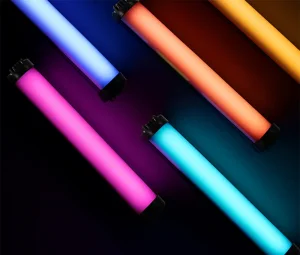
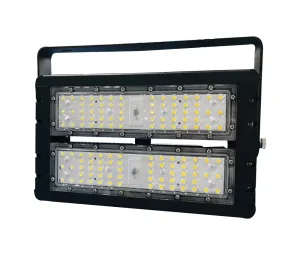
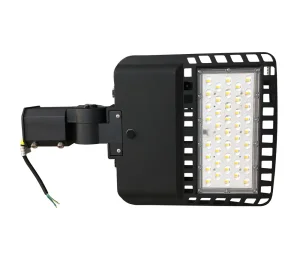
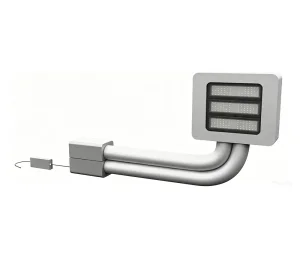
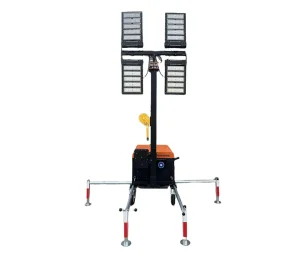
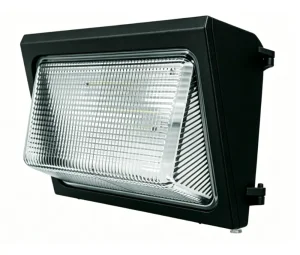
Explore our full line of industrial LED floodlights, high-temperature lights, underwater cinema fixtures, shoebox street lights, and mobile light towers engineered for extreme B2B deployments.
7. Frequently Asked Questions (FAQ) for Russian B2B Buyers
Technical and logistical insights answered by our senior lighting engineering team.
How do your RGB lights maintain operational stability at -40°C or -50°C in Russian winters?
Our cold-climate RGB lights integrate specialized LED drivers built with ultra-low-temperature solid-state capacitors and cold-start thermistors certified for reliable startup at temperatures as low as -55°C. Additionally, we utilize fluorosilicone seal rings that retain flexibility without cracking, alongside built-in breathing valves that equalize internal pressure variations to prevent lens condensation during freeze-thaw cycles.
What control protocols are supported for dynamic facade lighting shows?
We support standard DMX512-A and bi-directional RDM (Remote Device Management) protocols. For massive architectural pixel-mapping installations, our fixtures interface seamlessly with Art-Net and sACN protocols via industrial DMX decoders, enabling full control via Madrix or software platforms.
Can your factory provide custom optical beam angles for tall buildings?
Yes. We offer precision optical lenses ranging from ultra-narrow 5° and 10° spot beams for high-rise projection to asymmetrical 15°x45° and 30°x60° elliptical distributions for uniform wall washing without light spill.
Do your lighting products comply with Eurasian Customs Union (EAC) regulations?
Yes. All our exported LED luminaires are engineered to meet TP TC 004/2011 (Low Voltage Safety) and TP TC 020/2011 (Electromagnetic Compatibility) standards, ensuring complete compliance for import and distribution throughout Russia, Belarus, and Kazakhstan.
What is the standard production lead time for custom OEM RGB orders?
Standard OEM production lead time is 15 to 20 business days upon sample approval. Urgent project orders can be expedited through our flexible manufacturing schedule, with sample prototypes delivered within 5 to 7 days.