
Primary Thermal-Resistant Fixtures for Heavy Swedish Industry
Deployable immediately in high-vibration, high-dust, and radiant-heat processing plants across Bergslagen, Norrbotten, and Västerbotten industrial zones.
Industrial Realities: Sweden’s Fossil-Free Transition & High-Heat Operations
A technical assessment of luminaire sustainability, photothermal endurance, and low-carbon engineering for Nordic high-spec procurement.
The Swedish Industrial Landscape: Green Steel & Mining
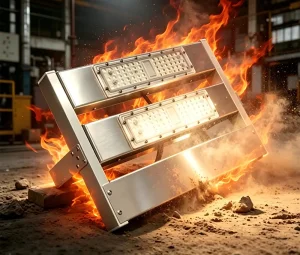
Sweden has distinguished itself globally through pioneering initiatives such as HYBRIT (Hydrogen Breakthrough Ironmaking Technology), replacing traditional blast furnaces with direct reduction processes using green hydrogen. However, downstream processing—including electric arc furnaces (EAF), continuous casting ladles, rolling mills, and hot-dip galvanizing lines—generates sustained ambient ceiling temperatures running continuously between 75°C and 130°C, with radiant radiant peaks up to 250°C.
Furthermore, Swedish operations place severe emphasis on circular design and the EU Ecodesign Directive (Directive 2009/125/EC). Standard commercial lighting systems built with plastic optics and electrolytic capacitors experience premature lumen depreciation (L70 dropped within 6 months) and structural housing failure under continuous thermal duress.
Global Metallurgy & Thermal Demands
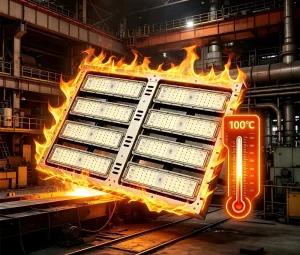
Across global foundries, smelters, petrochemical steam recovery bays, and paper mills, high ambient heat is the primary culprit behind industrial LED destruction. When junction temperatures (Tj) breach 105°C, phosphor bonding destabilizes, silicon lenses yellow, and forward voltage shifts dramatically. Our manufacturing methodology shifts away from standard passive finning toward active micro-channel vapor chambers, separate thermal galvanic isolation, and extruded aircraft-grade 6063 aluminum housing systems.
Engineering procurement officers across Stockholm, Gothenburg, and Luleå require luminaires that do not simply endure the heat, but maintain >150 lm/W system efficacy with a minimum maintenance life of L80B10 @ 65,000 hours in unrelenting 90°C ambient temperatures.
Direct-from-Manufacturer Strategic Advantage: Shenzhen Manufacturing Precision
How our direct vertical integration bypasses European middle-tier markups while delivering custom-tailored industrial optics.
Ultra-Rapid Prototyping
Unlike Scandinavian distributors limited to rigid catalog selections, our Shenzhen R&D center modifies PCB arrays, remote driver brackets, optical secondary lenses, and heat sinks within 5 to 7 operational days. Custom IES photometric simulation models are rendered instantly for exact crane bay heights.
Tier-1 Component Integration
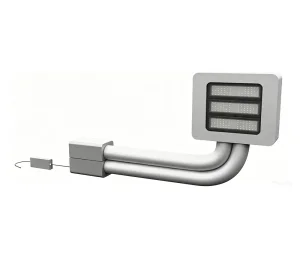
We source ultra-high-temp Nichia and Cree ceramic LED emitters configured with gold-wire bonding. Coupled with customized Mean Well and Inventronics high-temperature remote driver packs, our fixtures bypass electrolytic capacitance degradation by separating drivers from radiant LED thermal zones.
Optimized Total Cost of Ownership
Eliminate 30–50% procurement inflation created by European commercial resellers. Procure directly at source under transparent OEM/ODM service contracts with integrated DDP freight options to Gothenburg Port, Helsingborg, or direct to Malmö and Norrköping job sites.
Engineering Matrix: Thermal Class vs. Swedish Application Zones
Deploy the correct physical luminaire configuration according to ceiling height, radiant exposure, and ambient atmospheric particulates.
| Thermal Class | Rated Operating Temp | Target Swedish Industrial Application | Critical Optical & Housing Design | Remote Gear Distance |
|---|---|---|---|---|
| Standard Industrial Heavy | 80°C / 176°F | Pulp digester rooms, heavy boiler sheds, paper drying machines | Extruded AL6063, optical tempered glass, IP68 silastic seals | Integrated or Remote (< 15m) |
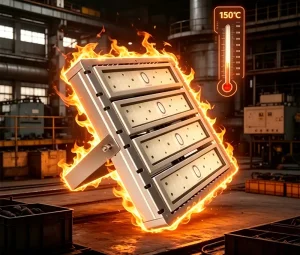
| High Thermal Grade | 100°C / 212°F | LKAB mining mineral processing plants, asphalt treatment units | Dual-zone heat sink, fluorocarbon powder coating, anti-vibration mount | Remote Gear Recommended (< 25m) |
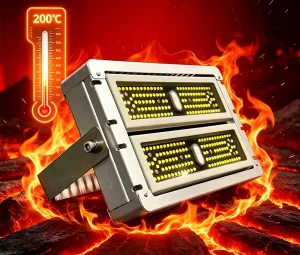
| Severe Pyro-Zone | 150°C / 302°F | Continuous steel casting bays, billet reheat furnace ceilings | Vapor chamber active thermal convection, heat-pipe distribution | External Cold-Zone Rack Mounted |
| Ultra Extreme Foundry | ≤ 300°C / 572°F | Direct EAF ladle crane hook locations, blast furnace tapping spouts | Liquid/pneumatic coolant loop capability, quartz glass shield, ceramic PCB | Isolated Driver Vault (< 50m) |
Localized Swedish Application Environments
Purpose-engineered for the severe climate swings, harsh chemicals, and internal heat loads typical of Nordic heavy facilities.
Steel Mills & Forging Facilities
Locations such as Oxelösund and Sandviken run round-the-clock hot strip operations where steel slabs travel at temperatures over 1,000°C. Luminaires installed overhead must absorb both broad convective roof air temperatures of 85°C to 110°C and relentless radiant heat waves without diode degradation or lens warping.
Pulp, Paper & Chemical Recovery
Swedish mills along the Gulf of Bothnia utilize black liquor chemical recovery boilers where chlorine, sulfur dioxide (SO₂), and alkaline vapors mix with ambient air temperatures exceeding 70°C. Our IP68 and IP69K sealed housings feature dual anodization plus anti-corrosive powder finishes to defeat chemical ingress.
Subarctic Smelting & Concentrators
In northern facilities (Kiruna, Malmberget, Rönnskär), lighting must operate reliably across extreme thermal cycles: from –40°C start-up in deep winter to +95°C running state adjacent to lead/copper roasters. Our wide-spectrum drivers feature automated thermistor feedback and cold-start surge protection.
Frequently Asked Technical Questions (Procurement & Engineering)
Key design factors, Swedish electrical compliance, thermal dissipation, and supply logistics for factory project engineers.
How do Lsledsus high-temperature fixtures protect electronics from thermal fatigue at 100°C+?
Do these luminaires comply with Swedish and European Union safety and energy standards?
Can standard optics withstand sulfur, moisture, and alkaline fumes found in Swedish paper mills?
What is the difference between active thermal management and standard passive heat dissipation?
What is the lead time for customized orders exported from Shenzhen to Sweden?
Full Industrial Specification Range for Global & Nordic Facilities
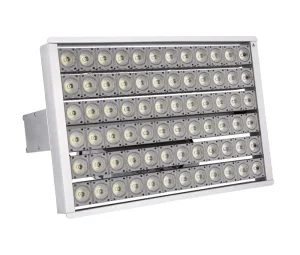
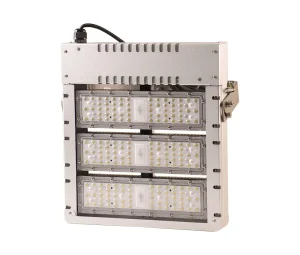
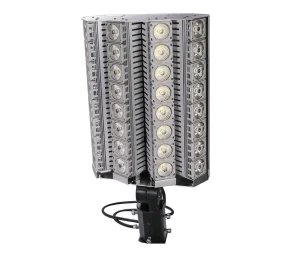
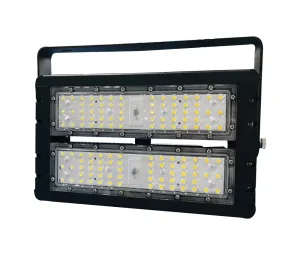
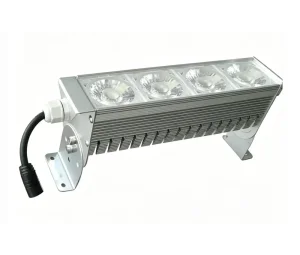
Rugged, heavy-duty lighting platforms tested for temperature tolerance, mechanical impact, and ingress resistance.
Ready to Upgrade Your Swedish Plant’s Lighting Reliability?
Connect directly with our senior thermal engineers. Send your lux targets, ceiling elevations, and heat-zone profiles for free photometric evaluations and quotation datasheets.
Send Inquiry Now