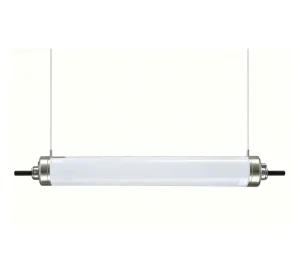
Core Extreme-Temperature LED Luminaires
Precision-engineered luminaire suites tested under rigorous laboratory stress conditions and validated for New Zealand heavy industrial site architectures.
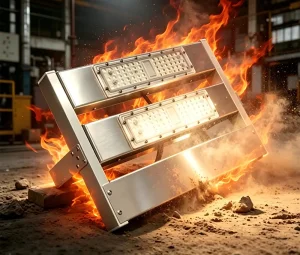
Tailored High Temperature LED Light with Highly Dustproof Configuration for New Zealand Timber Kilns
View Specifications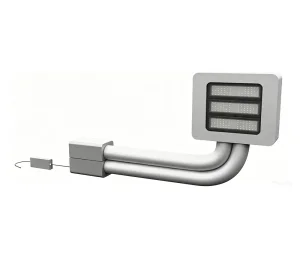
High-Quality Tailored High Temperature LED Light with Active Thermal Management Rated 300°C (572°F)
View Specifications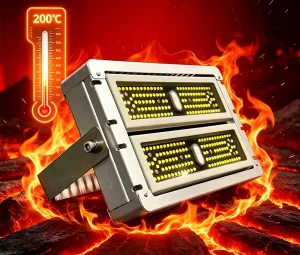
Ultra High Temperature LED Light Rated 200°C (392°F) with IP68 Waterproof Protection
View Specifications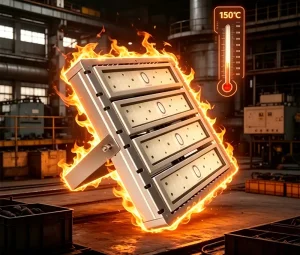
Extreme High Temperature LED Light Rated 150°C (302°F) with IP68 Waterproof Protection
View SpecificationsNew Zealand's Extreme Operating Environments & Lighting Challenges
New Zealand’s industrial landscape presents an aggressive cocktail of hyper-localized microclimates: geothermal hydrogen sulfide (H2S) outgassing, high ambient ceiling heat in heavy timber drying kilns, and coastal maritime humidity.
Taupō Volcanic Zone & Geothermal Power
Facilities across Wairakei, Ohaaki, and Ngawha face severe atmospheric challenges. Geothermal generation involves subterranean steam containing elevated H2S gas and moisture at temperatures exceeding 85°C. Standard commercial fittings suffer copper trace degradation, optic fogging, and catastrophic driver blowout within months. Our sealed IP68 anti-corrosion luminaires feature sacrificial anodic treatments and isolated driver bays engineered to resist acidic vapor penetration.
Central North Island Timber & Pulp Mills
The vast softwood plantations fueling the Kawerau and Kinleith pulp, paper, and timber mills rely on massive automated drying kilns. In these enclosed facilities, temperatures regularly spike between 90°C and 140°C with severe wood resin vaporization and abrasive cellulose particulate. Our high-bay solutions utilize borosilicate tempered glass optics that prevent resin burn-in and specialized heat pipes running dual-phase liquid convection to purge heat away from LED junctions.
Tiwai Point & Glenbrook Heavy Smelting
New Zealand’s primary smelting plants—including the Glenbrook steel works and Pacific aluminum operations—involve continuous blast furnaces and ladle pre-heating. Craneway ambient air commonly reaches 70°C to 110°C directly under roofing trusses. Standard LEDs experience rapid thermal phosphor decay (blue-shift failure). We deploy separate remote-mount driver stations up to 60 meters away from the primary luminaire emitter, ensuring rock-solid longevity.
Global Thermal Stress Trends in Heavy Industrial Illumination
The worldwide acceleration toward automated manufacturing, enclosed kiln drying, and smelting decarbonization has exposed a structural flaw in legacy industrial lighting paradigms.
The Failure of "Commercial-Grade High Bays" in Extreme Heat
Traditional lighting distributors frequently supply generic die-cast aluminum high bays claiming "industrial suitability." However, when ambient ceiling temps cross 55°C, their integrated electrolytic capacitors dry out prematurely, causing widespread strobe effect, color shifting, and driver shutdown. In severe operations like glass annealing, mining kiln calcination, and forge plants, every maintenance downtime hour can cost industrial operators over $25,000 NZD in crane rental, production halts, and scaffolding assembly. Industrial specifiers require decoupled electronic topologies and structural thermodynamics.
Thermodynamic Design: Phase-Change & Active Heat Sinks
Next-generation high-temperature luminaires utilize advanced aerospace thermal principles. By deploying sintered copper powder heat pipes with deionized water vacuum working fluids, our fixtures achieve thermal conductivity rates exceeding 5,000 W/mK—over 20 times higher than solid billet aluminum. When combined with Japanese ceramic-substrate LEDs (flip-chip packaging without bonding wires), the physical emitter can safely endure sustained internal junction temperatures (Tj) of 135°C without luminous degradation or color drift across decades of service.
The Direct Shenzhen Manufacturing Advantage for New Zealand Buyers
Bypassing multi-tier distribution layers to deliver bespoke precision manufacturing, competitive unit economics, and rapid engineering customization directly to Auckland, Tauranga, Lyttelton, and beyond.
Rapid Tailoring & Custom Mechanicals
Every industrial plant has specific structural hurdles: mounting bracket vibration profiles, 110V/240V/415V three-phase grid fluctuations, or tight clearance dimensions around steam manifolds. Our direct factory engineering team produces custom CAD bracketry, custom beam angles (from 15° pencil beam to 120° wide flood), and bespoke thermal isolation housings within 48 to 72 hours.
Rigorous Environmental Testing Lab
Before dispatch, all fixtures undergo exhaustive burn-in inside continuous high-temperature thermal ovens (up to 300°C), IPX8 high-pressure water submergence testing, and saline-fog salt spray corrosion trials mimicking harsh maritime regions like Hawkes Bay and Taranaki. We ensure 100% QA traceability before packing.
Direct Logistics to Australasia
Leveraging direct air-freight corridors to Auckland (AKL) and Christchurch (CHC) alongside regular sea container shipping to Ports of Auckland, Tauranga, and Lyttelton. We provide complete DDP (Delivered Duty Paid) logistics management, import paperwork handling, and turnkey delivery directly to your facility gates.
Key Technical Criteria for Engineering & EPC Procurement Teams
When drafting tenders for high-heat industrial lighting, electrical engineers and project managers should benchmark proposals against these essential physical parameters:
1. Driver Architecture: Integrated vs. Remote-Box
For ambient zones below 65°C, integrated high-spec drivers (e.g., Mean Well, Inventronics) with potting compound are acceptable. Above 70°C, an external remote electrical enclosure is mandatory. The power unit must be located in an air-conditioned electrical control room or at low level, connecting to the luminaire emitter head via Teflon-sheathed high-temperature silicone multi-core cabling.
2. Optical Materials: Polycarbonate vs. Borosilicate
Standard luminaires employ acrylic (PMMA) or polycarbonate lenses. In continuous ambient heat over 80°C or presence of airborne solvents/sulfur, polycarbonates turn yellow, embrittle, and lose up to 45% transmittance within 12 months. Specifiers must mandate pure non-reactive borosilicate micro-prismatic glass lenses sealed with vulcanized fluoroelastomer gaskets.
3. Atmospheric Ingress & Chemical Defense
Verify dynamic IP ratings (IP66, IP67, or IP68/IP69K). In environments like timber dry kilns or dairy drying towers, luminaires must handle high-pressure washdowns (100 bar, 80°C steam cleaning). Housing surfaces require fluorocarbon powder coatings or hard-anodized marine finishes exceeding 1,000 hours of continuous ASTM B117 salt spray exposure.
4. Photometric Verification & AS/NZS Compliance
Ensure suppliers supply native IES / LDT digital files measured at steady-state operating temps (not cold-start laboratory pulses). Fixtures destined for New Zealand must comply with AS/NZS 60598.1 safety protocols, AS/NZS CISPR 15 radio interference standards, and display verifiable RCM (Regulatory Compliance Mark) documentation.
Engineering an Extreme-Heat Facility in New Zealand?
Connect directly with our senior thermal design engineers. Share your ceiling mounting heights, operating ambient temperatures, and architectural CAD drawings to receive a complimentary Dialux 3D photometric calculation and factory-direct quotation within 24 hours.
Frequently Asked Questions by Industrial Engineers & Specifiers
In-depth responses covering installation, thermal limitations, driver placement, and regulatory compliance for heavy industrial sites across Australasia.
What is the core difference between ordinary industrial high bays and genuine high-temperature LED lights?
How do your fixtures handle hydrogen sulfide (H2S) in New Zealand geothermal zones?
Can the LED power supply (driver) be installed away from the heat zone?
Do these lights comply with New Zealand electrical safety standards?
What is the standard production and shipping lead time to New Zealand?
Specialized Industrial & Harsh-Environment Luminaire Range
Browse our complete catalog of extreme-temperature, explosion-proof, linear strip, and heavy-duty architectural luminaires engineered for New Zealand industrial facilities.
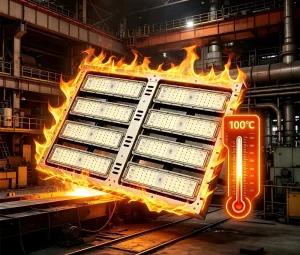
High-Quality High Temperature LED Light Rated 100°C (212°F), IP68 Waterproof for New Zealand Industrial Mills
View Specifications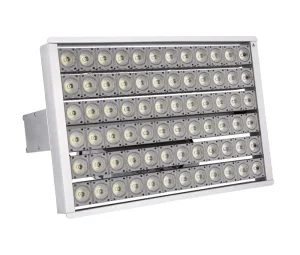
High-Quality High Temperature LED Light Rated 90°C (194°F) for New Zealand Industrial Workshops
View Specifications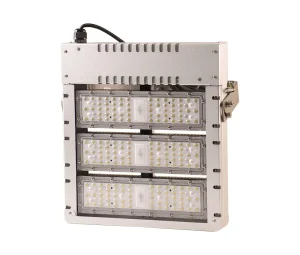
OEM High Temperature LED Flood and High Bay Light Rated 80°C for New Zealand Heavy Production Warehouses
View Specifications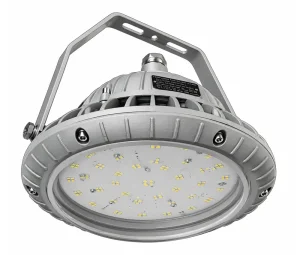
Explosion Proof LED Light – Safe, Durable Industrial Illumination for New Zealand Hazardous Zones
View Specifications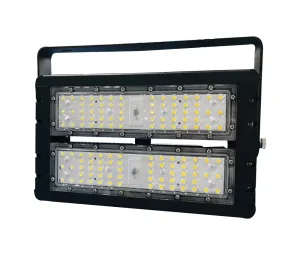
High-Quality 12V/24V DC LED Flood Light for Portable & Solar Applications in Remote New Zealand Worksites
View Specifications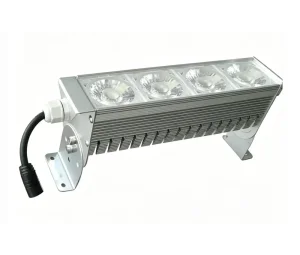
High-Quality LED Linear Strip Light for Industrial, Commercial & Architectural Operations in New Zealand
View Specifications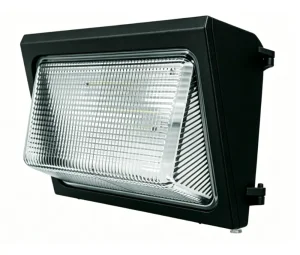
Best Wall Pack LED Light – Secure & Efficient Exterior Building Lighting for New Zealand Industrial Depots
View Specifications