
Primary Product Portfolio
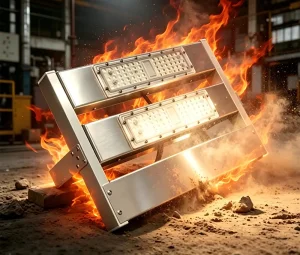
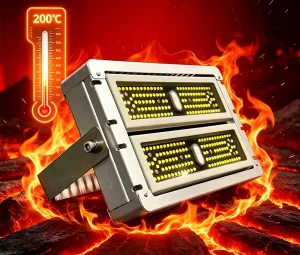
Extreme Temperature Series (Rated up to 300°C)
Engineered explicitly for high-ambient Australian operations including furnace bays, smelters, and heavy foundry infrastructure.
Macro Economic & Environmental Context
The Australian High-Temperature Lighting Operating Environment
An in-depth analysis of thermal degradation factors across Western Australia, Queensland, New South Wales, and Victoria industrial processing nodes.
Australia’s industrial sector represents one of the most punishing physical operational landscapes globally for solid-state electronics and optical equipment. From the iron ore processing plants of the Pilbara region in Western Australia to the alumina smelters of Gladstone, Queensland, and the copper refineries of South Australia, heavy industrial operations present a compound thermal challenge. Operating facilities in these regions consistently deal with ambient outdoor temperatures exceeding 45°C during summer, which translates to internal ceiling and fixture mounting height ambient temperatures ranging from 80°C to well over 200°C near furnaces, kilns, and ladle transfer bays.
Mining & Mineral Processing
Iron ore car dumpers, crushers, and gold roasting plants encounter intense ambient heat, persistent airborne silica dust, and heavy structural vibrations requiring ruggedized IP68/IP69K sealing.
Smelting & Metallurgy
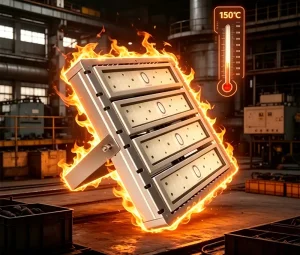
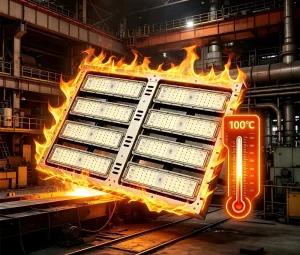
Aluminum potrooms and steel casting plants generate intense localized convective and radiant heat loads, exceeding 150°C ambient temperatures where standard commercial fixtures fail within weeks.
Solar Microgrids & Remote Facilities
Remote Australian facilities backed by diesel-solar hybrid setups require ultra-efficient 12V/24V DC high-temp luminaires that maintain high lumens without overheating off-grid battery systems.
Standard commercial LED high bays specified with off-the-shelf aluminum heat sinks and basic electrolytic drivers suffer rapid lumen depreciation (L70 failure within 3,000 to 8,000 hours) when deployed in Australian industrial facilities. High ambient temperatures accelerate three distinct failure mechanisms: p-n junction thermal breakdown, driver capacitor drying, and optical lens yellowing/cracking caused by combined thermal stress and intense UV exposure.
Performance Metrics
Engineering Reliability Benchmark for Australia
How specialized high-temperature manufacturing transforms system longevity and operational continuity.
300°C
Max Ambient Rating
100,000h
L80B10 Lifespan @ 80°C
IP68/69K
Ingress Protection
<0.08°C/W
Thermal Resistance (Rth)
Advanced Thermal Physics
Thermal Management & Photometric Engineering Architecture
Solving the $T_j$ (Junction Temperature) equation in high-ambient industrial lighting design.
In high-temperature lighting design, the fundamental objective is maintaining the LED chip’s semiconductor junction temperature ($T_j$) below critical thresholds (typically <105°C) even when the external surrounding air temperature ($T_a$) reaches 80°C, 100°C, 150°C, or 300°C. Achieving this requires a holistic engineering approach combining active thermal management, phase-change materials, remote power electronics, and specialized optical encapsulation.
1. Multi-Stage Phase-Change Heat Pipes & 3D Vapor Chambers
Rather than relying solely on passive aluminum extrusions, our high-temperature luminaires integrate sintered copper phase-change heat pipes bonded directly to a thermoelectric copper substrate. Deployed fluid inside the evacuated micro-channels evaporates at the hot junction (LED baseplate) and condenses at the fin matrix, conducting thermal energy away at rates up to 100 times faster than solid copper.
2. Remote Driver Architecture & Gallium Nitride (GaN) Power Modules
In extreme ambient environments (>100°C), housing the power driver inside the same enclosure as the light engine is mathematically non-viable for long lifespans. Our Australian-spec engineering isolates the driver via remote quick-disconnect wiring harnesses (up to 50 meters away in cooler control rooms) or utilizes ultra-high-efficiency GaN power switches housed in air-cooled, IP68 rated outer housings capable of resisting heat up to 85°C continuously.
3. Non-Yellowing Borosilicate Glass & Fluorosilicone Optics
Standard PMMA (acrylic) or PC (polycarbonate) secondary optics degrade rapidly under extreme heat combined with high UV output, turning yellow, brittle, and losing up to 40% of luminous efficacy. Our high-temperature products employ precision-molded borosilicate glass lenses paired with high-purity fluorosilicone vacuum-sealed gaskets that maintain elasticity and seal integrity across temperatures ranging from -40°C to +300°C.
| Thermal Metric / Component | Standard Commercial LED High Bay | Australian Mining/Industrial Spec LED | High-Temp 300°C Active Management LED |
|---|---|---|---|
| Max Operating Ambient ($T_a$) | 40°C – 45°C | 80°C – 100°C | 150°C – 300°C Continuous |
| Heat Sink Material | Stamped / Die-Cast Aluminum | Cold-Forged Al6063 + Heat Pipes | 3D Vapor Chamber + Micro-Channel Active Flow |
| Optical Lens Material | Polycarbonate (PC) / Acrylic | Tempered Glass + Silicone | Borosilicate Glass + Fluorosilicone Seals |
| Driver Isolation | Integrated (Internal) | Thermally Isolated Channel | Remote GaN Driver System (Up to 50m) |
| L70 Lifespan @ 80°C Ambient | < 5,000 Hours (Thermal Runaway) | > 80,000 Hours | > 100,000 Hours |
B2B Sourcing Synergies
China Direct Manufacturing Advantages for Australia Sourcing Directors
How Tier-1 OEM/ODM manufacturing bridges the gap between ultra-rigorous custom engineering and cost-effective procurement.
Australian EPC (Engineering, Procurement, and Construction) firms, electrical wholesalers, and mining asset managers face constant cost-versus-performance pressure. Sourcing high-temperature luminaires direct from specialized Chinese OEM/ODM manufacturing facilities offers unmatched technical flexibility, rapid design-to-delivery timelines, and dramatic Total Cost of Ownership (TCO) reductions.
Rapid ANSYS Flotherm & Photometric Simulation
Our in-house thermal engineering teams execute thermal modeling (ANSYS Flotherm) and bespoke Dialux photometric layouts within 48 hours of receiving site drawings, ensuring precise beam angles and temperature tolerances prior to tooling or production.
Direct Logistics to Major Australian Ports
Established supply chain corridors provide streamlined sea and air freight solutions directly to Fremantle (Perth), Port Adelaide, Melbourne, Sydney, and Brisbane, supported by full customs documentation, Australian RCM compliance, and origin certificates.
Field Application Scenarios
Deployed Solutions Across Major Australian Industrial Hubs
Proven operational performance in critical infrastructure projects across Western Australia and Queensland.
Case Study 1: Iron Ore Car Dumper Sheds (Pilbara, WA)
Environment: Enclosed transfer structure with ambient summer temperatures hitting 55°C outdoors, exceeding 85°C under metal roofing, coupled with fine hematite dust exposure.
Solution: Installation of 150W Dustproof High Temp LED Lights with IP68 ratings and cold-forged fins. Resulted in a 65% reduction in energy usage and zero thermal failures over 36 months of continuous operation.
Case Study 2: Alumina Smelter Anode Bake Plants (Gladstone, QLD)
Environment: Overhead crane bays and anode baking ovens operating with convective air columns reaching 180°C.
Solution: Tailored Active Thermal Management High Temp LED Lights rated at 300°C with remote driver enclosures situated 30 meters away. Delivered stable lux levels and enhanced safety for maintenance teams.
Compliance & Assurance
Australian Electrical Safety & Compliance Standards
Ensuring seamlessly integrated certification for Tier-1 mining site acceptance.
To be installed legally and safely across Australian commercial and industrial sites, high-temperature luminaires must meet strict statutory guidelines established by Standards Australia and electrical safety regulators:
- AS/NZS 60598.1 & AS/NZS 60598.2.1: Luminaires - General requirements, thermal testing, and safety specifications for fixed general purpose luminaires.
- RCM (Regulatory Compliance Mark): Full compliance with Australian Communications and Media Authority (ACMA) EMC standards and Electrical Regulatory Authorities Council (ERAC) safety requirements.
- IECEx / ATEX Ex d / Ex e: Certification for hazardous dust (Zone 21/22) and gas (Zone 1/2) environments present in Australian coal handling and chemical facilities.
- IP68 & IP69K Ingress Testing: Verified protection against high-pressure water jet washdowns and total immersion, critical for coastal operations exposed to salt spray.
Expanded Catalog
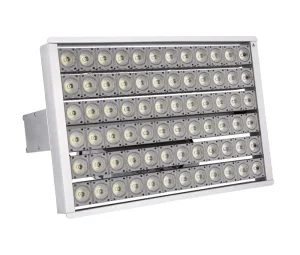
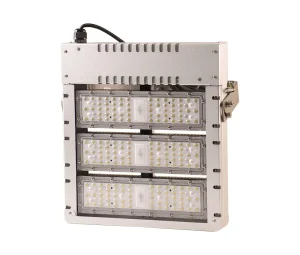
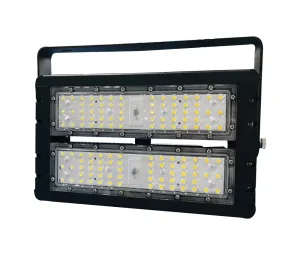
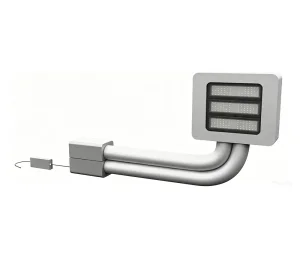
High Temperature & Specialized Industrial Fixtures
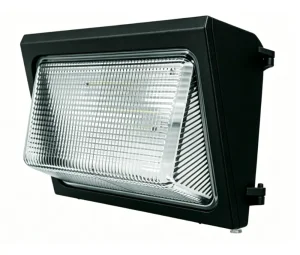
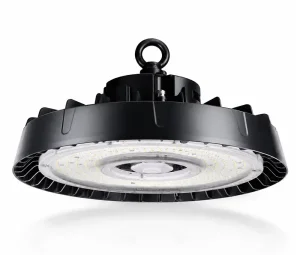
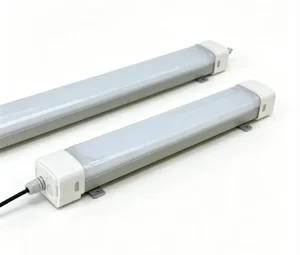
Explore our full line of industrial high bays, floodlights, solar luminaires, and waterproof fixtures optimized for Australia.
Technical & Sourcing Procurement FAQ
Frequently Asked Questions for Australian Industrial Buyers
Expert answers addressing compliance, thermal longevity, shipping, and custom manufacturing capability.
How do high-temperature LED lights achieve operating ratings up to 300°C?
Our 300°C rated luminaires utilize active micro-channel phase-change cooling, remote GaN power supplies placed outside the high-heat zone, non-yellowing borosilicate glass optics, and fluorosilicone seals. This ensures the LED semiconductor junction temperature ($T_j$) remains within safe thresholds despite extreme ambient surroundings.
Do your industrial luminaires comply with Australian RCM and Safety Standards?
Yes. All high-temperature fixtures supplied to Australia comply with AS/NZS 60598.1, AS/NZS 60598.2.1, and carry mandatory RCM registration for electrical safety and electromagnetic compatibility (EMC). Complete test reports are provided during quotation.
What lead times can Australian mining and industrial operations expect?
Standard OEM production runs take 2 to 3 weeks following photometric approval. Fast-track air freight to Perth, Sydney, or Brisbane takes 5–7 days, while sea freight door-to-door typically averages 18–22 days depending on destination port.
Can you customize beam angles and mounting hardware for retrofit projects?
Absolutely. We offer customized 15°, 30°, 60°, 90°, and 120° optics, along with heavy-duty 316 stainless steel mounting brackets designed to fit existing conduit, pipe-mounts, or truss structures on Australian job sites.
What warranty protection is provided for extreme high-temperature environments?
We provide a 5-year full replacement factory warranty on high-temperature series operating up to their rated temperature classes (80°C, 100°C, 150°C, and 300°C), backed by rigorous accelerated thermal aging tests.
How do I obtain a Photometric Dialux layout for my Australian facility?
Simply send your facility dimensions, ceiling height, reflectance requirements, and target lux levels to our engineering team via the contact form. We generate a complete Dialux simulation report free of charge within 24–48 hours.