
High-Temperature LED Fixtures for Extreme Seattle Applications
Engineered with active thermal management, remote driver options, and heavy-duty IP68 dust-and-waterproof protection for high ambient temperature zones.
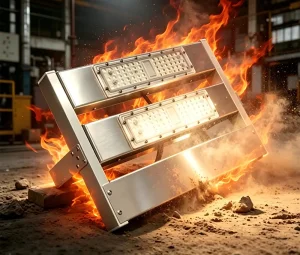
Best Tailored High Temperature LED Light with Highly Dustproof Configuration Factory, Manufacturers
View Specifications & Request Quote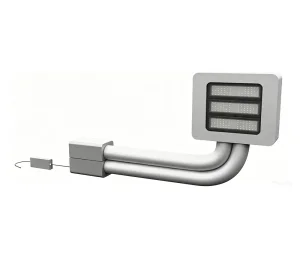
High-Quality Tailored High Temperature LED Light with Active Thermal Management- Rated 300°C (572°F) Factory, Manufacturers
View Specifications & Request Quote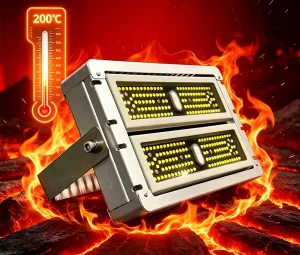
Best Ultra High Temperature LED Light - Rated 200°C (392°F) with IP68 Waterproof Protection Factory, Manufacturers
View Specifications & Request Quote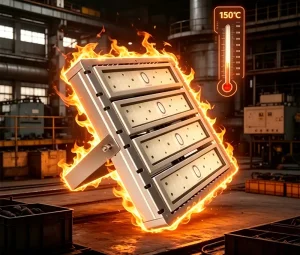
High-Quality Extreme High Temperature LED Light - Rated 150°C (302°F) with IP68 Waterproof Protection Factories, Factory
View Specifications & Request QuoteThermal & Reliability Performance Benchmarks
Built to overcome thermal degradation, driver failure, and lumen decay in the Pacific Northwest’s heaviest industrial environments.
Navigating High-Temperature Lighting Challenges in Seattle's Industrial Landscape
The Greater Seattle region, spanning Renton, Everett, Kent Valley, and the Puget Sound maritime corridors, presents a uniquely demanding set of operating conditions for industrial lighting infrastructure. While the Pacific Northwest is globally recognized for its aerospace engineering, naval shipyards, advanced metallurgy, and green energy technology, local plant managers and industrial electrical contractors encounter severe lighting degradation inside specialized, high-heat processing zones.
In facilities such as aerospace composite curing bays, heat-treating steel foundries, marine vessel engine rooms, glass manufacturing plants, and high-bay pulp mills, ambient ceiling temperatures routinely exceed 80°C (176°F) and can surge past 200°C (392°F) near ovens and furnace lines. Standard commercial off-the-shelf (COTS) LED luminaires—typically rated only for 40°C to 50°C—fail rapidly under these thermal stresses. Driver capacitors dry out, optical lenses yellow and crack, phosphor layers degrade, and LED junction temperatures ($T_j$) exceed safe limits, causing catastrophic premature failure.
The Physics of Extreme Heat LED Degradation: Why Standard LEDs Fail
Solid-state lighting (LED) efficiency is directly governed by thermal management. When an LED chip operates, only 30% to 45% of electrical energy is converted into visible light; the remaining 55% to 70% is converted directly into heat. In ambient environments exceeding 80°C, natural convection heat transfer drops dramatically. If heat cannot escape from the LED substrate:
- Non-Radiative Recombination Increases: Thermal agitation within the semiconductor lattice destroys photon efficiency, leading to rapid lumen depreciation.
- Color Shift & Phosphor Breakdown: High ambient heat degrades silicone encapsulants, shifting color temperatures from crisp 5000K daylight into distorted yellowish or greenish hues.
- Power Supply Capacitor Failure: Electrolytic capacitors inside standard LED drivers experience accelerated electrolyte evaporation. For every 10°C increase in ambient operating temperature, driver lifespan is reduced by 50%.
Standard Commercial LED High Bays
Max Ambient: 40°C – 50°C (104°F – 122°F)
Driver Isolation: Internal / Integrated (Heat trapped)
Optics: Acrylic (PMMA) – Yellows at 70°C
Failure Mode: Capacitor blowout within 6-12 months in high heat zones.
LSLEDSUS OEM High-Temp Luminaires
Max Ambient: 80°C to 300°C (176°F to 572°F)
Driver Isolation: Remote Driver Enclosures up to 100 meters away
Optics: High-purity Borosilicate Glass & Optical Silicone
Failure Mode: L70 rated for 100,000+ hours under continuous peak heat.
Architectural Thermal Innovations in LSLEDSUS High-Temperature Luminaires
To deliver uncompromised reliability to Seattle procurement managers and OEM project contractors, LSLEDSUS engineers fixture architectures based on three critical technological pillars:
- Vapor Chamber & Phase-Change Heat Sink Topologies: Utilizing extruded 6063-T6 aerospace aluminum alloys integrated with copper heat pipes and liquid phase-change chambers. Heat is rapidly pulled away from the LED printed circuit board (PCB) to cooling fins even when ambient air currents are stagnant.
- Remote Driver Enclosure (RDE) System: For extreme ambient zones rated 150°C to 300°C, the sensitive driver electronics are housed in a remote NEMA 4X enclosure installed in a cooler control room or lower ambient zone up to 100 meters away. Only the solid-state light head and high-temperature silicone wiring reside in the hot zone.
- Phase-Resistant Borosilicate & Quartz Lenses: Replacing synthetic plastics with thermal-shock resistant borosilicate glass optical lenses. These lenses maintain 96% light transmittance without yellowing, fogging, or cracking under rapid thermal cycling in heat-treatment operations.
High-Temperature Lighting Series Specifications
Compare operational temperature limits, thermal protection mechanisms, ingress protection, and mounting options for Seattle facilities.
| Series Class | Ambient Heat Rating | Thermal Management System | Optical Lens Material | Ingress Rating | Primary Seattle Application |
|---|---|---|---|---|---|
| HT-80 Series | 80°C / 176°F | Passivated 6063-T6 Aluminum Heat Sink | Polycarbonate / Optical Silicone | IP67 / NEMA 4X | Forging Shops, Machine Bays, Commercial Bakeries |
| HT-100 Series | 100°C / 212°F | Vapor Chamber Heat Pipe Architecture | Borosilicate Glass Lens | IP68 Waterproof | Casting Bays, Steel Rolling Mills, Wood Drying Kilns |
| HT-150 Series | 150°C / 302°F | Dual-Chamber Thermal Isolation | High-Purity Quartz Glass | IP68 Heavy-Duty | Turbine Halls, Boiler Rooms, Composite Autoclaves |
| HT-300 Extreme | 300°C / 572°F | Active Liquid Cooling + Remote Driver | Quartz/Sapphire Optical Array | IP68 / Submersion | Smelters, Furnace Viewing Ports, Coke Ovens |
Seattle Utility Rebate Alignment & Safety Standards
Ensuring compliance with North American electrical codes and maximizing local utility energy efficiency incentives.
UL 1598 / UL 1598A & UL 844 Certified
Engineered for hazardous location safety, marine environment corrosion resistance (UL1598A), and high ambient safety ratings required by Washington State Department of Labor & Industries (L&I).
Seattle City Light & Puget Sound Energy Rebates
High lumen-per-watt efficiency (up to 170 lm/W) enables OEM lighting projects to qualify for maximum commercial & industrial energy retrofit rebates through Seattle City Light and PSE incentive programs.
Harsh Weather & Salt Spray Resilience
Designed for the moist Pacific Northwest marine climate. Features AkzoNobel powder-coated aluminum enclosures tested to 5,000-hour salt spray resistance (ASTM B117 standards) for coastal facilities.
The Shenzhen OEM Factory Advantage for Seattle B2B Buyers
As an established Shenzhen industrial LED lighting manufacturer with over 20 years of dedicated R&D experience, LSLEDSUS bridges high-end thermal engineering with factory-direct supply chain agility. Seattle importers, electrical distributors, and OEM engineering firms gain significant strategic advantages:
Custom OEM/ODM Engineering
From non-standard mounting brackets fitting existing Seattle high-bay structures to custom optics, thermal sensor integration (0-10V/DALI dimming with thermal fold-back protection), and private-label packaging.
30% - 50% Procurement Cost Savings
Eliminate multiple intermediary markups. Access tier-one components (OSRAM, MeanWell, Inventronics, Cree LED chips) assembled under strict ISO9001 certification at direct-from-factory OEM pricing.
Rapid Photometric & Thermal Modeling
Our in-house optical engineers deliver IES files, DIALux 3D lighting simulations, and ANSYS FloTHERM thermal simulations within 48 hours for your Seattle engineering bids.
Streamlined Logistics to Port of Seattle
Direct ocean freight shipping to the Port of Seattle (NWSA) or expedited air freight to Seattle-Tacoma International Airport (SEA) with full customs documentation and duty support.
Seattle Area Industrial Application Scenarios
Purpose-built lighting configurations tailored to key commercial and heavy industrial sectors in the Pacific Northwest.
Aerospace Heat Curing & Autoclave Bays
High-bay ceiling zones above composite curing autoclaves in Renton and Everett facilities experience concentrated heat plumes up to 100°C. Our HT-100 series provides high CRI (CRI>80) daylight illumination for continuous visual inspection without thermal degradation.
Puget Sound Marine Vessel Engine Rooms
Shipyards along Harbor Island and Tacoma marine terminals require compact, vibration-resistant, IP68 rated fixtures capable of withstanding intense engine room heat (70°C+) and constant moisture, oil mist, and fuel vapors.
Heavy Metallurgy & Foundries
Seattle iron works and hot rolling mills demand robust fixtures with active thermal throttling. When radiant heat spikes near furnace pour sites (exceeding 200°C), our integrated remote-driver systems prevent catastrophic component burnout.
Pulp, Paper & Wood Kiln Processing
Pacific Northwest lumber drying kilns and paper processing mills combine extreme ambient heat with corrosive steam and high particulate dust. Our IP68 dustproof fixtures feature hydrophobic breather valves to prevent vacuum moisture suction.
High-Temperature & Specialized Industrial Lighting Catalog
Explore our full range of high-bay, flood, marine, sports stadium, and explosion-proof LED luminaires available for Seattle OEM orders.
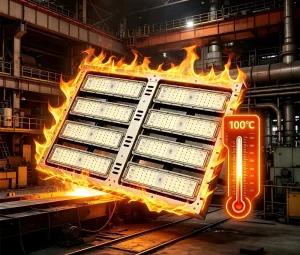
High-Quality High Temperature LED Light Rated 100°C(212°F), IP68 Waterproof Factories, Factory
View Specifications & Request Quote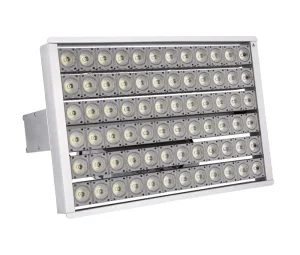
High-Quality High Temperature LED Light Rated 90°C(194°F) Suppliers, Manufacturers
View Specifications & Request Quote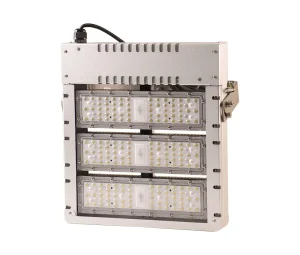
OEM High Temperature LED Flood and High Bay Light Rated 80°C Factories, Suppliers
View Specifications & Request Quote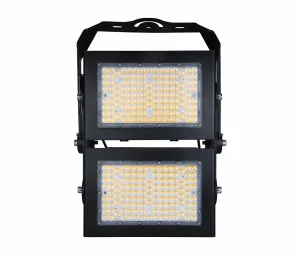
OEM Vega LED Sports Field Light-Robust Design, Adjustable Optics, Competitive Cost Supplier, Manufacturers
View Specifications & Request Quote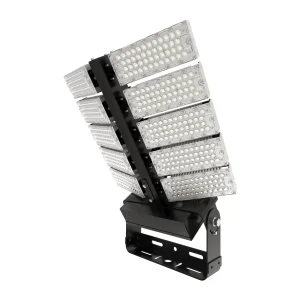
High-Quality Flex LED Flood Light - Independently Articulating Modules for Flawless Field Uniformity Factory, Supplier
View Specifications & Request Quote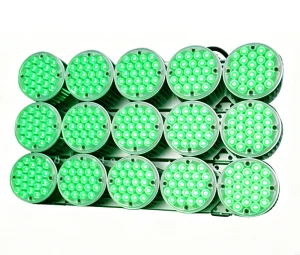
Best RGB Flood Lights - 1000W of Vibrant Power for High Towers & Grand Landscapes Manufacturers, Manufacturer
View Specifications & Request Quote
OEM High Temperature LED Flood and High Bay Light Rated 80°C Factories, Suppliers
View Specifications & Request Quote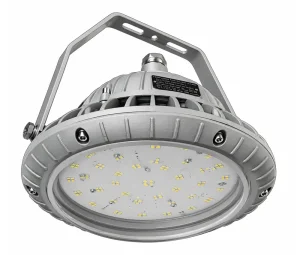
Best Explosion proof LED Light – Safe, Durable, Industrial Illumination Suppliers, Supplier
View Specifications & Request QuoteHigh-Temperature Lighting OEM & Seattle Procurement FAQ
In-depth technical answers for electrical contractors, facility engineers, and OEM purchasing managers in Washington State.
What ambient temperature classes do LSLEDSUS high-temperature LED lights support for Seattle facilities?
+
Our standard high-temperature product lines are engineered for continuous operating ambient temperatures of 80°C (176°F), 90°C (194°F), 100°C (212°F), and 150°C (302°F). For extreme applications—such as furnace viewing ports, smelting shops, and glass kilns—we offer custom-engineered active liquid-cooled solutions rated up to 300°C (572°F) continuous ambient heat.
How does remote driver topology work in extreme high-temperature installations?
+
In environments exceeding 100°C, electronic LED drivers are the weakest link due to electrolytic capacitor degradation. Our Remote Driver Enclosure (RDE) system physically separates the driver from the hot optical head. The driver NEMA cabinet is mounted up to 100 meters (328 feet) away in a cooler control room or lower ambient wall zone, connected via heat-resistant Teflon-coated cabling. This guarantees maximum driver longevity while allowing the light head to operate in extreme heat.
Can LSLEDSUS provide DIALux photometric design layouts for Seattle engineering projects?
+
Yes. Our dedicated optical engineering team provides comprehensive 3D DIALux lighting design simulations and full IES photometrics prior to production. You can verify lux levels, floor uniformity, glare ratings (UGR), and mounting height recommendations specific to your Seattle warehouse, aerospace hangar, or industrial plant floor.
Are these luminaires suitable for moist Pacific Northwest marine environments?
+
Absolutely. All HT-Series fixtures feature dual IP67/IP68 silicon gasketing, 316 marine-grade stainless steel fasteners, and AkzoNobel corrosion-resistant powder coatings tested for 5,000+ hours under ASTM B117 salt spray exposure. They are specifically optimized for Puget Sound maritime shipyards, port terminals, and wet industrial washdown bays.
What is the typical lead time for OEM/ODM orders delivered to Seattle, Washington?
+
Standard OEM sample orders are manufactured and dispatched within 7–10 business days. Mass production orders typically take 15–20 days. Air freight direct to Seattle-Tacoma International Airport (SEA) takes 5–7 days, while ocean freight directly to the Port of Seattle takes approximately 18–22 days depending on vessel scheduling.
Do LSLEDSUS high-temperature lights qualify for local utility energy rebates?
+
Yes. Our fixtures operate at industry-leading luminous efficacy (up to 170 lm/W) and feature dimmable drivers (0-10V, DALI, PWM). They comply with major North American efficiency standards, allowing Seattle industrial clients to submit photometric and DLC test data to Seattle City Light or Puget Sound Energy (PSE) for maximum custom lighting retrofit incentives.
Ready to Upgrade Your Seattle Industrial Lighting Infrastructure?
Talk directly with our senior thermal engineers. Send us your site ambient temperatures, mounting heights, or drawings to receive a custom OEM high-temperature lighting proposal within 24 hours.
Send Inquiry Now