
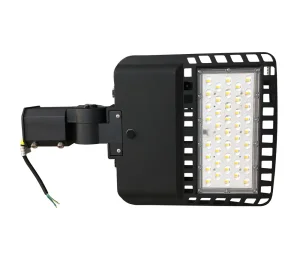
Seoul Deployment Portfolio
High-Performance Luminaires for Seoul Infrastructure
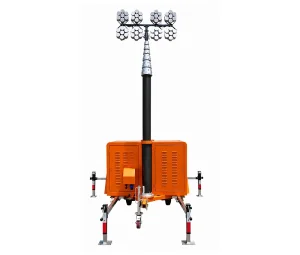
Precision-engineered LED street lights, asymmetric roadway fixtures, and heavy-duty mobile towers deployed across South Korea's urban corridors.
Executive Technical Whitepaper
The Seoul Lighting Landscape: Municipal Standards, Smart Cities & Extreme Weather Resilience
The Seoul Metropolitan Area (SMA), home to over 25 million residents, stands as one of the world's most technologically advanced mega-cities. As the Metropolitan Government advances its flagship "Smart Seoul 2030" vision, street lighting infrastructure is undergoing a fundamental transformation. Modern lighting systems are no longer passive illumination elements; they are now intelligent, sensor-laden nodes within the city's broader IoT and C-ITS (Cooperative Intelligent Transport Systems) frameworks.
Procuring LED street lighting for Seoul requires navigating a rigorous set of technical challenges peculiar to the Korean peninsula. The region experiences extreme microclimates—ranging from freezing Siberian air masses in winter (temperatures dropping below -15°C) to intense monsoon seasons in summer characterized by high ambient humidity (exceeding 90% RH) and ambient temperatures topping 35°C. These thermal shifts place immense stress on driver electronics, optical lenses, and pressure-equalization vents.
Key Infrastructure Zones in Seoul Demanding OEM Customization
Different administrative and industrial districts within Seoul present distinct photometric and mechanical requirements:
- Gasan & Guro Digital Complex (G-Valley): High-density tech hubs requiring glare-free, high-CRI (RA > 80) white light to support foot traffic, Autonomous Delivery Robots (ADRs), and high-definition CCTV surveillance security feeds.
- Olympic-daero & Gangnam-daero Arterial Expressways: Multi-lane highways requiring specialized asymmetric beam spreads (Type II-M and Type III-M optics) to achieve uniform luminance (L_avg > 2.0 cd/m²) without blinding drivers traveling at high speeds.
- Incheon-Seoul Logistics Corridors & Port Access Roads: Heavy commercial transport zones where high-vibration resistance (3G and 5G rating per ANSI C136.31) is strictly mandated for pole-mounted luminaires.
- Han River Parks & Eco-Sensitive Zones: Strict compliance with Korea's "Prevention of Light Pollution Due to Artificial Lighting Act," mandating Zero Upward Light Output Ratio (ULOR = 0%) to prevent skyglow and protect urban ecosystems.
Technical Insight for OEM Partners: Seoul municipal tenders heavily favor fixtures utilizing modular heat dissipation architectures, tool-less maintenance access, and standardized Zhaga Book 18 or 7-pin ANSI C136.41 NEMA receptacles for seamless integration with local Korea Telecom (KT) or SK Telecom IoT lighting control networks.
Engineering Excellence
Macro Industry Solutions & Technical Architecture
How our OEM engineering matrix addresses heat dissipation, optical efficiency, and driver longevity under South Korea's strict municipal guidelines.
Advanced Thermal Management
Engineered with ADC12 die-cast aluminum housings featuring patented fin geometries. Heat-pipe thermal paths ensure junction temperatures ($T_j$) remain below 65°C even at 35°C ambient summer heat, preventing lumen degradation.
Custom Optical Cut-offs
Optical-grade PMMA lens matrices designed for anti-yellowing over 10 years. Customized asymmetry delivers precise rectangular light distribution on multi-lane roadways, eliminating spill light and meeting dark-sky policies.
Surge & Electrical Protection
Built-in 10kV/20kV SPD (Surge Protection Device) guards against grid voltage instability and lightning strikes during the East Asian monsoon season. Class I and Class II electrical safety topologies fully compliant with KS standards.
| Parameter Specification | Standard OEM Street Light | Seoul High-Spec Smart Series | Industrial High-Temp / Heavy Duty |
|---|---|---|---|
| System Luminous Efficacy | 140 - 160 Lm/W | 170 - 195 Lm/W | 130 - 150 Lm/W |
| LED Chip Architecture | Lumileds 3030 / Cree XTE | Bridgelux / Lumileds 5050 (Multi-die) | High-Temp Rated Nichia / Osram |
| Driver Topology | Mean Well XLG Series | Inventronics EUM Series (DALI-2 / 0-10V) | Custom Remote Driver Box Option |
| Surge Immunity (SPD) | 6kV / 10kV | 10kV / 20kV (IEC 61643-11) | 20kV Reinforced |
| Color Rendering Index (CRI) | Ra ≥ 70 | Ra ≥ 80 (Custom 3000K-5700K) | Ra ≥ 70 |
| Smart Controls Interface | Optional Photocell | Zhaga Book 18 socket / NEMA 7-Pin | RS485 / Modbus / Zigbee Interface |
Forward-Looking Technology
Technical Roadmap & Future Outlook (2025–2035) for Seoul Smart Lighting
The convergence of urban lighting with wireless telecommunication and artificial intelligence is creating a new paradigm for outdoor fixtures. As Seoul expands its 5G network density and prepares for autonomous vehicle navigation, street light poles are evolving into primary real estate for urban sensor arrays.
1. Smart Pole Multi-Sensor Integration
Next-generation OEM street lights manufactured for the Seoul market feature modular top and bottom cavities designed to house 5G micro-cells, public Wi-Fi APs, environmental sensors (measuring PM2.5/PM10 fine dust levels), and traffic monitoring AI cameras. Power supplies are engineered with auxiliary 12V/24V DC outputs to drive these peripheral devices directly without external transformers.
2. Autonomous Adaptive Dimming (AI-C-ITS)
Integrating real-time radar and vehicle telemetry with street light controllers allows dynamic lighting profiles. Rather than operating at fixed 100% output throughout the night, lighting levels dynamically scale based on traffic density and weather conditions (fog, heavy rain, black ice). This reduces municipal energy consumption by up to an additional 40% compared to static LED retrofits.
3. Hybrid Solar-Grid Mobile & Permanent Towers
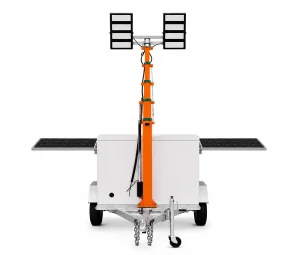
For temporary civil engineering projects, bridge repair along the Han River, and emergency disaster relief scenarios, portable lighting towers are shifting toward solar-diesel hybrid configurations. High-efficiency monocrystalline PV modules coupled with Lithium Iron Phosphate (LiFePO4) battery racks ensure continuous 3-day operation even under overcast winter conditions in Korea.
Regulatory & Logistics Assurance
Localized Support, Compliance & Korean Certification Standards
Entering or supplying project tenders in South Korea requires absolute adherence to local technical standardizations. As an experienced OEM manufacturing partner, we provide complete engineering documentation and testing verification to streamline your certification process:
- KC Certification (Korea Certification): Compliance with KC 60598-1 and KC 60598-2-3 for electrical safety, dielectric strength, insulation resistance, and creepage distances.
- KS Certification (KSC 7658): Adherence to South Korean industrial standards governing LED street light fixtures, verifying photobiological safety, lumen maintenance, and harmonic distortion limits (THD < 10%).
- EMC & Radio Regulation Compliance: Compliance with KN 61000 standards to ensure RF emissions from smart controllers do not interfere with local emergency radio frequencies or commercial cellular bands.
- Corrosion Resistance Testing: Salt spray testing per ASTM B117 for over 1,000 hours, ensuring non-corrosive performance in coastal industrial zones like Incheon and Busan.
Knowledge Base
Frequently Asked Questions (Procurement & Engineering)
Technical guidance for B2B procurement officers, municipal contractors, and engineering leads serving the South Korean market.
How do your OEM street lights meet Seoul's strict light pollution laws?
Our street lights utilize customized flat, tempered glass lenses paired with precise total internal reflection (TIR) optical optics. This ensures a strict 0% Upward Light Output Ratio (ULOR = 0) and sharp lateral cut-offs, preventing spill light into residential apartment windows and complying with the Korean Artificial Light Pollution Prevention Act.
What ambient temperature parameters are supported for extreme Korean winter conditions?
All our fixtures undergo cold-start thermal shock validation down to -40°C. Drivers feature low-temperature soft-start circuitry, and silicon gaskets maintain elasticity without cracking, preventing IP seal degradation during freeze-thaw cycles in Seoul's winter.
Can you provide custom SKD or CKD kit options for local assembly in South Korea?
Yes. To help partners meet local manufacturing content mandates for government tenders, we offer Semi-Knocked-Down (SKD) and Completely Knocked-Down (CKD) delivery models, complete with pre-tested LED PCBAs, certified drivers, and die-cast housings.
What is the standard lead time for OEM orders shipped to Incheon or Busan Port?
Standard OEM sample orders are dispatched within 7-10 working days. Full container loads (FCL) of mass production runs typically take 20-25 days. Maritime transit from our Shenzhen manufacturing facility to Incheon Port takes approximately 3 to 5 days.
Complete Industrial & Speciality Catalog
Comprehensive LED Lighting Products for Global Markets
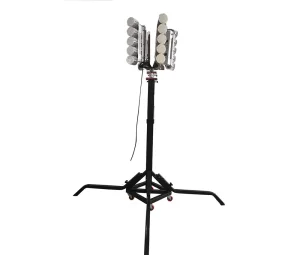
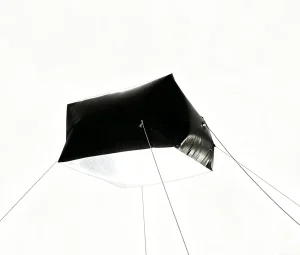
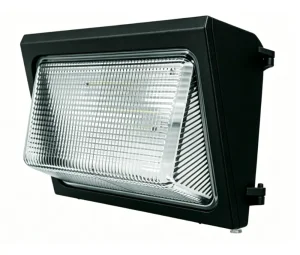
Explore our full range of solar light towers, high-temperature industrial luminaires, balloon cinema lights, and exterior building fixtures.
Partner with a World-Class OEM Street Light Factory Today
Looking to bid on municipal infrastructure projects in Seoul or require custom-engineered street lighting solutions tailored to your market's exact standards?
Send Inquiry Now