
Flagship Roadway & Area Luminaire Series for Japan
Engineered to satisfy JIS C 8105-2-3 standards, featuring low unified glare ratings (UGR), high luminous efficacy, and superior surge immunity for Tokyo, Osaka, and regional highway networks.
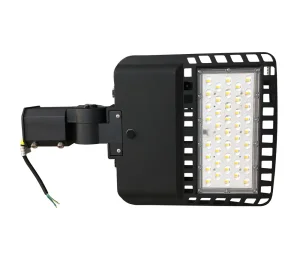
Equipped with Type II/III precision optical lenses, integrated NEMA/Zhaga receptacles, and anti-UV polycarbonate shielding.
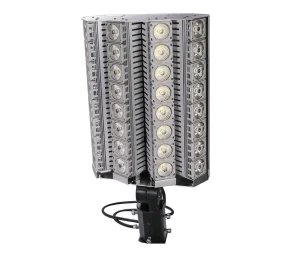
Asymmetric batwing optical distribution maximizing inter-pole distances along high-speed corridors while eliminating upward light waste.
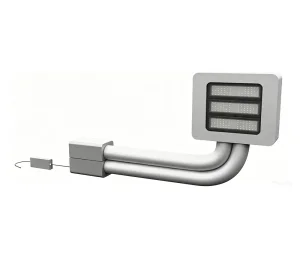
Heavy-duty thermal dissipation engineered for foundries, steelworks, and chemical plant perimeter perimeter illumination.
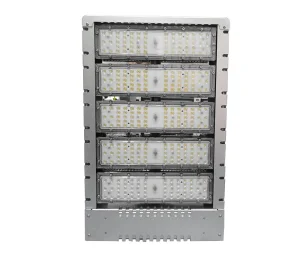
Ultra-aerodynamic body cutting EPA wind load, paired with C5-M marine-grade anodized anti-corrosion coating for coastal facilities.
Japanese Commercial Reality: Navigating Strict Regulations & Physical Extremes
Procuring roadway luminaires for Japan demands unprecedented technical compliance, dual-grid compatibility, and extreme structural defense mechanisms against severe seismic and meteorological phenomena.
The municipal and industrial lighting infrastructure of Japan operates under some of the most rigorous operational standards worldwide. Overseen by the Ministry of Land, Infrastructure, Transport and Tourism (MLIT) and guided by the Japan Industrial Standards (JIS), roadway luminaires are not merely light sources—they are mission-critical disaster prevention assets. The Japanese archipelago is subjected to an unrelenting matrix of environmental stresses: Level-16 typhoons with sustained gust speeds surpassing 60 m/s, acute seismic events reaching JMA Seismic Intensity 7, torrential seasonal downpours, and intense coastal salt mist across 30,000 kilometers of shoreline.
Furthermore, international suppliers must navigate the unique electrical duality of the Japanese transmission grid. Eastern Japan (including Tokyo, Sendai, and Sapporo) operates on a 50Hz frequency governed by TEPCO and Tohoku Electric, whereas Western Japan (including Osaka, Nagoya, and Fukuoka) operates on a 60Hz frequency managed by KEPCO and Chubu Electric. Roadway lighting power supplies must feature wide-band universal input (AC 90V–305V, 47Hz–63Hz) with total harmonic distortion (THD) under 10% and power factor (PF) exceeding 0.98. Obtaining the mandatory PSE (Product Safety Electrical Appliance & Material) diamond mark and certifying adherence to JIS C 8105-2-3 (luminaires for road and street lighting) and JIS C 8155 are strictly non-negotiable thresholds for public procurement and tier-1 EPC general contractors.
| Evaluation Parameter | Japanese Domestic Standard (JIS / MLIT) | Our China Factory 4.0 Specification | Compliance Status |
|---|---|---|---|
| Electrical Safety Certification | METI PSE Diamond Mark (Law Concerning Electrical Safety) | Certified PSE Drivers, Isolated SELV Class I/II topology | 100% Certified |
| Surge Immunity Protection | JIS C 8105 Class B: Min. 10kV common/differential mode | Integrated 10kV/20kV SPD (IEC 61643-11 certified) | Exceeds Spec |
| Structural Wind Load (Typhoon) | MLIT Design Guidelines: Sustained 60 m/s gale resilience | Die-cast ADC12 alloy, low Effective Projected Area (<0.05m²) | Validated |
| Dark Sky & Upward Light Waste | JIEG-001 Guidelines: ULR = 0% (Zero upward light pollution) | Cut-off optical lenses, 0cd at 90° horizontal horizon | Compliant |
| Corrosion Resistance (Coastal) | JIS K 5600 Salt Spray: Minimum 1,000-hour exposure | Powder-coated AkzoNobel marine finish, 3,000-hour ASTM B117 | Superior |
Technological Evolution: Smart City Infrastructure & Society 5.0
How Japan's transition toward digital twin governance and decarbonization is driving the next wave of street lighting procurement.
Zhaga Book 18 & NEMA 7-Pin IoT Sockets
The obsolete photocell is rapidly being superseded by standardization around Zhaga Book 18 and ANSI C136.41 sockets. We supply streetlights pre-wired with standard D4i certified LED drivers, allowing Japanese municipal operators to hot-swap wireless LoRaWAN, Wi-SUN, or cellular NB-IoT communication nodes without replacing luminaire housings.
Net-Zero 2050 Mandate: >180 lm/W Efficacy
Under the Tokyo Metropolitan Government's "Zero Emission Tokyo Strategy" and national carbon neutrality roadmaps, energy budgets are tightly audited. By leveraging premium multi-die flip-chip packages (Lumileds LUXEON / Bridgelux) driven at high efficiency, our systems deliver up to 185 lumens per system watt, cutting municipal grid consumption by up to 72%.
Disaster Autonomous Microgrid Lighting
Following natural catastrophic events, main grid blackouts can paralyze evacuation routes. We engineer smart hybrid DC microgrid streetlights integrating deep-cycle LiFePO4 battery storage, MPPT solar controllers, and bi-directional AC charging to guarantee uncompromised roadway illumination for 72 consecutive hours during emergency grid collapse.
China Industry 4.0: Supply Chain Resilience & Japanese EPC Synergy
Combining world-class production scale with microscopic Japanese quality assurance frameworks to solve global procurement bottlenecks.
International infrastructure procurement professionals and Japanese trading conglomerates (Sogo Shosha) frequently encounter a critical dilemma: domestic Japanese luminaire brands deliver high adherence to local norms but suffer from prohibitive price structures and rigid 12-to-16 week delivery horizons. Meanwhile, generic low-cost imports fail catastrophic salt-mist, PSE certification, and vibration stress tests.
Our Shenzhen Industry 4.0 manufacturing cluster bridges this structural gap. Through full vertical integration—from high-pressure die casting tooling (2,000-ton capacity) and automated surface-mount technology (SMT) with 100% 3D Automated Optical Inspection (AOI), to in-house photogoniophotometer darkrooms—we execute specialized custom runs tailored to Japanese technical submittals within 3 to 4 weeks. Every luminaire batch undergoes complete IESNA LM-79, LM-80, and ISTMT thermal profiling, backed by Japanese-language Dialux lighting simulation models for roadway designers.
Agile Tooling & Mold Customization
Rapid in-house CNC mold modification allows tailored spigot clamp diameters (48mm, 60mm, 76mm) matching municipal Japanese pole head variations without extensive re-tooling lead times.
Dual-Sourced Tier-1 Component Integrity
Our driver ecosystem incorporates Mean Well, Inventronics, and SOSEN power plants, mated with Japanese Nichia, Lumileds, or Cree LED modules, ensuring reliable availability and zero counterfeit vulnerability.
Rigorous Seismic & Vibration Validation
Luminaires are subjected to multi-axis mechanical shake tables replicating JIS C 8105-2-3 vibration parameters (3.0G peak acceleration), ensuring zero bracket fracturing during severe seismic tremors.
Direct Maritime Logistics to Major Japanese Ports
Strategically situated within 45 minutes of Shenzhen and Hong Kong container terminals, offering direct 4-to-6 day vessel transits to the Port of Tokyo, Yokohama, Nagoya, and Kobe.
Engineered for Japan's Most Demanding Geographic Scenarios
From freezing snow squalls in Hokkaido to high-salinity typhoon corridors in Okinawa, discover our tailored regional configurations.
Tomei & Meishin Expressway Interchanges
High-speed national expressways require extreme cutoff optics to avoid blinding drivers traveling at 100+ km/h. Our asymmetric multi-cavity lenses direct 98% of light strictly onto asphalt driving lanes, keeping luminance uniformity (U0) above 0.45 while preventing spillover into surrounding residential zones.
Keihin & Hanshin Heavy Industrial Logistics Hubs
Continuous heavy tractor-trailer movement and gantry crane operations generate persistent mechanical vibrations. We provide reinforced trunnion and tenon mounting brackets with grade 316 stainless steel hardware, rated for continuous industrial shock without optic displacement.
Tohoku & Hokkaido Heavy Snow Belts
Sub-zero conditions create heavy ice loading. Our curved aerodynamic housings feature smooth, non-flanged upper shells that naturally shed snow and ice accumulation, paired with cold-start power modules rated down to -40°C with self-regulating de-icing thermal management.
Specialized Heavy Industrial & Emergency Lighting Systems
Comprehensive luminaire assemblies engineered for disaster response, hazardous atmospheres, maritime berths, and commercial architectural facades across Japan.
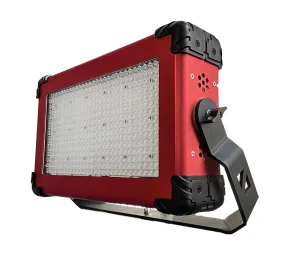
Submersible IP68 marine construction designed for underwater harbor maintenance, offshore caisson inspection, and cinema work.
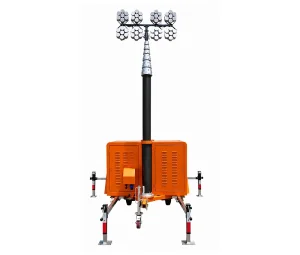
Hydraulic mast with 360° omnidirectional high-lumen floodlights for nighttime highway repairs, civil construction, and earthquake rescue zones.
Heavy perimeter illumination engineered for container storage yards, cross-dock freight facilities, and municipal rail hubs.
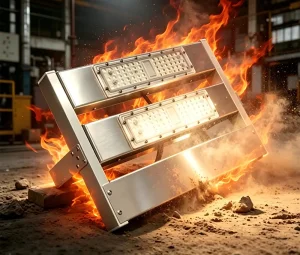
Sealed optical chambers preventing microscopic combustible dust ingress in cement kilns, grain processing terminals, and mining yards.
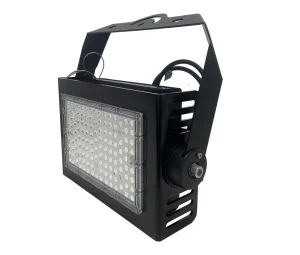
Engineered specifically for low-voltage battery storage, solar hybrid light trailers, and remote railway construction gantries.
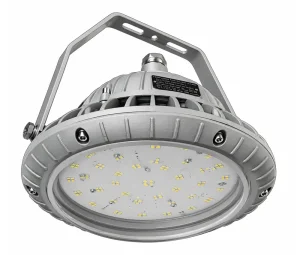
Explosion-proof Zone 1 / Zone 2 certified luminaire designed for Tokyo Bay petrochemical refineries and LNG receiving terminals.
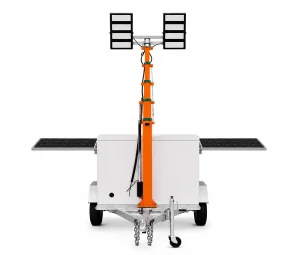
Self-sustaining solar charging mast with high-efficiency mono-PERC panels and smart battery management for highway night work.
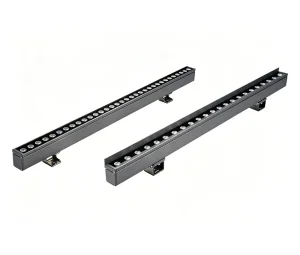
DMX512-controlled high-power RGB/RGBW architectural floodlight for bridge pylons, entertainment districts, and civic structures.
Frequently Asked Questions: B2B Street Light Sourcing for Japan
Essential guidance covering Japanese regulatory frameworks, certification paths, manufacturing lead times, and engineering support.
What certifications are mandatory when importing streetlights into Japan?
How do your luminaires accommodate Japan's 50Hz / 60Hz split electrical grid?
Can your engineering team provide Japanese-standard Dialux photometric plans?
How do your fixtures withstand severe typhoon winds and salt-air corrosion?
What are the typical OEM/ODM production lead times for projects in Japan?
Accelerate Your Japanese Lighting Infrastructure Projects
Partner with an Industry 4.0 Chinese street light manufacturer engineered to meet Japan’s highest photometric, mechanical, and safety mandates. Request detailed submittals, IES files, or bespoke quotations.